Fraser Kurt M, Holland Peter C
Department of Psychological and Brain Sciences.
Behav Neurosci. 2019 Apr;133(2):145-175. doi: 10.1037/bne0000306.
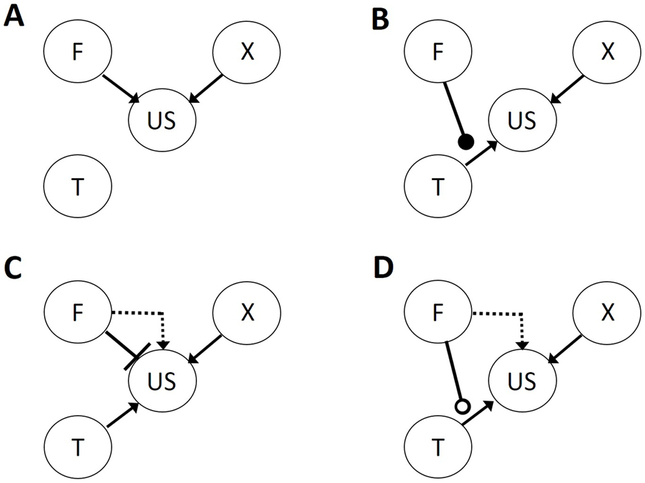
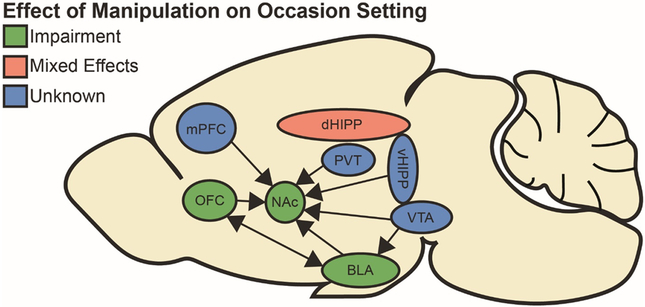
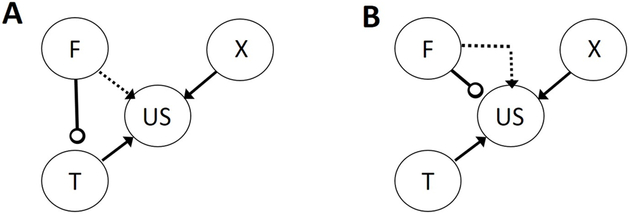
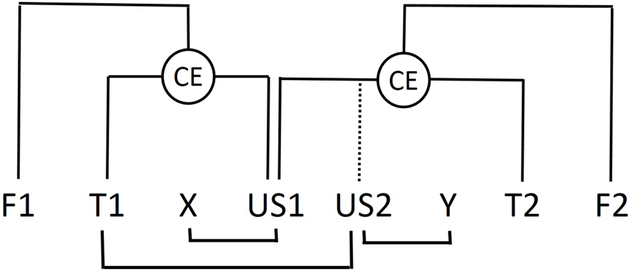
Occasion setting refers to the ability of 1 stimulus, an occasion setter, to modulate the efficacy of the association between another, conditioned stimulus (CS) and an unconditioned stimulus (US) or reinforcer. Occasion setters and simple CSs are readily distinguished. For example, occasion setters are relatively immune to extinction and counterconditioning, and their combination and transfer functions differ substantially from those of simple CSs. Similarly, the acquisition of occasion setting is favored when stimuli are separated by longer intervals, by empty trace intervals, and are of different modalities, whereas the opposite conditions typically favor the acquisition of simple associations. Furthermore, the simple conditioning and occasion setting properties of a single stimulus can be independent, for example, that stimulus may simultaneously predict the occurrence of a reinforcer and indicate that another stimulus will not be reinforced. Many behavioral phenomena that are intractable to simple associative analysis are better understood within an occasion setting framework. Besides capturing the distinction between direct and modulatory control common to many arenas in neuroscience, occasion setting provides a model for the hierarchical organization of memory for events and event relations, and for contextual control more broadly. Although early lesion studies further differentiated between occasion setting and simple conditioning functions, little is known about the neurobiology of occasion setting. Modern techniques for precise manipulation and monitoring of neuronal activity in multiple brain regions are ideally suited for disentangling contributions of simple conditioning and occasion setting in associative learning. (PsycINFO Database Record (c) 2019 APA, all rights reserved).
情境设定是指一种刺激(情境设定刺激)调节另一种条件刺激(CS)与非条件刺激(US)或强化物之间关联效力的能力。情境设定刺激和简单的条件刺激很容易区分。例如,情境设定刺激相对不易消退和对抗条件作用,并且它们的组合和转换功能与简单条件刺激有很大不同。同样,当刺激之间间隔较长、有空白痕迹间隔且属于不同模态时,情境设定的习得更受青睐,而相反的条件通常有利于简单关联的习得。此外,单个刺激的简单条件作用和情境设定属性可以是独立的,例如,该刺激可能同时预测强化物的出现并表明另一个刺激不会得到强化。许多用简单联想分析难以解释的行为现象,在情境设定框架内能得到更好的理解。除了捕捉神经科学许多领域共有的直接控制和调节控制之间的区别外,情境设定还为事件和事件关系的记忆层次组织以及更广泛的情境控制提供了一个模型。尽管早期的损伤研究进一步区分了情境设定和简单条件作用功能,但对情境设定的神经生物学知之甚少。用于精确操纵和监测多个脑区神经元活动的现代技术非常适合于厘清简单条件作用和情境设定在联想学习中的作用。(《心理学文摘数据库记录》(c)2019美国心理学会,保留所有权利)