Materials Science and Engineering Program, University of California, San Diego, CA, 92093, USA.
Energy Storage and Distributed Resources Division, Lawrence Berkeley National Laboratory, Berkeley, CA, 94720, USA.
Nat Commun. 2019 Mar 26;10(1):1377. doi: 10.1038/s41467-019-09378-5.
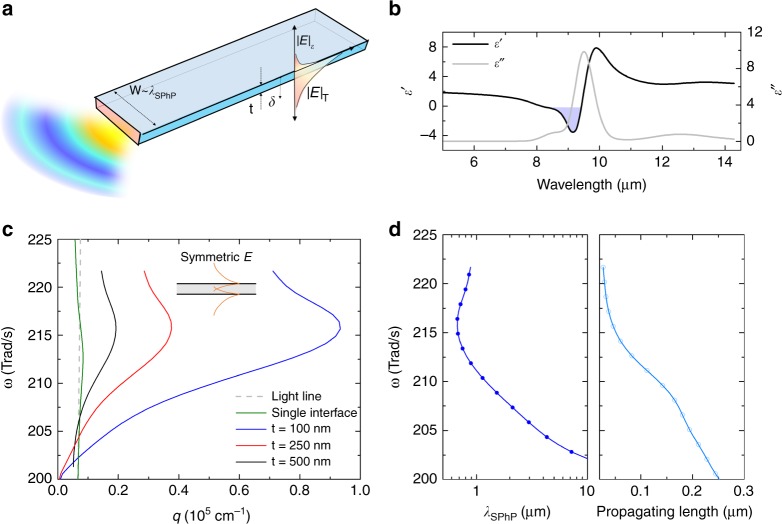
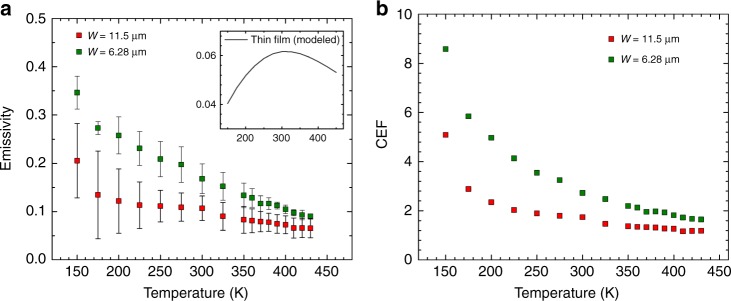
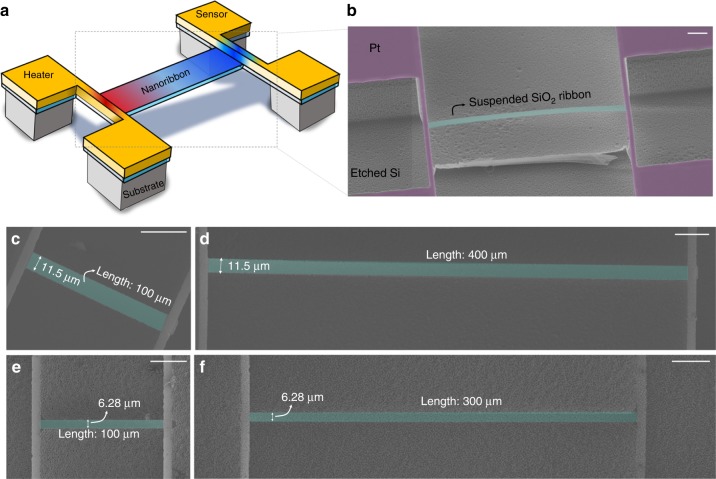
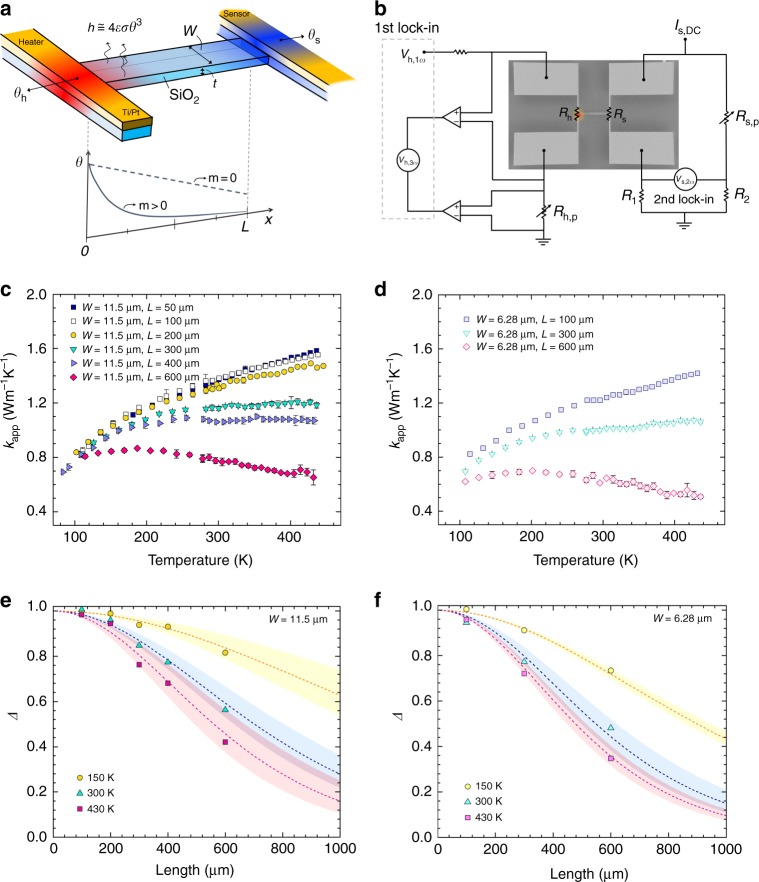
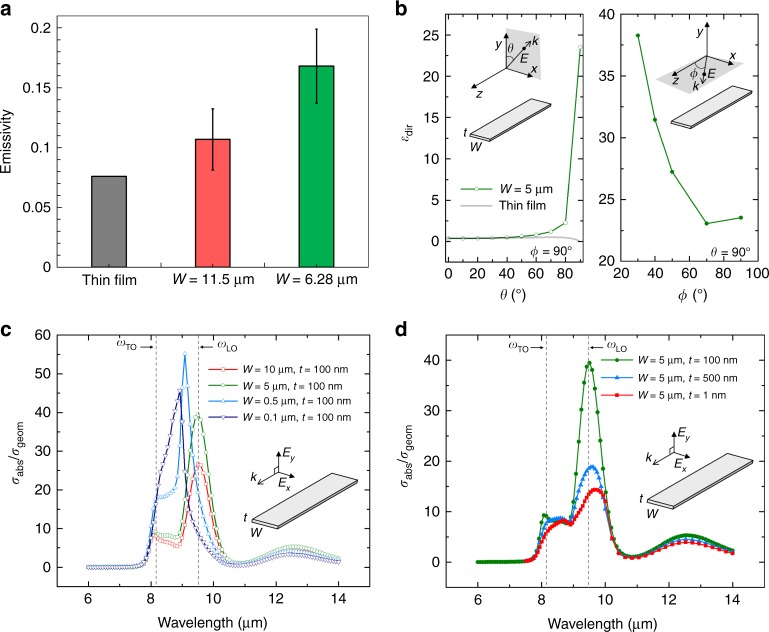
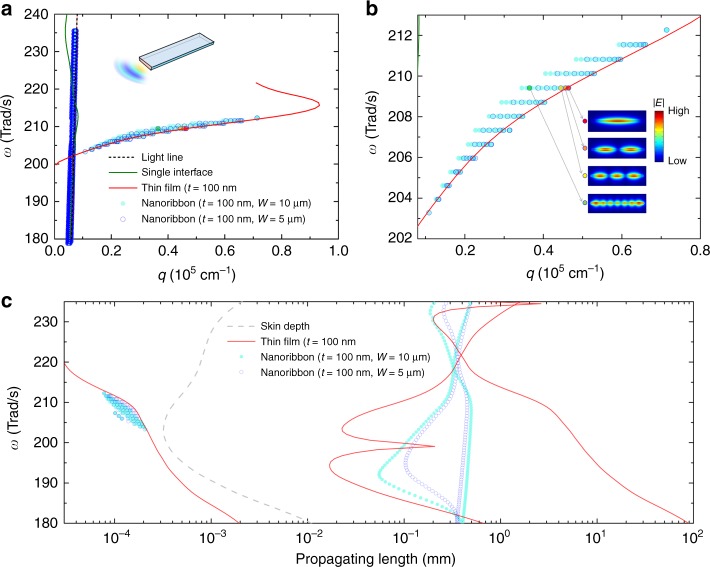
Coherent thermal emission deviates from the Planckian blackbody emission with a narrow spectrum and strong directionality. While far-field thermal emission from polaritonic resonance has shown the deviation through modelling and optical characterizations, an approach to achieve and directly measure dominant coherent thermal emission has not materialised. By exploiting the large disparity in the skin depth and wavelength of surface phonon polaritons, we design anisotropic SiO nanoribbons to enable independent control of the incoherent and coherent behaviours, which exhibit over 8.5-fold enhancement in the emissivity compared with the thin-film limit. Importantly, this enhancement is attributed to the coherent polaritonic resonant effect, hence, was found to be stronger at lower temperature. A thermometry platform is devised to extract, for the first time, the thermal emissivity from such dielectric nanoemitters with nanowatt-level emitting power. The result provides new insight into the realisation of spatial and spectral distribution control for far-field thermal emission.
相干热发射偏离具有窄谱和强方向性的普朗克黑体发射。虽然通过建模和光学特性已经表明了极性共振的远场热发射存在这种偏离,但实现并直接测量主要相干热发射的方法尚未实现。通过利用表面声子极化激元的趋肤深度和波长之间的巨大差异,我们设计了各向异性的 SiO 纳米带,以实现对非相干和相干行为的独立控制,与薄膜极限相比,发射率提高了 8.5 倍以上。重要的是,这种增强归因于相干极化激元共振效应,因此在较低温度下表现出更强的效果。设计了一个测温平台,首次从具有纳瓦级发射功率的这种介电纳米发射器中提取热发射率。该结果为实现远场热发射的空间和光谱分布控制提供了新的见解。