Sanz-Navarro Maria, Delgado Irene, Torres Miguel, Mustonen Tuija, Michon Frederic, Rice David P
Helsinki Institute of Life Science, Institute of Biotechnology, University of Helsinki, Helsinki, Finland.
Orthodontics, Department of Oral and Maxillofacial Diseases, University of Helsinki, Helsinki, Finland.
Front Physiol. 2019 Mar 12;10:249. doi: 10.3389/fphys.2019.00249. eCollection 2019.
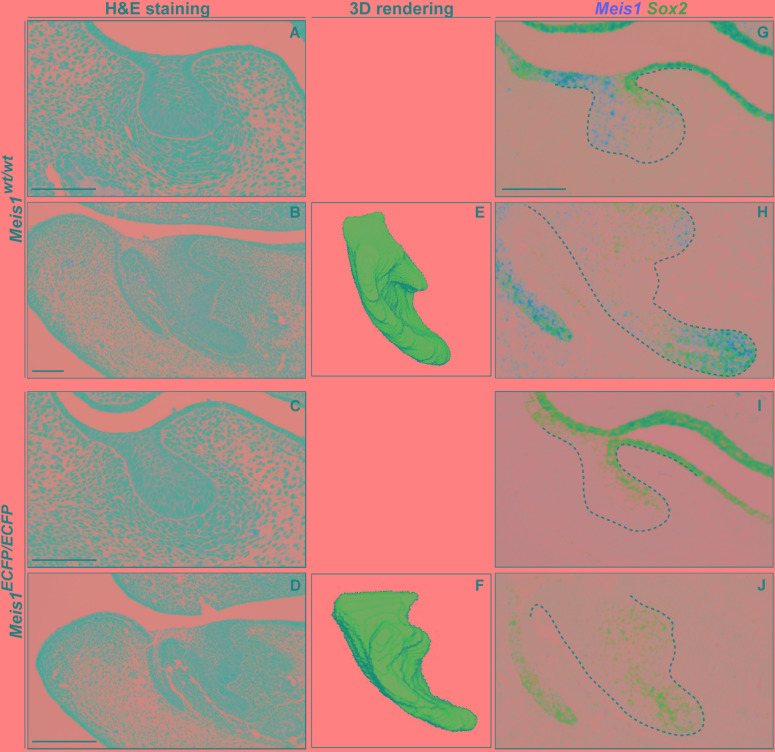
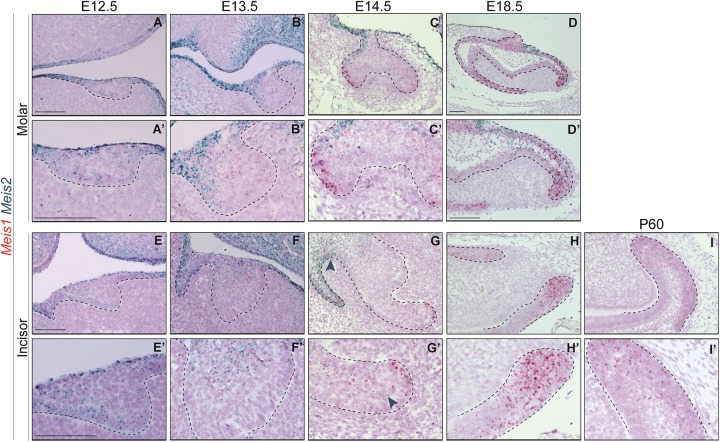
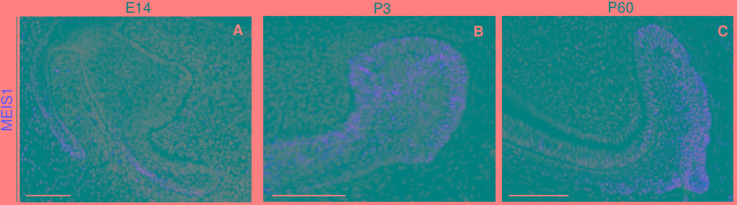
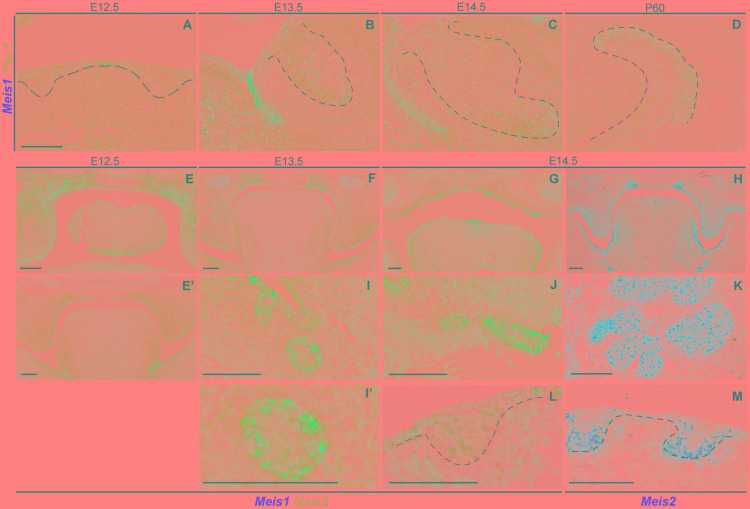
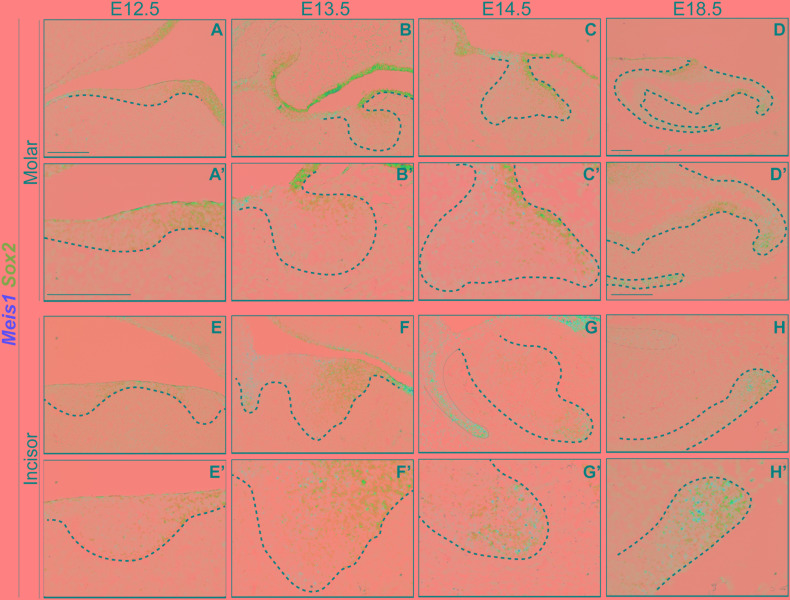
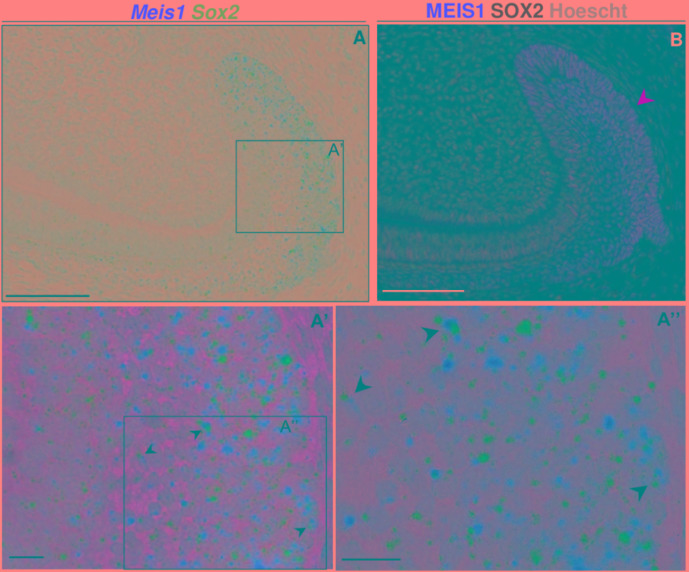
MEIS1 is a key developmental regulator of several organs and participates in stem cell maintenance in different niches. However, despite the murine continuously growing incisor being a well described model for the study of adult stem cells, has not been investigated in a dental context. Here, we uncover that expression in the tooth is confined to the epithelial compartment. Its expression arises during morphogenesis and becomes restricted to the mouse incisor epithelial stem cell niche, the labial cervical loop. is specifically expressed by stem cells, which give rise to all dental epithelial cell lineages. Also, we have found that in the incisor is coexpressed with potential binding partner during both embryonic and adult stages. Interestingly, is present in different areas of the forming tooth and it is not expressed by dental epithelial stem cells, suggesting different roles for these two largely homologous genes. Additionally, we have established the expression patterns of and during tongue, hair, salivary gland and palate formation. Finally, analysis of -null allele mice indicated that, similarly, to SOX2, MEIS1 is not essential for tooth initiation, but might have a role during adult incisor renewal.
MEIS1是多个器官关键的发育调节因子,并参与不同微环境中干细胞的维持。然而,尽管小鼠不断生长的切牙是研究成体干细胞的一个描述详尽的模型,但尚未在牙齿背景下对其进行研究。在此,我们发现其在牙齿中的表达局限于上皮区室。其表达在形态发生过程中出现,并局限于小鼠切牙上皮干细胞微环境,即唇侧颈环。它由产生所有牙齿上皮细胞谱系的干细胞特异性表达。此外,我们发现切牙中的MEIS1在胚胎期和成年期均与潜在结合伴侣共同表达。有趣的是,PITX2存在于正在形成的牙齿的不同区域,且不由牙齿上皮干细胞表达,这表明这两个高度同源的基因具有不同的作用。此外,我们还确定了MEIS1和PITX2在舌、毛发、唾液腺和腭形成过程中的表达模式。最后,对Meis1基因敲除小鼠的分析表明,与SOX2类似,MEIS1对牙齿起始并非必需,但可能在成年切牙更新过程中发挥作用。