
基于综合生物信息学分析的肝细胞癌患者生存预测八基因特征识别
Identification of an eight-gene signature for survival prediction for patients with hepatocellular carcinoma based on integrated bioinformatics analysis.
作者信息
Qiao Guo-Jie, Chen Liang, Wu Jin-Cai, Li Zhou-Ri
机构信息
Institute of Tropical Agriculture and Forestry, Hainan University, Hainkou, China.
Department of Hepatobiliary Surgery, Hainan Provincial People's Hospital, Hainan Medical College, Hainkou, China.
出版信息
PeerJ. 2019 Mar 20;7:e6548. doi: 10.7717/peerj.6548. eCollection 2019.
BACKGROUND
Hepatocellular carcinoma (HCC) remains one of the leading causes of cancer-related death worldwide. Despite recent advances in imaging techniques and therapeutic intervention for HCC, the low overall 5-year survival rate of HCC patients remains unsatisfactory. This study aims to find a gene signature to predict clinical outcomes in HCC.
METHODS
Bioinformatics analysis including Cox's regression analysis, Kaplan-Meier (KM) and receiver operating characteristic curve (ROC) analysis and the random survival forest algorithm were performed to mine the expression profiles of 553 hepatocellular carcinoma (HCC) patients from The Cancer Genome Atlas (TCGA) and Gene Expression Omnibus (GEO) public database.
RESULTS
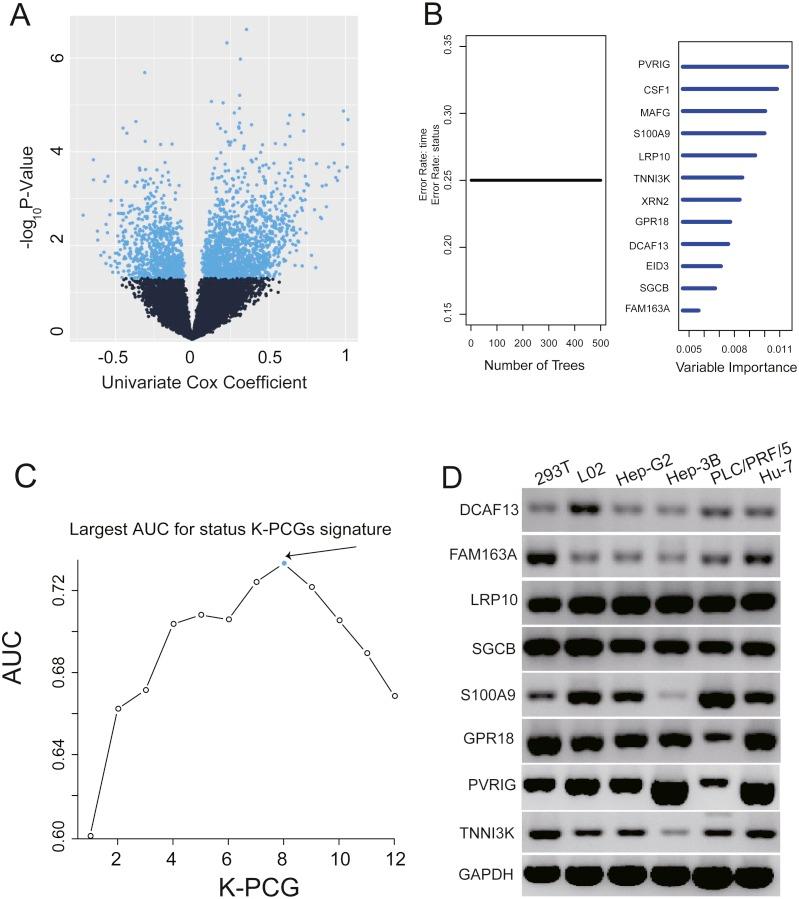
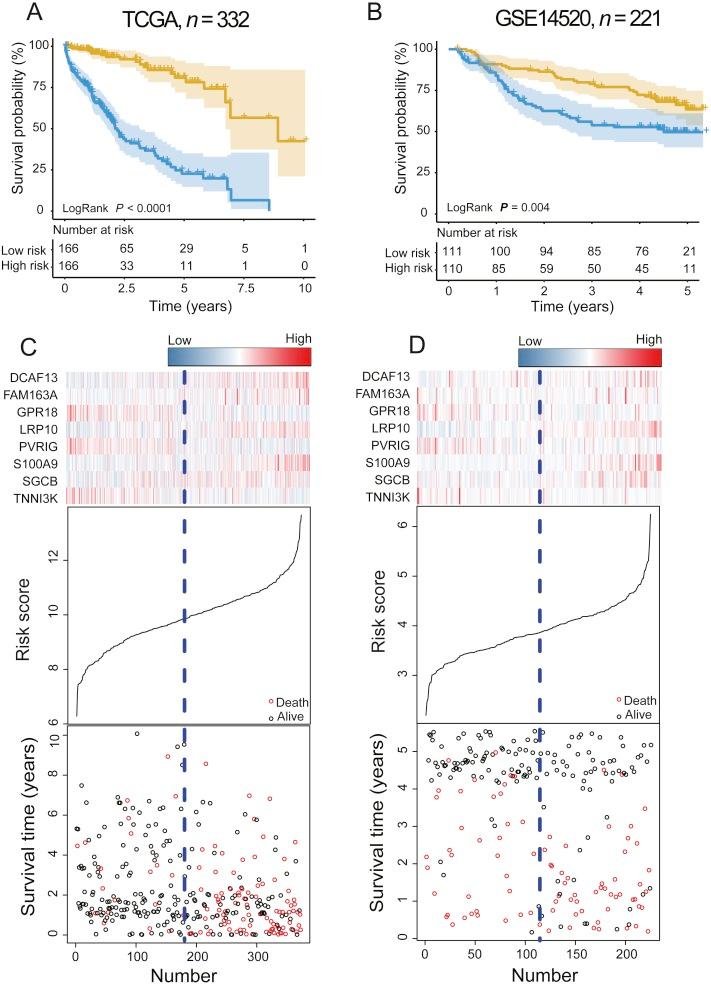
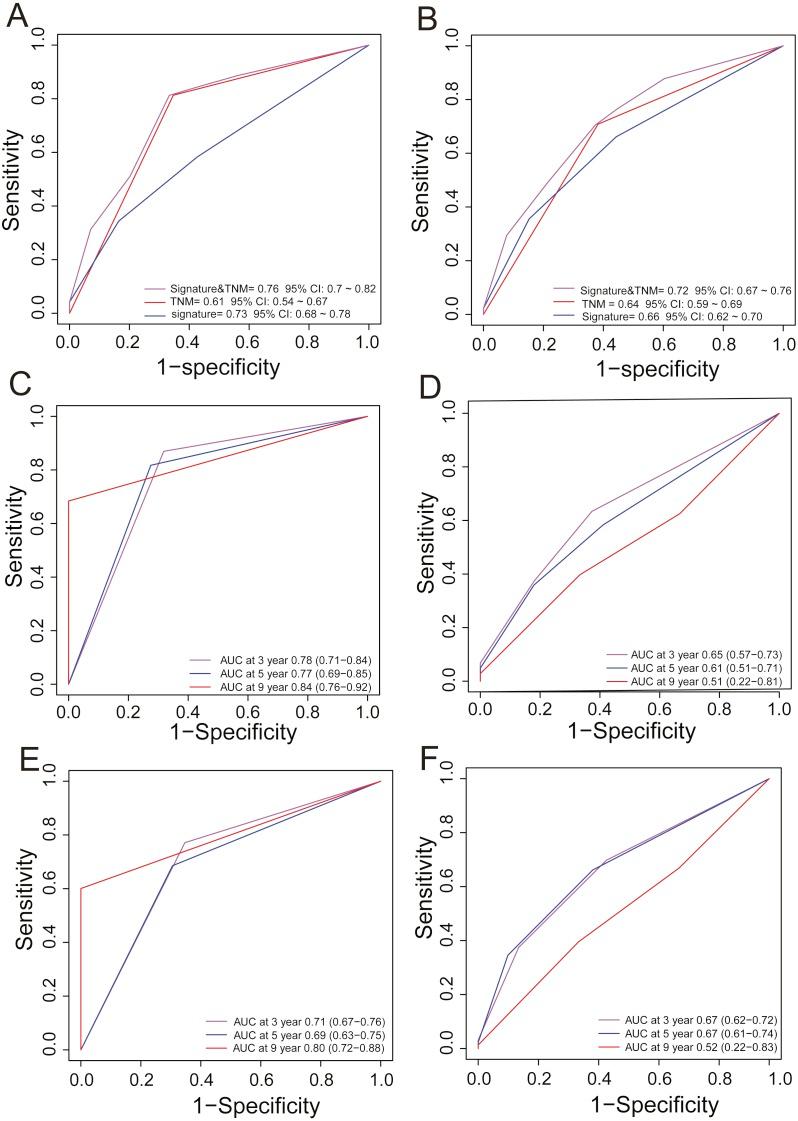
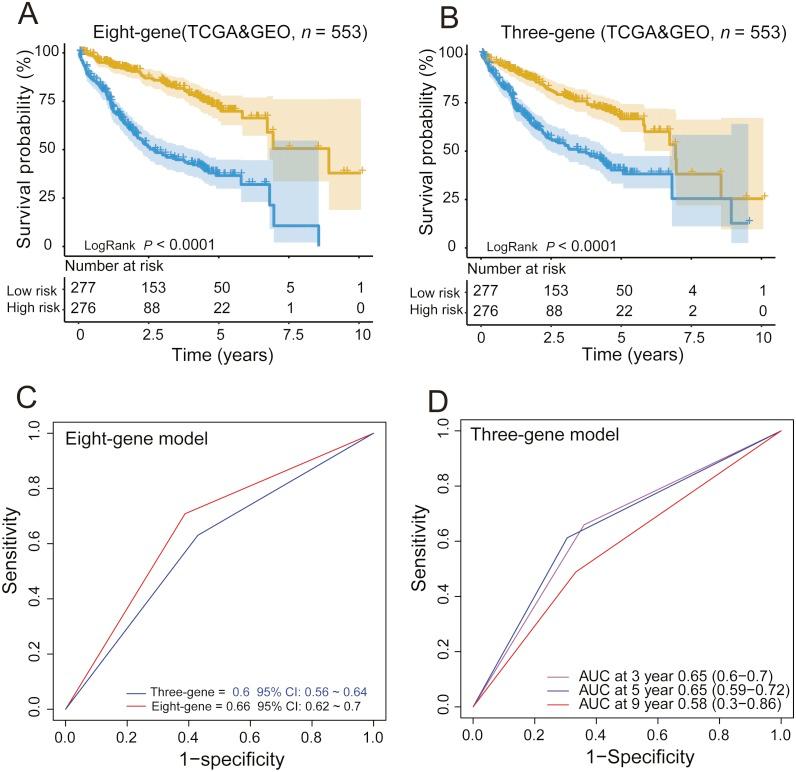
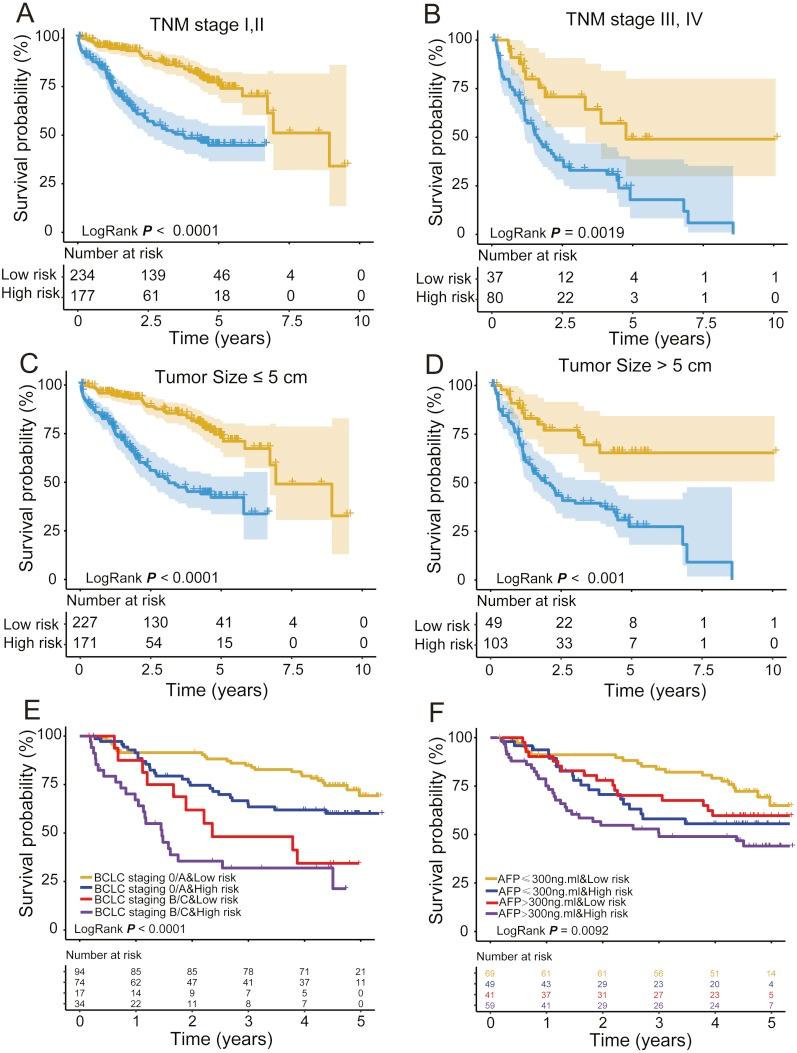
We selected a signature comprising eight protein-coding genes (DCAF13, FAM163A, GPR18, LRP10, PVRIG, S100A9, SGCB, and TNNI3K) in the training dataset (AUC = 0.77 at five years, = 332). The signature stratified patients into high- and low-risk groups with significantly different survival in the training dataset (median 2.20 vs. 8.93 years, log-rank test < 0.001) and in the test dataset (median 2.68 vs. 4.24 years, log-rank test = 0.004, = 221, GSE14520). Further multivariate Cox regression analysis showed that the signature was an independent prognostic factor for patients with HCC. Compared with TNM stage and another reported three-gene model, the signature displayed improved survival prediction power in entire dataset (AUC signature = 0.66 vs. AUC TNM = 0.64 vs. AUC gene model = 0.60, = 553). Stratification analysis shows that it can be used as an auxiliary marker for many traditional staging models.
CONCLUSIONS
We constructed an eight-gene signature that can be a novel prognostic marker to predict the survival of HCC patients.
背景
肝细胞癌(HCC)仍是全球癌症相关死亡的主要原因之一。尽管近年来HCC的成像技术和治疗干预取得了进展,但HCC患者总体5年生存率较低,仍不尽人意。本研究旨在寻找一种基因特征来预测HCC的临床结局。
方法
进行生物信息学分析,包括Cox回归分析、Kaplan-Meier(KM)和受试者工作特征曲线(ROC)分析以及随机生存森林算法,以挖掘来自癌症基因组图谱(TCGA)和基因表达综合数据库(GEO)的553例肝细胞癌(HCC)患者的表达谱。
结果
我们在训练数据集中选择了一个由8个蛋白质编码基因(DCAF13、FAM163A、GPR18、LRP10、PVRIG、S100A9、SGCB和TNNI3K)组成的特征(5年时AUC = 0.77,n = 332)。该特征将训练数据集中的患者分为高风险组和低风险组,两组生存情况有显著差异(中位数分别为2.20年和8.93年,对数秩检验P < 0.001),在测试数据集中也是如此(中位数分别为2.68年和4.24年,对数秩检验P = 0.004,n = 221,GSE14520)。进一步的多变量Cox回归分析表明,该特征是HCC患者的独立预后因素。与TNM分期和另一个报道的三基因模型相比,该特征在整个数据集中显示出更好的生存预测能力(AUC特征 = 0.66,AUC TNM = 0.64,AUC基因模型 = 0.60,n = 553)。分层分析表明,它可以作为许多传统分期模型的辅助标志物。
结论
我们构建了一个八基因特征,可作为预测HCC患者生存的新型预后标志物。
 Zotero 插件