Rana Suresh, Bennouna Jaafar, Samuel E James Jebaseelan, Gutierrez Alonso N
Department of Radiation Oncology, Miami Cancer Institute, Baptist Health South Florida, Miami, FL, USA.
Department of Radiation Oncology, Herbert Wertheim College of Medicine, Florida International University, Miami, FL, USA.
J Appl Clin Med Phys. 2019 Apr;20(4):29-44. doi: 10.1002/acm2.12556. Epub 2019 Mar 28.
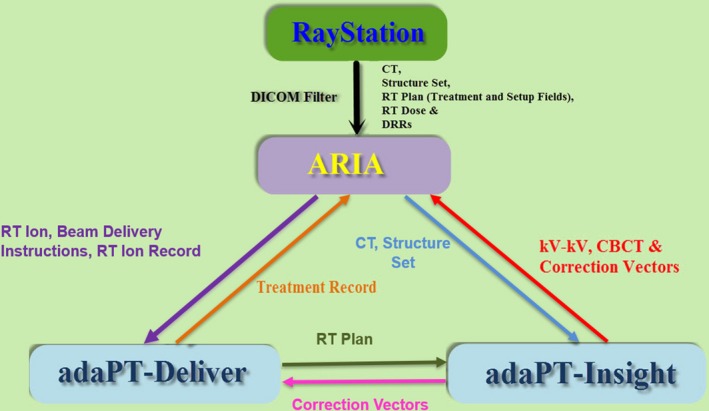
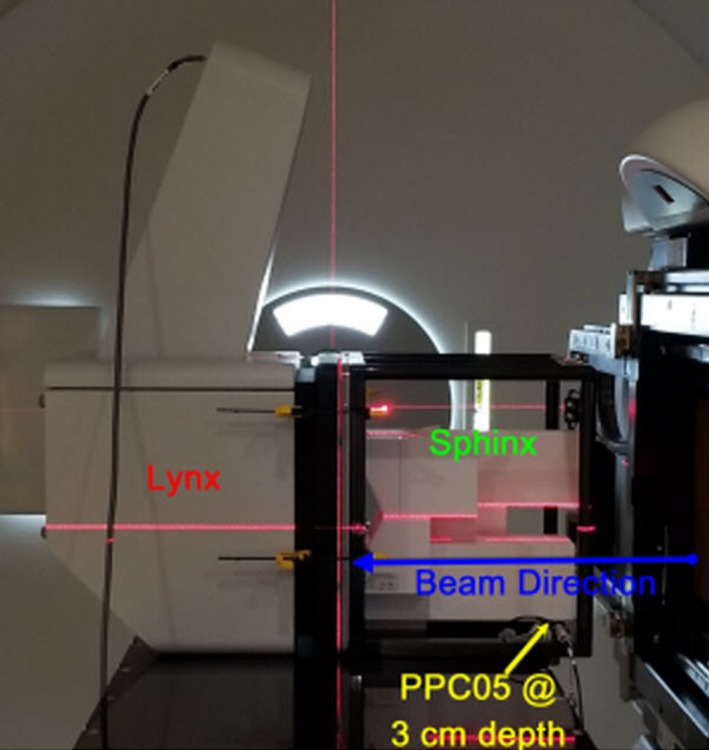
The main purpose of this study is to demonstrate the clinical implementation of a comprehensive pencil beam scanning (PBS) daily quality assurance (QA) program involving a number of novel QA devices including the Sphinx/Lynx/parallel-plate (PPC05) ion chamber and HexaCheck/multiple imaging modality isocentricity (MIMI) imaging phantoms. Additionally, the study highlights the importance of testing the connectivity among oncology information system (OIS), beam delivery/imaging systems, and patient position system at a proton center with multi-vendor equipment and software.
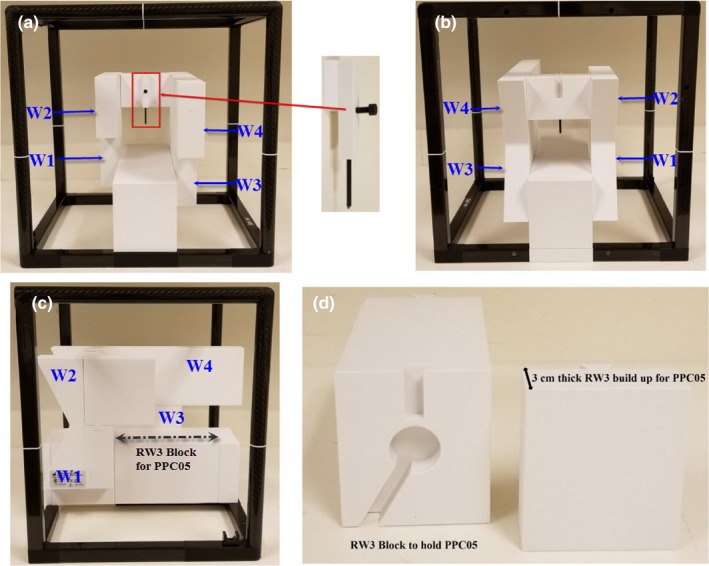
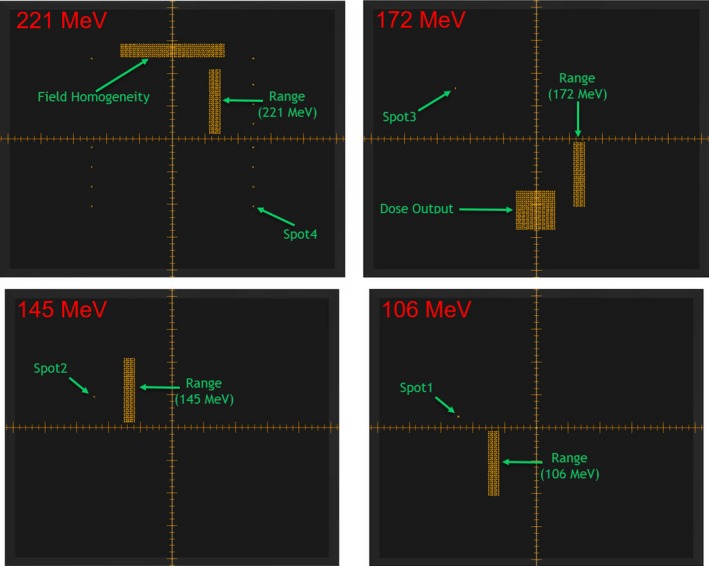
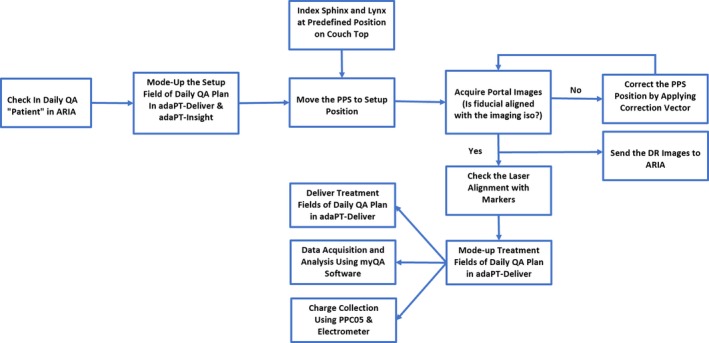
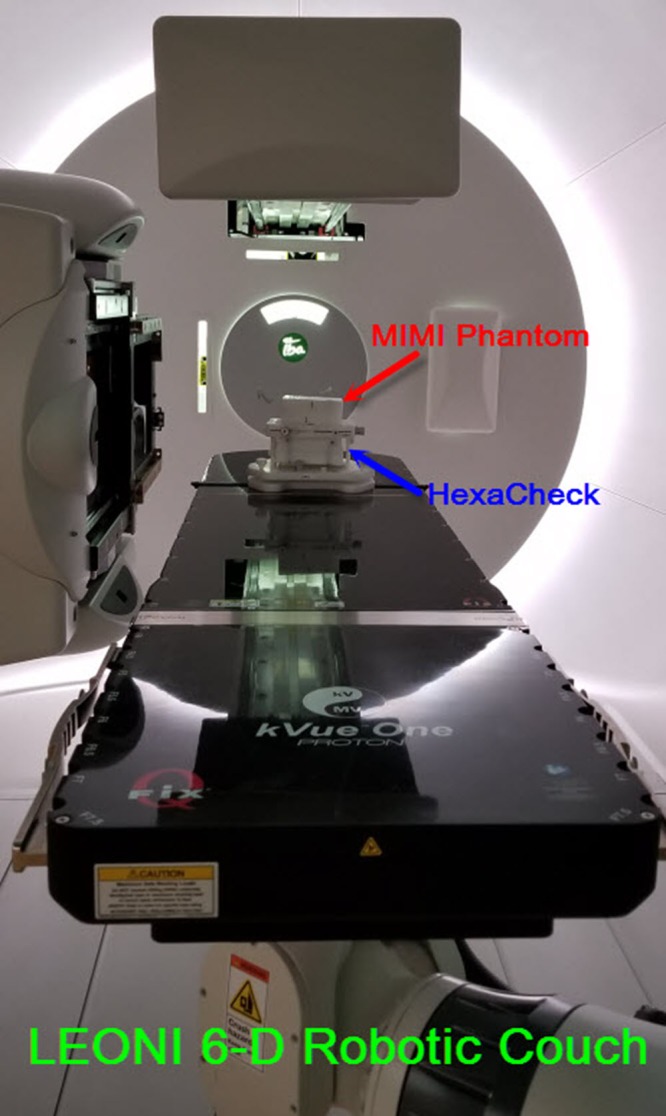
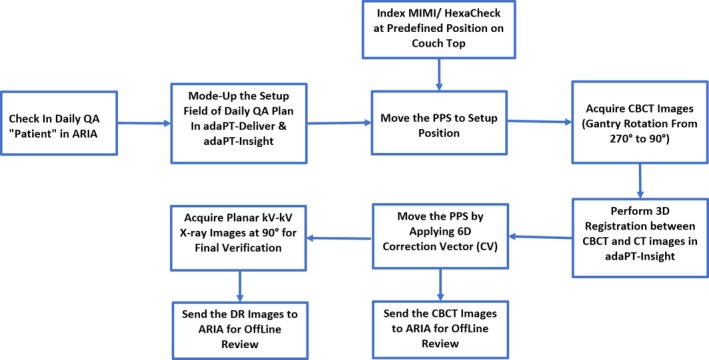
For dosimetry, a daily QA plan with spot map of four different energies (106, 145, 172, and 221 MeV) is delivered on the delivery system through the OIS. The delivery assesses the dose output, field homogeneity, beam coincidence, beam energy, width, distal-fall-off (DFO), and spot characteristics - for example, position, size, and skewness. As a part of mechanical and imaging QA, a treatment plan with the MIMI phantom serving as the patient is transferred from OIS to imaging system. The HexaCheck/MIMI phantoms are used to assess daily laser accuracy, imaging isocenter accuracy, image registration accuracy, and six-dimensional (6D) positional correction accuracy for the kV imaging system and robotic couch.
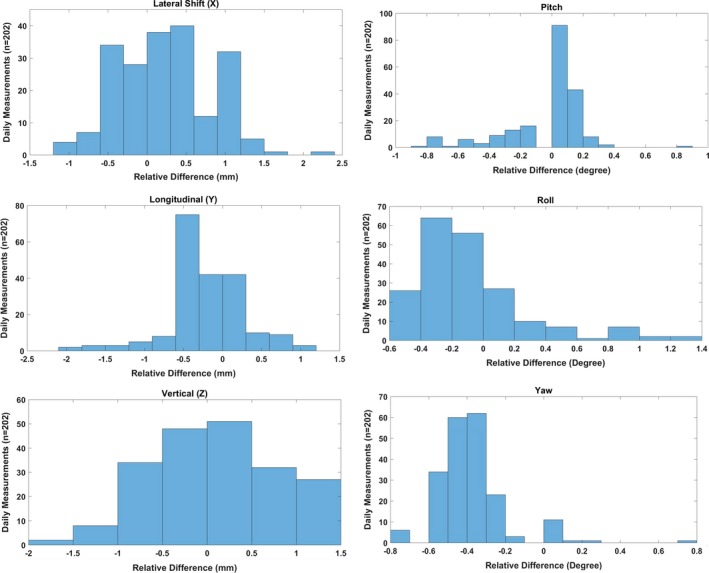
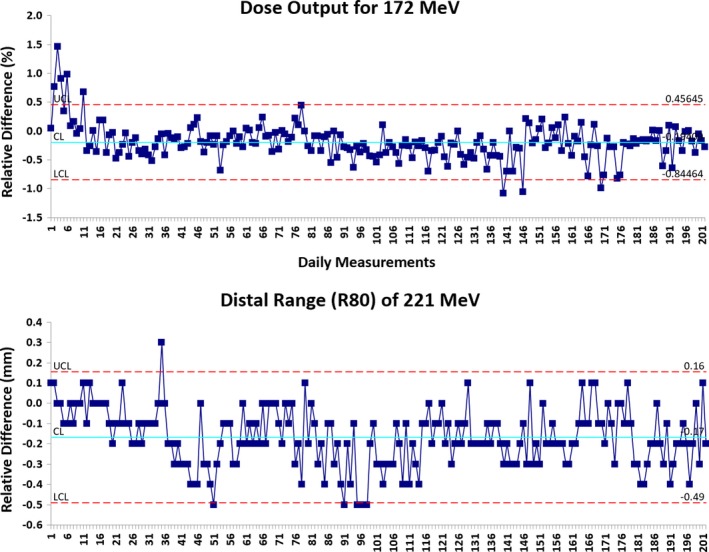
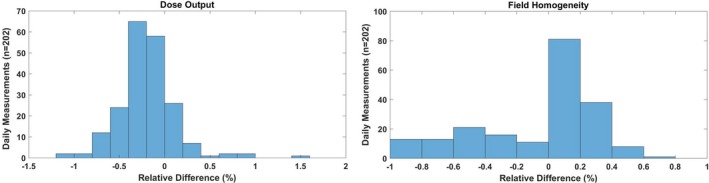
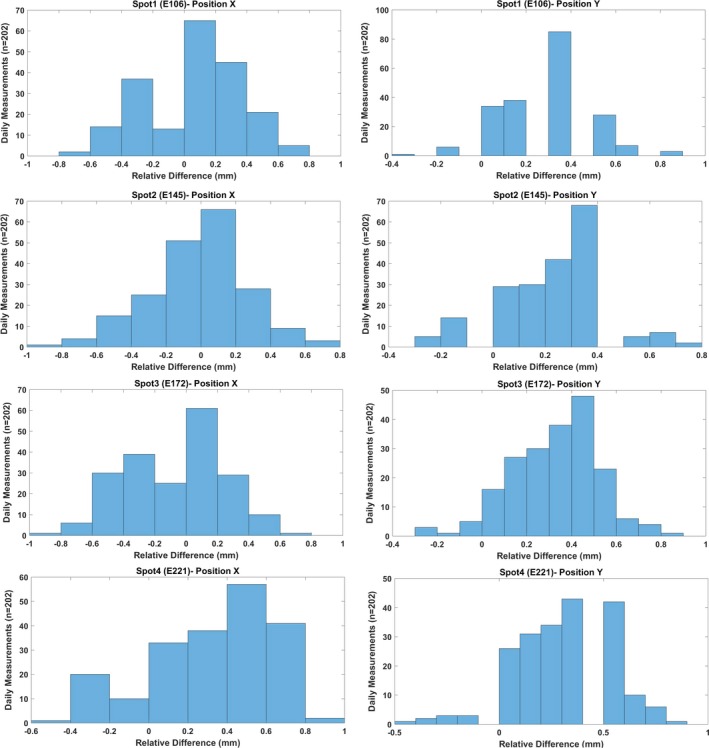
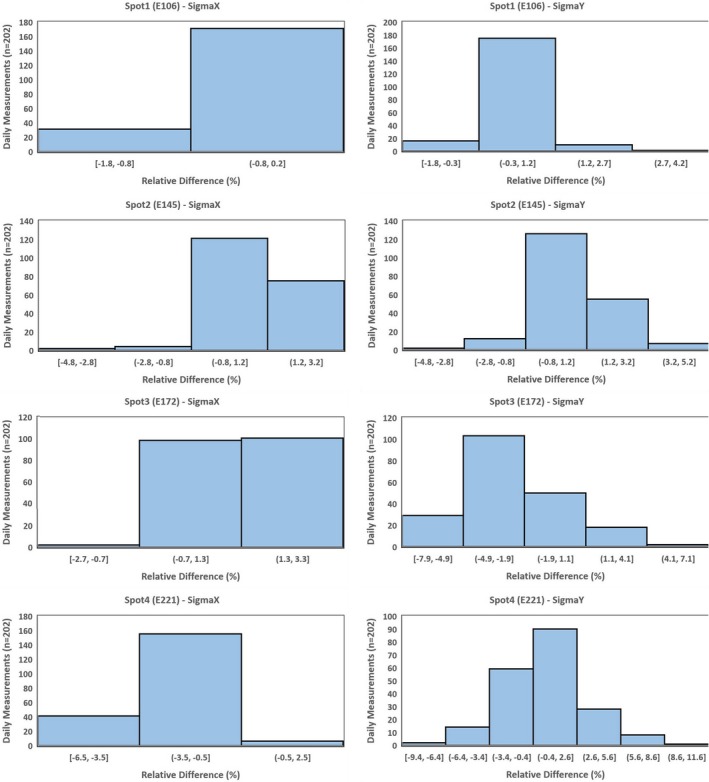
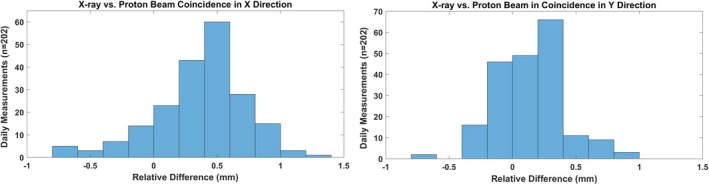
The daily QA results presented herein are based on 202 daily sets of measurements over a period of 10 months. Total time to perform daily QA tasks at our center is under 30 min. The relative difference (Δ ) of daily measurements with respect to baseline was within ± 1% for field homogeneity, ±0.5 mm for range, width and DFO, ±1 mm for spots positions, ±10% for in-air spot sigma, ±0.5 spot skewness, and ±1 mm for beam coincidence (except 1 case: Δ = 1.3 mm). The average Δ in dose output was -0.2% (range: -1.1% to 1.5%). For 6D IGRT QA, the average absolute difference (Δ ) was ≤0.6 ± 0.4 mm for translational and ≤0.5° for rotational shifts.
The use of novel QA devices such as the Sphinx in conjunction with the Lynx, PPC05 ion chamber, HexaCheck/MIMI phantoms, and myQA software was shown to provide a comprehensive and efficient method for performing daily QA of a number of system parameters for a modern proton PBS-dedicated treatment delivery unit.
本研究的主要目的是展示一个全面的笔形束扫描(PBS)每日质量保证(QA)程序的临床实施情况,该程序涉及多种新型QA设备,包括Sphinx/Lynx/平行板(PPC05)电离室以及HexaCheck/多模态成像等中心性(MIMI)成像体模。此外,该研究强调了在配备多供应商设备和软件的质子中心测试肿瘤信息系统(OIS)、束流传输/成像系统以及患者定位系统之间连接性的重要性。
对于剂量测定,通过OIS在传输系统上交付一份包含四种不同能量(106、145、172和221 MeV)光斑图的每日QA计划。该传输过程评估剂量输出、射野均匀性、束流重合性、束流能量、宽度、远端剂量跌落(DFO)以及光斑特性,例如位置、大小和偏斜度。作为机械和成像QA的一部分,一个以MIMI体模作为患者的治疗计划从OIS传输至成像系统。HexaCheck/MIMI体模用于评估kV成像系统和机器人治疗床的每日激光精度、成像等中心精度、图像配准精度以及六维(6D)位置校正精度。
本文呈现的每日QA结果基于10个月期间的202组每日测量数据。在我们中心执行每日QA任务的总时间不到30分钟。每日测量相对于基线的相对差异(Δ)对于射野均匀性在±1%以内,对于射程、宽度和DFO在±0.5 mm以内,对于光斑位置在±1 mm以内,对于空气中光斑标准差在±10%以内,对于光斑偏斜度在±0.5以内,对于束流重合性在±1 mm以内(除1例:Δ = 1.3 mm)。剂量输出的平均Δ为 -0.2%(范围:-1.1%至1.5%)。对于6D IGRT QA,平移的平均绝对差异(Δ)≤0.6 ± 0.4 mm,旋转位移≤0.5°。
使用诸如Sphinx与Lynx、PPC05电离室、HexaCheck/MIMI体模以及myQA软件等新型QA设备,被证明为现代质子PBS专用治疗传输单元的多个系统参数执行每日QA提供了一种全面且高效的方法。