Faculty of Epidemiology and Population Health, London School of Hygiene and Tropical Medicine, Keppel Street, London, WC1E 7HT, UK.
African Population and Health Research Center, APHRC Campus, 2nd Floor, Manga Close, Off Kirawa Road, P.O. Box 10787-00100, Nairobi, Kenya.
BMC Pregnancy Childbirth. 2019 Mar 28;19(1):100. doi: 10.1186/s12884-019-2245-3.
Advancing an understanding of childbearing desires is an important precursor to achievement of the policy goal of reducing unintended pregnancies. It has been long debated that concepts of fertility desires and planning may be particularly problematic in sub-Saharan Africa. However, examination of the utility of fertility preference measures and their link to reproductive behaviour is still rare in the region. The aim of this study is to assess the predictive validity of future childbearing desires on subsequent reproduction among women living in the highly unpredictable circumstances of Nairobi slums.
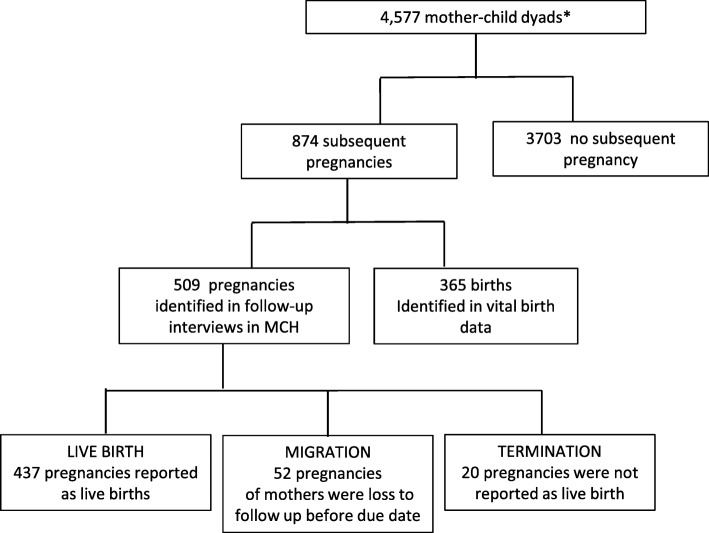
We used data from a longitudinal study (2007-2010) nested in the Nairobi Urban Health Demographic Surveillance System that is located in two slums in Nairobi, Kenya. We analysed baseline fertility desires among 4577 postpartum women. Cox proportional hazard model was employed to examine the effect of fertility desires on subsequent reproduction.
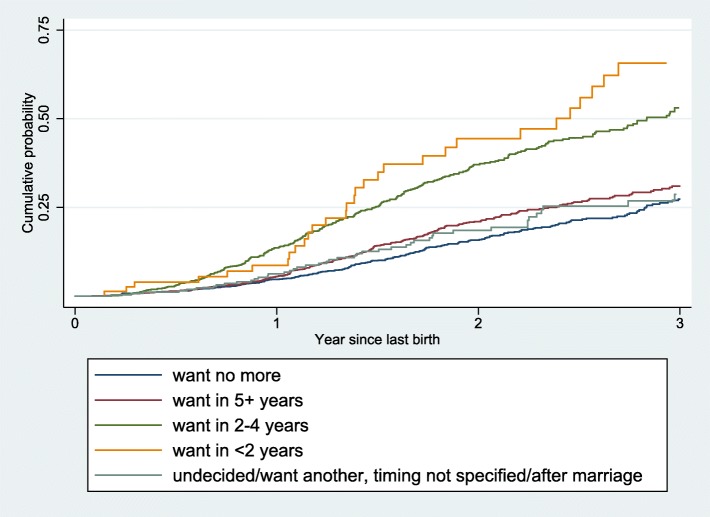
One-third of the women wanted no more children and 37% wanted to wait for at least five years at baseline. While two-thirds of the women who wanted to have a child soon became pregnant within three years, less than one-third of those wanting no more children became pregnant. The multivariable analysis shows that the probability of becoming pregnant among women who expressed desires to stop or delay childbearing at least for five years was 50% less than among women who wanted to have a child in two to four years. In addition to prospective fertility desires, level of woman's education, residence and ethnicity exerted important influences on implementation of baseline preferences.
Our study finds a strong link between baseline fertility desires and subsequent reproduction. A large difference in pregnancy risk was observed between those who wanted no more children and those who wanted another child. The link between a woman's stated desire to stop childbearing and subsequent childbearing is just as strong in the Nairobi slums as elsewhere. In addition, the findings revealed a pronounced gradient in pregnancy risk according to preferred spacing length, which support other evidence on the important contribution of long-term spacing or postponement to fertility decline in sub-Saharan Africa.
深入了解生育意愿是实现减少意外怀孕这一政策目标的重要前提。长期以来,人们一直争论说,在撒哈拉以南非洲,生育意愿和生育计划的概念可能特别成问题。然而,该地区对生育意愿衡量标准的效用及其与生育行为之间联系的研究仍然很少。本研究旨在评估在肯尼亚内罗毕两个贫民窟居住的妇女未来生育意愿对随后生育行为的预测价值,这些妇女生活在高度不稳定的环境中。
我们使用了嵌套在内罗毕城市人口动态监测系统中的一项纵向研究(2007-2010 年)的数据,该系统位于肯尼亚内罗毕的两个贫民窟内。我们分析了 4577 名产后妇女的生育意愿基线数据。采用 Cox 比例风险模型来检验生育意愿对随后生育的影响。
三分之一的妇女不想要更多的孩子,37%的妇女希望至少等待五年才生孩子。虽然有三分之二的希望尽快生孩子的妇女在三年内怀孕,但不到三分之一的不想要更多孩子的妇女怀孕。多变量分析表明,与那些希望至少五年内不生育或推迟生育的妇女相比,那些希望在两到四年内生孩子的妇女怀孕的可能性要高出 50%。除了前瞻性生育意愿外,妇女的教育水平、居住地和种族对生育意愿的实现也有重要影响。
我们的研究发现生育意愿基线与随后的生育之间存在很强的联系。那些不想要更多孩子的妇女和那些希望再要一个孩子的妇女之间的怀孕风险差异很大。在肯尼亚的贫民窟,妇女表示希望停止生育和随后生育之间的联系与其他地方一样强烈。此外,研究结果显示,根据首选的生育间隔长度,怀孕风险呈明显梯度,这支持了关于长期间隔或推迟对撒哈拉以南非洲生育率下降的重要贡献的其他证据。