Department of Medical Microbiology, School of Biomedical and Laboratory Sciences, College of Medicine and Health Sciences, University of Gondar, Gondar, Ethiopia.
Ann Clin Microbiol Antimicrob. 2019 Mar 28;18(1):14. doi: 10.1186/s12941-019-0313-1.
Maternal rectovaginal colonization with Streptococcus agalactiae (Group B Streptococcus or GBS) is the most common route for the GBS disease in the perinatal period. The knowledge of maternal colonization, antibiotic resistance and serotype profiles is substantially needed to formulate the broad vaccine. However, it has not been estimated in Africa. This meta-analysis was aimed to determine the pooled prevalence of colonization, antibiotic resistance and serotype profiles of GBS reported in Africa.
Potentially relevant studies from 1989 to 31th January, 2019 were retrieved from the Medline/PubMed, EMBASE, HINARI online databases, periodicals and by requesting authors. Unpublished studies retrieved from grey literature through Google and Google Scholar. Pooled estimates were calculated using the random effect model. Subgroup analysis was done to investigate the burden of colonization across sub-regions, sampling site and countries. Summary estimates were presented using words, Forest plots and Tables. Heterogeneity was assessed using the I statistic.
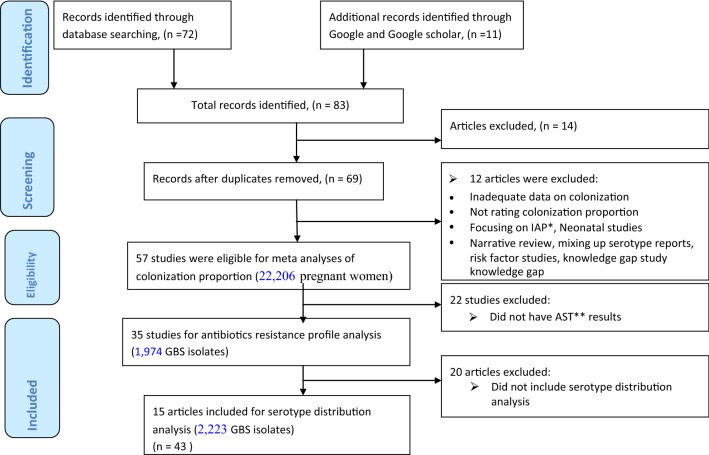
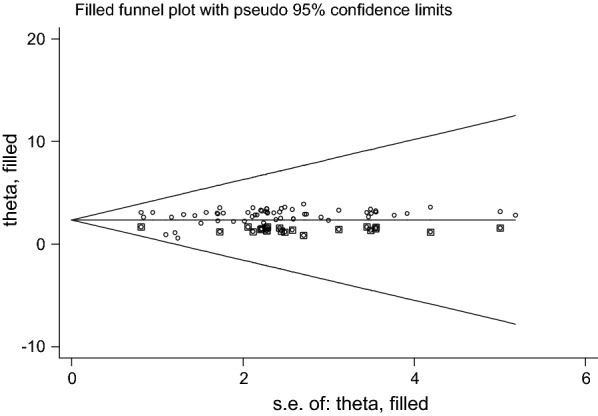
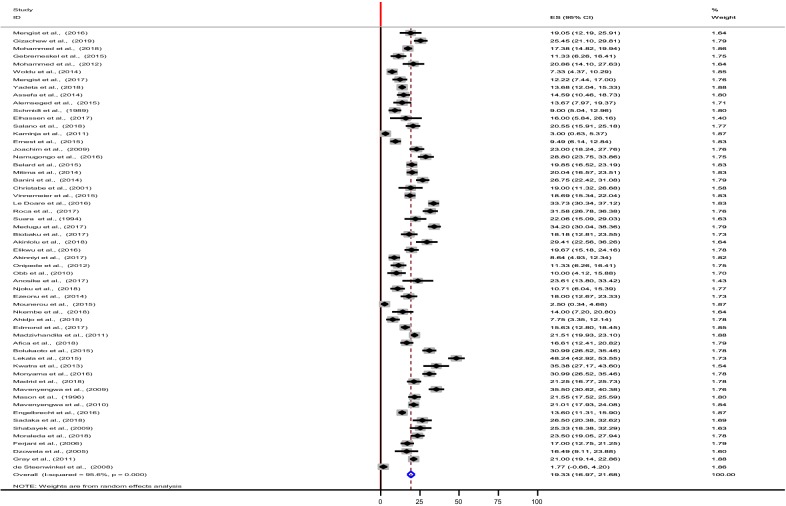
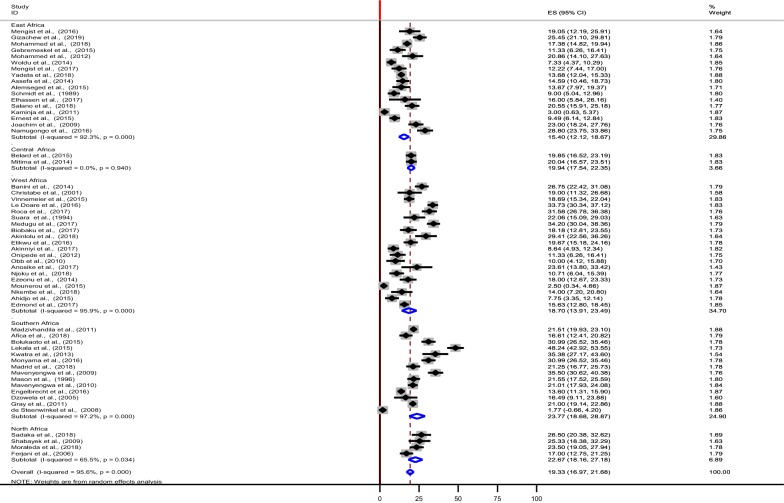
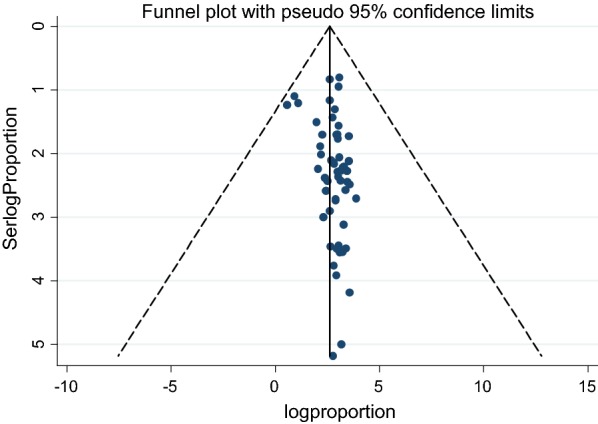
Eighty-three articles were assessed, of which 57 studies conducted in five sub-regions with 21 countries (22,206 pregnant women) met pre-specified inclusion criteria. The overall estimate of recto-vaginal colonization was 19.3% (95% CI 16.9, 21.7). The highest estimate was observed in Southern Africa, 23.8% (95% CI 18.7, 28.9), followed by Northern Africa, 22.7% (95% CI 18.2, 27.2) while the lowest was driven from the Eastern Africa, 15.4% (95% CI 12.1, 18.7). Considerable heterogeneity across and within regions, sampling site, screening methods and countries (I > 75%); and the publication bias were observed (p = 0.031). GBS showed the highest resistance to tetracycline. Resistance to penicillin, amoxicillin, chloramphenicol, ampicillin, ceftriaxone, ciprofloxacin, erythromycin, vancomycin and clindamycin also observed. The V, III, Ia, Ib, and II serotypes altogether were accounted 91.8% in the African studies.
The pooled estimate of the maternal colonization with GBS was 19.3% which is equivalent with other many primary and review reports worldwide. The most antibiotic resistance estimate was recorded in the tetracycline followed by penicillin. Five serotypes were the most prevalent in Africa and more data on the antibiotic résistance and serotype distribution patterns are needed from developing countries to devise the effective preventive measures. In addition, the antibiotic susceptibility test methods used in the Africa shall be assessed for its quality. Trial registration Prospero Registration Number CRD42018094525.
母婴直肠阴道定植的无乳链球菌(B 组链球菌或 GBS)是围产期 GBS 病最常见的途径。为了制定广泛的疫苗,我们需要了解母体定植、抗生素耐药性和血清型特征。然而,在非洲,这些情况还没有得到评估。本荟萃分析旨在确定在非洲报道的 GBS 定植、抗生素耐药性和血清型特征的汇总流行率。
从 1989 年至 2019 年 1 月 31 日,从 Medline/PubMed、EMBASE、HINARI 在线数据库、期刊和作者请求中检索到潜在相关研究。通过 Google 和 Google Scholar 从灰色文献中检索未发表的研究。使用随机效应模型计算汇总估计值。进行亚组分析以调查亚区域、采样地点和国家的定植负担。使用文字、森林图和表格来呈现汇总估计值。使用 I 统计量评估异质性。
评估了 83 篇文章,其中 57 项研究来自五个亚区域的 21 个国家(22206 名孕妇),符合预先指定的纳入标准。直肠阴道定植的总体估计值为 19.3%(95%CI 16.9,21.7)。最高的估计值来自南部非洲,为 23.8%(95%CI 18.7,28.9),其次是北部非洲,为 22.7%(95%CI 18.2,27.2),而最低的来自东部非洲,为 15.4%(95%CI 12.1,18.7)。在区域内和区域间、采样地点、筛查方法和国家之间存在相当大的异质性(I>75%);并且存在发表偏倚(p=0.031)。GBS 对四环素的耐药性最高。还观察到对青霉素、阿莫西林、氯霉素、氨苄西林、头孢曲松、环丙沙星、红霉素、万古霉素和克林霉素的耐药性。在非洲的研究中,V、III、Ia、Ib 和 II 型血清型总共占 91.8%。
GBS 母婴定植的汇总估计值为 19.3%,与世界上其他许多原始和综述报告相当。记录到的最抗生素耐药性估计值是四环素,其次是青霉素。在非洲,有五个血清型最为常见,发展中国家需要更多关于抗生素耐药性和血清型分布模式的数据,以制定有效的预防措施。此外,还需要评估非洲使用的抗生素敏感性测试方法的质量。试验注册 Prospero 注册号 CRD42018094525。