Key Laboratory of Proteomics, Dalian Medical University, Dalian 116044, China.
Institute of Cancer Stem Cell, Dalian Medical University, Dalian 116044, China.
EBioMedicine. 2019 Apr;42:311-325. doi: 10.1016/j.ebiom.2019.03.045. Epub 2019 Mar 25.
Non-small cell lung cancer (NSCLC) is the most common type of lung cancer with a poor prognosis. We previously found that protein disulfide isomerase family 6 (PDIA6) is upregulated in lung squamous cell carcinoma (LSCC). This study aimed to elucidate the clinical relevance, biological functions, and molecular mechanisms of PDIA6 in NSCLC.
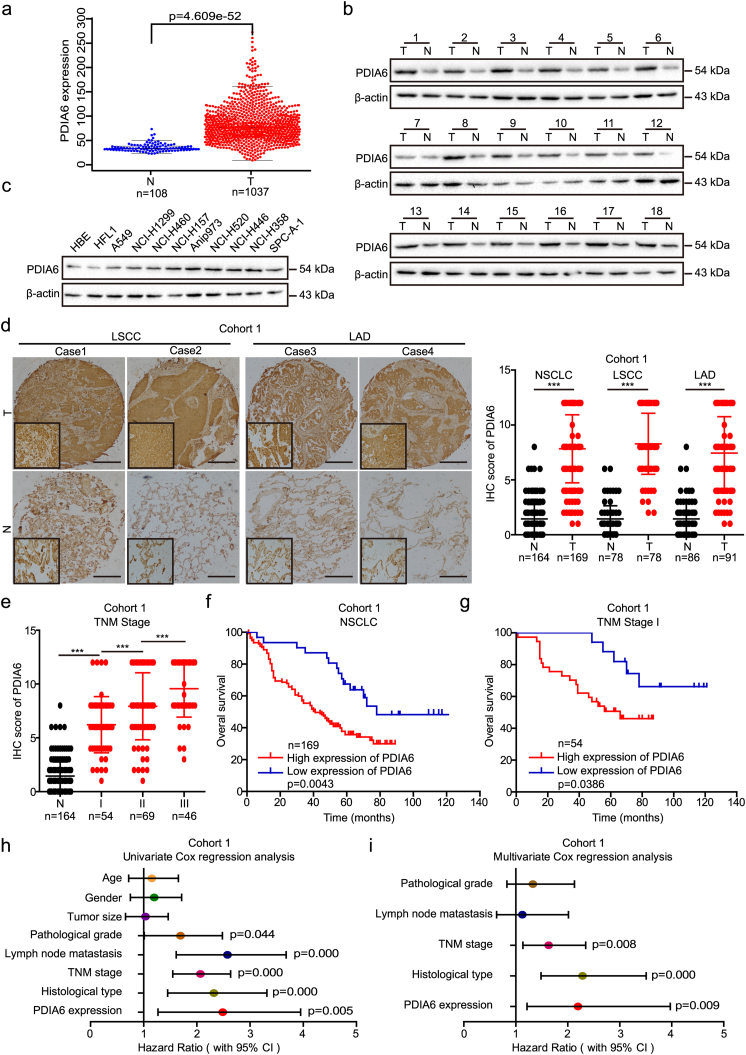
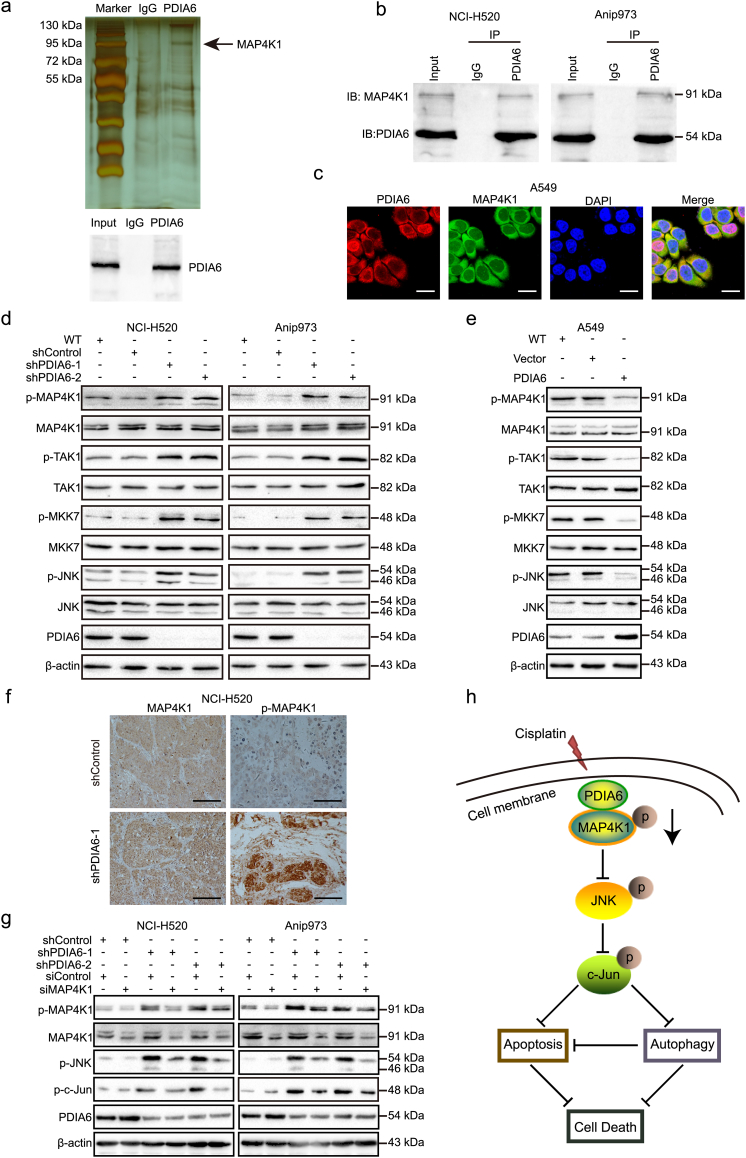
The expression of PDIA6 in NSCLC was assessed using the TCGA database, western blotting, and immunohistochemistry. Correlations of PDIA6 expression with clinicopathological and survival features were evaluated. The functions of PDIA6 in regulating NSCLC cell growth, apoptosis, and autophagy were investigated using gain-and loss-of-function strategies in vitro or in vivo. The underlying molecular mechanisms of PDIA6 function were examined by human phospho-kinase array and co-immunoprecipitation.
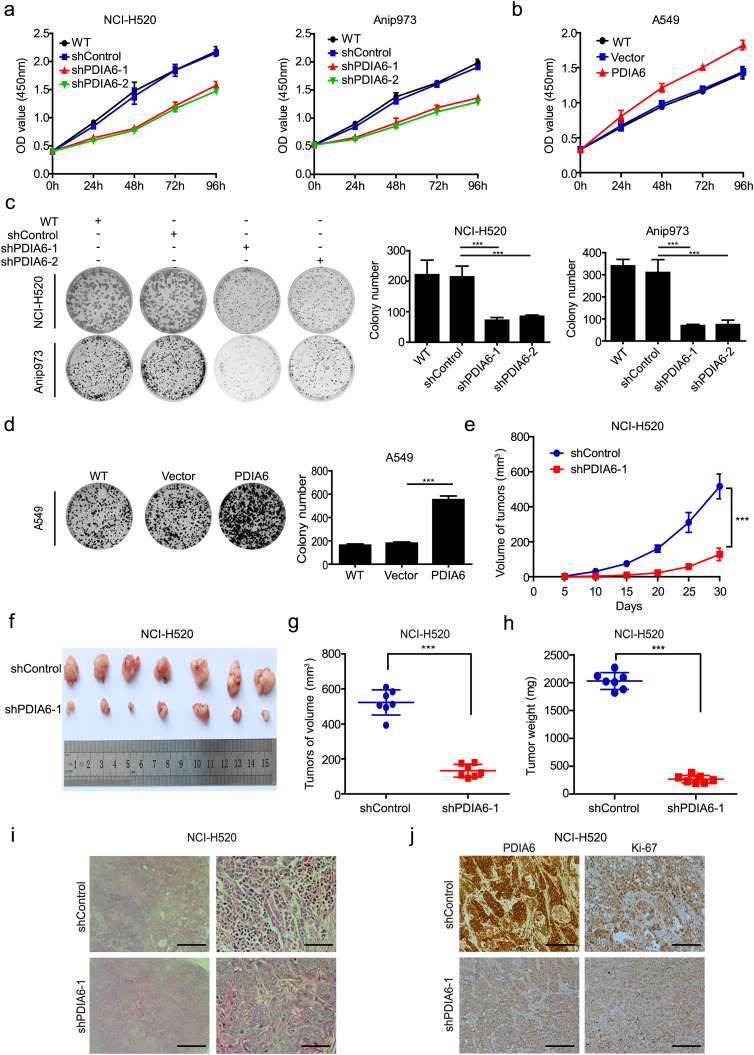
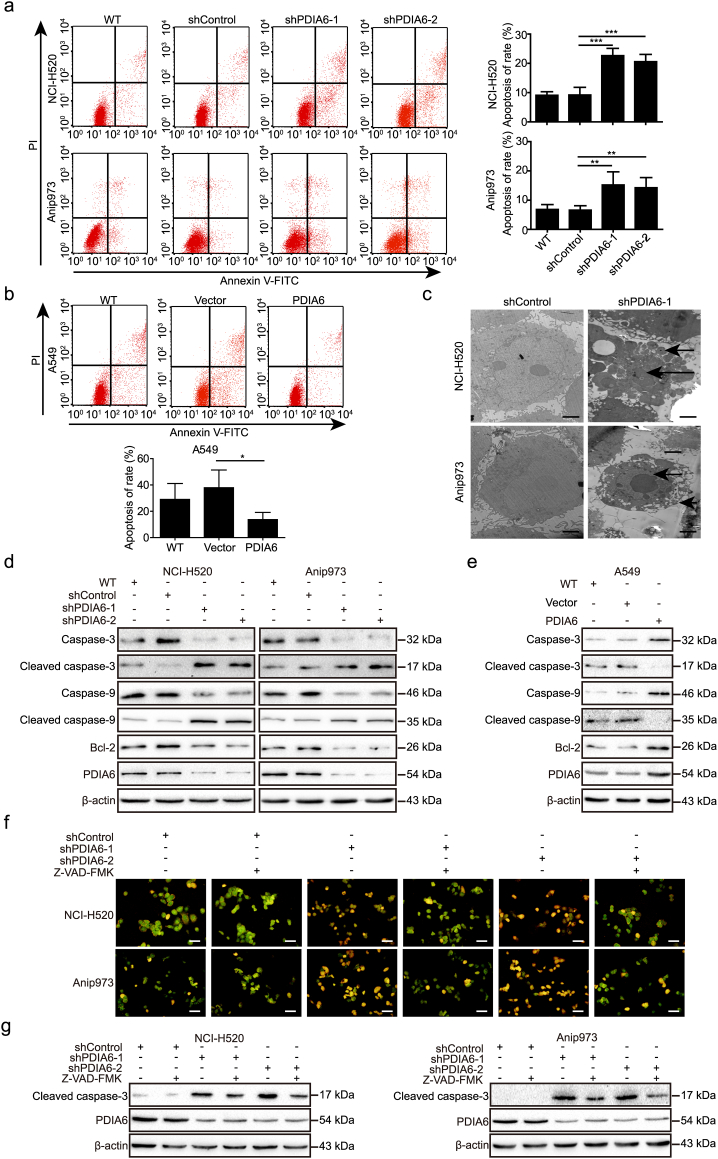
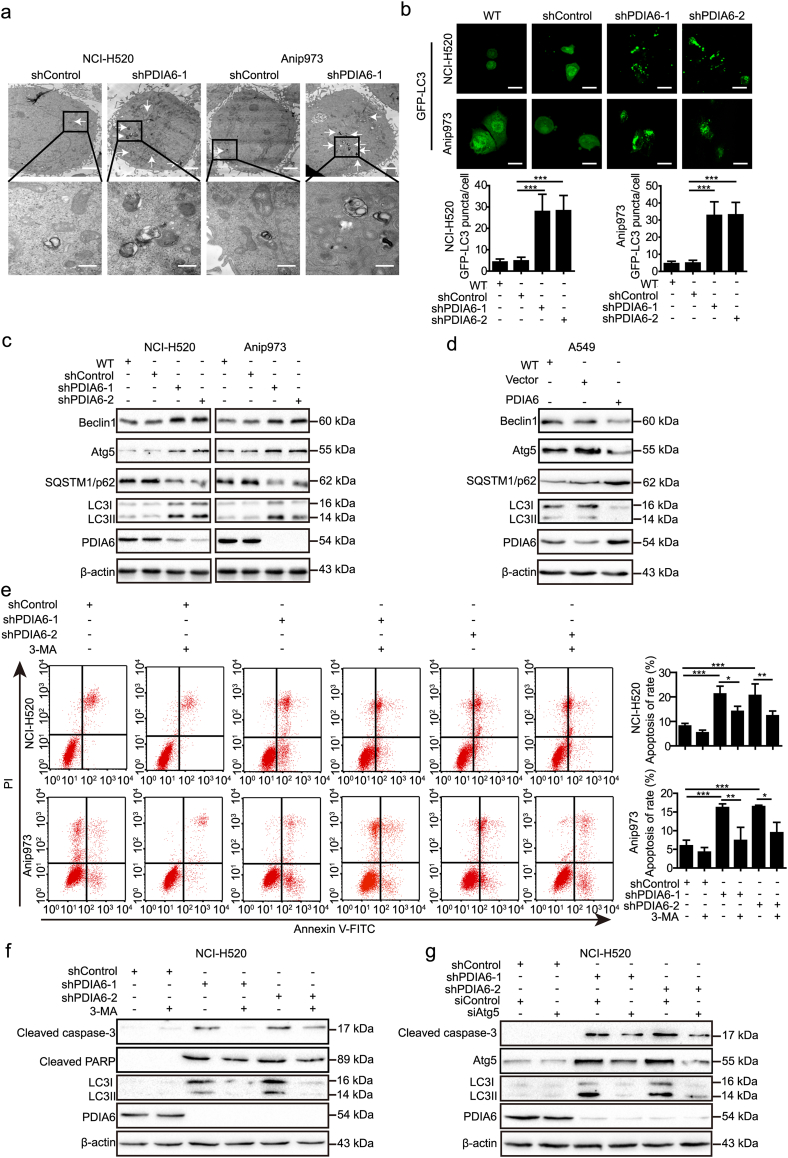
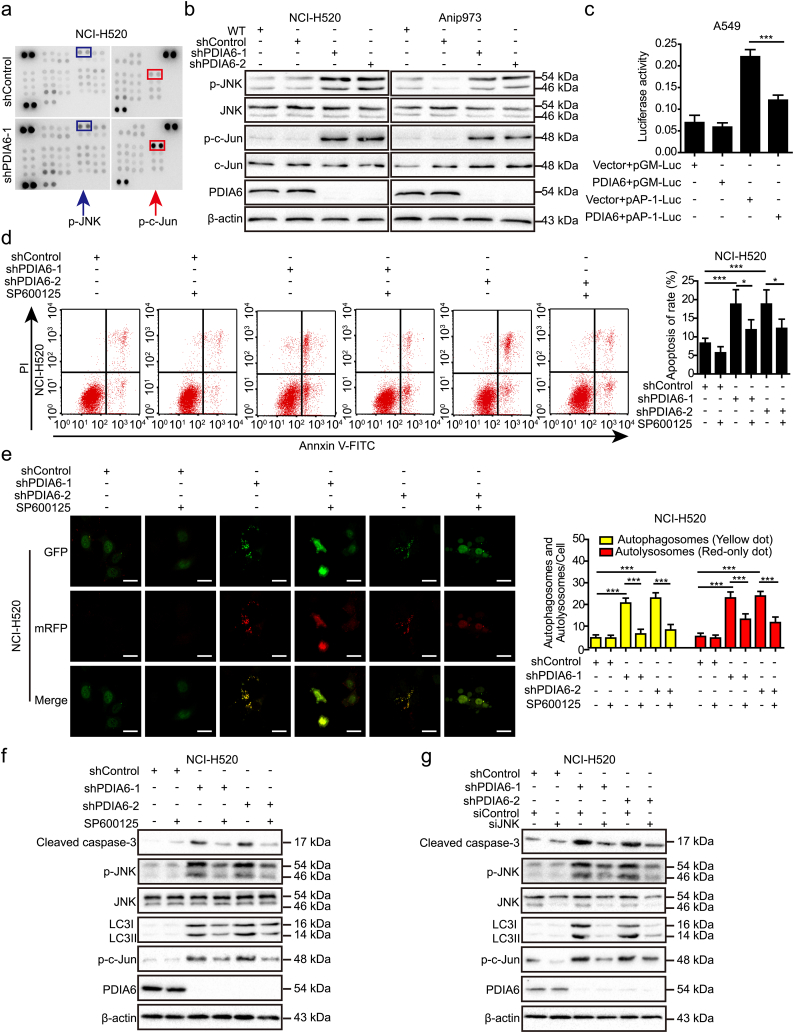
PDIA6 expression was upregulated in NSCLC compared with adjacent normal tissues, and the higher PDIA6 expression was correlated with poor prognosis. PDIA6 knockdown decreased NSCLC cell proliferation and increased cisplatin-induced intrinsic apoptosis, while PDIA6 overexpression had the opposite effects. In addition, PDIA6 regulated cisplatin-induced autophagy, and this contributed to PDIA6-mediated apoptosis in NSCLC cells. Mechanistically, PDIA6 reduced the phosphorylation levels of JNK and c-Jun. Moreover, PDIA6 interacted with MAP4K1 and inhibited its phosphorylation, ultimately inhibiting the JNK/c-Jun signaling pathway.
PDIA6 is overexpressed in NSCLC and inhibits cisplatin-induced NSCLC cell apoptosis and autophagy via the MAP4K1/JNK/c-Jun signaling pathway, suggesting that PDIA6 may serve as a biomarker and therapeutic target for NSCLC patients. FUND: National Natural Science Foundation of China and Institutions of higher learning of innovation team from Liaoning province.
非小细胞肺癌(NSCLC)是最常见的肺癌类型,预后较差。我们之前发现,蛋白二硫键异构酶家族 6(PDIA6)在肺鳞状细胞癌(LSCC)中上调。本研究旨在阐明 PDIA6 在 NSCLC 中的临床相关性、生物学功能和分子机制。
使用 TCGA 数据库、western blot 和免疫组织化学评估 NSCLC 中 PDIA6 的表达。评估 PDIA6 表达与临床病理和生存特征的相关性。通过体外或体内的 gain-and loss-of-function 策略研究 PDIA6 调节 NSCLC 细胞生长、凋亡和自噬的功能。通过人磷酸激酶阵列和共免疫沉淀检测 PDIA6 功能的潜在分子机制。
与相邻正常组织相比,NSCLC 中 PDIA6 的表达上调,较高的 PDIA6 表达与预后不良相关。PDIA6 敲低降低了 NSCLC 细胞的增殖并增加了顺铂诱导的内在凋亡,而 PDIA6 过表达则产生相反的效果。此外,PDIA6 调节顺铂诱导的自噬,这有助于 PDIA6 介导的 NSCLC 细胞凋亡。机制上,PDIA6 降低了 JNK 和 c-Jun 的磷酸化水平。此外,PDIA6 与 MAP4K1 相互作用并抑制其磷酸化,最终抑制 JNK/c-Jun 信号通路。
PDIA6 在 NSCLC 中过表达,通过 MAP4K1/JNK/c-Jun 信号通路抑制顺铂诱导的 NSCLC 细胞凋亡和自噬,提示 PDIA6 可能作为 NSCLC 患者的生物标志物和治疗靶点。
国家自然科学基金和辽宁省高等学校创新团队支持计划。