Department of Neurology, Union Hospital, Tongji Medical College, Huazhong University of Science and Technology, Wuhan 430022, China.
Department of Dermatology, Wuhan No.1 Hospital, Tongji Medical College, Huazhong University of Science and Technology, Wuhan 430022, China.
Neural Plast. 2019 Feb 21;2019:6724903. doi: 10.1155/2019/6724903. eCollection 2019.
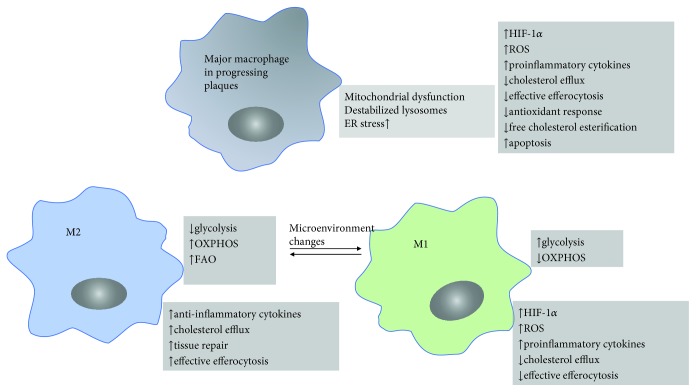
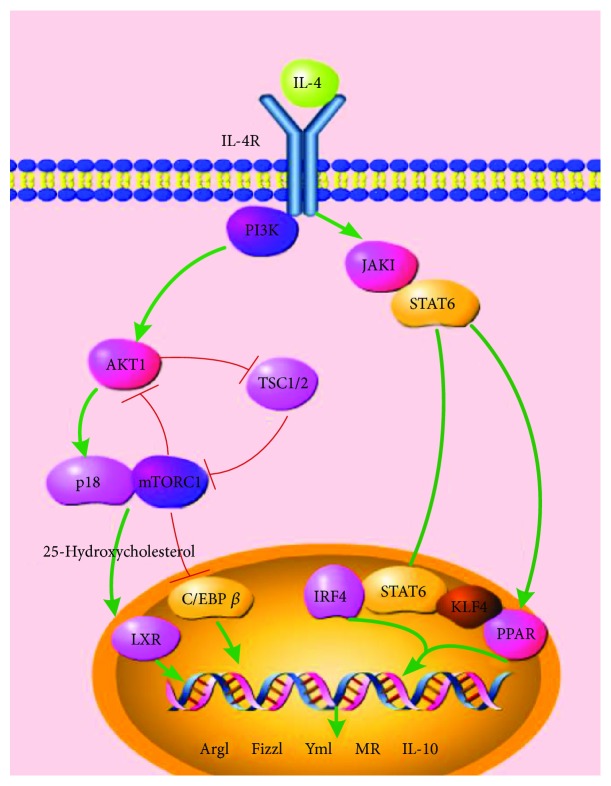
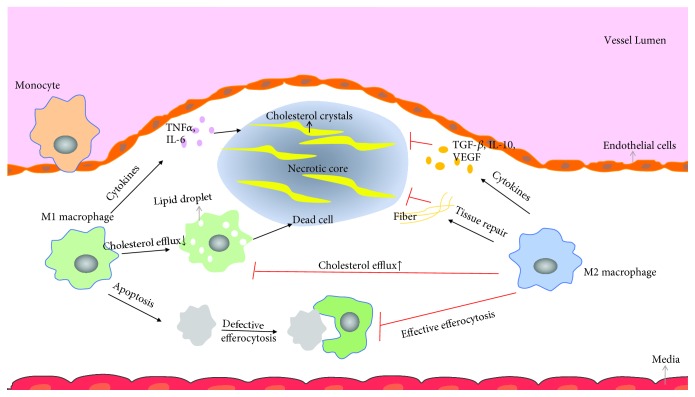
Atherosclerosis is a chronic progressive inflammation course, which could induce life-threatening diseases such as stroke and myocardial infarction. Optimal medical treatments for atherosclerotic risk factors with current antihypertensive and lipid-lowering drugs (for example, statins) are widely used in clinical practice. However, many patients with established disease still continue to have recurrent cardiovascular events in spite of treatment with a state-of-the-art therapy. Atherosclerotic cardiovascular disease (ASCVD) remains the leading cause of mortality worldwide. Hence, current treatment of atherosclerosis is still far from being satisfactory. Recently, M2 macrophages have been found associated with atherosclerosis regression. The M2 phenotype can secrete anti-inflammatory factors such as IL-10 and TGF-, promote tissue remodeling and repairing through collagen formation, and clear dying cells and debris by efferocytosis. Therefore, modulators targeting macrophages' polarization to the M2 phenotype could be another promising treatment strategy for atherosclerosis. Two main signaling pathways, the Akt/mTORC/LXR pathway and the JAK/STAT6 pathway, are found playing important roles in M2 polarization. In addition, researchers have reported several potential approaches to modulate M2 polarization. Inhibiting or activating some kinds of enzymes, affecting transcription factors, or acting on several membrane receptors could regulate the polarization of the M2 phenotype. Besides, biomolecules, for example vitamin D, were found to affect the process of M2 polarization. Pomegranate juice could promote M2 polarization via unclear mechanism. In this review, we will discuss how M2 macrophages affect atherosclerosis regression, signal transduction in M2 polarization, and outline potential targets and compounds that affect M2 polarization, thus controlling the progress of atherosclerosis.
动脉粥样硬化是一种慢性进行性炎症过程,可引发危及生命的疾病,如中风和心肌梗死。目前广泛应用于临床实践的降压和降脂药物(例如他汀类药物)是治疗动脉粥样硬化危险因素的最佳药物。然而,许多已确诊疾病的患者尽管接受了最先进的治疗,但仍继续发生心血管事件复发。动脉粥样硬化性心血管疾病(ASCVD)仍然是全球死亡的主要原因。因此,目前对动脉粥样硬化的治疗仍远未令人满意。最近,研究发现 M2 巨噬细胞与动脉粥样硬化消退有关。M2 表型可分泌抗炎因子,如 IL-10 和 TGF-β,通过胶原蛋白形成促进组织重塑和修复,并通过吞噬作用清除死亡细胞和碎片。因此,针对巨噬细胞向 M2 表型极化的调节剂可能是动脉粥样硬化的另一种有前途的治疗策略。两条主要信号通路,即 Akt/mTORC/LXR 通路和 JAK/STAT6 通路,被发现在 M2 极化中发挥重要作用。此外,研究人员还报告了几种潜在的调节 M2 极化的方法。抑制或激活某些酶、影响转录因子或作用于几种膜受体都可以调节 M2 表型的极化。此外,生物分子,例如维生素 D,被发现影响 M2 极化过程。石榴汁可能通过不明机制促进 M2 极化。在这篇综述中,我们将讨论 M2 巨噬细胞如何影响动脉粥样硬化消退、M2 极化中的信号转导以及概述影响 M2 极化的潜在靶点和化合物,从而控制动脉粥样硬化的进展。