Sadia-Kacou Cécile Agnimou Malanfoua, Yobo Céline Mabot, Adja Maurice Akré, Sagna André Barembaye, Ndille Emmanuel Elanga, Poinsignon Anne, Tano Yao, Koudou Benjamin Guibehi, Remoue Franck
Institut Pierre Richet (IPR), Institut National de Santé Publique (INSP), 01 BP 1500, Bouaké 01, Côte d'Ivoire.
UFR Biosciences, Université Félix Houphouët Boigny, 08 3800, Abidjan 08, Côte d'Ivoire.
Parasite Epidemiol Control. 2019 Mar 7;5:e00102. doi: 10.1016/j.parepi.2019.e00102. eCollection 2019 May.
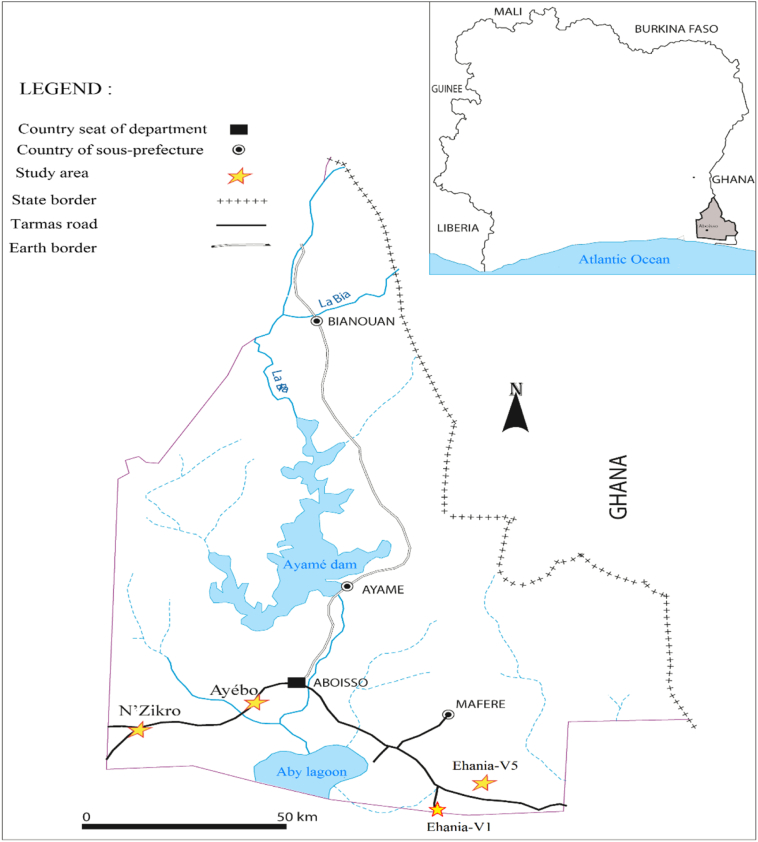
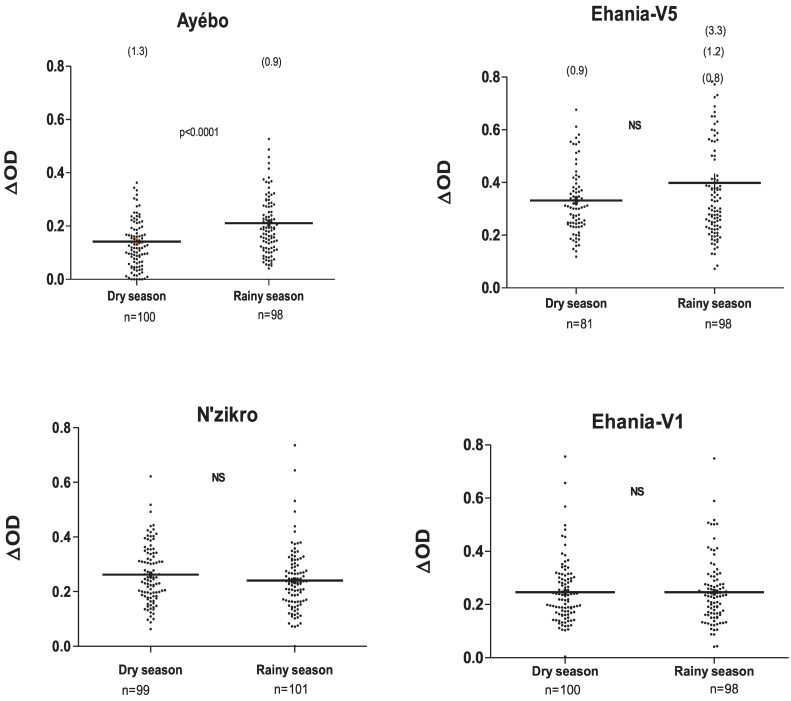
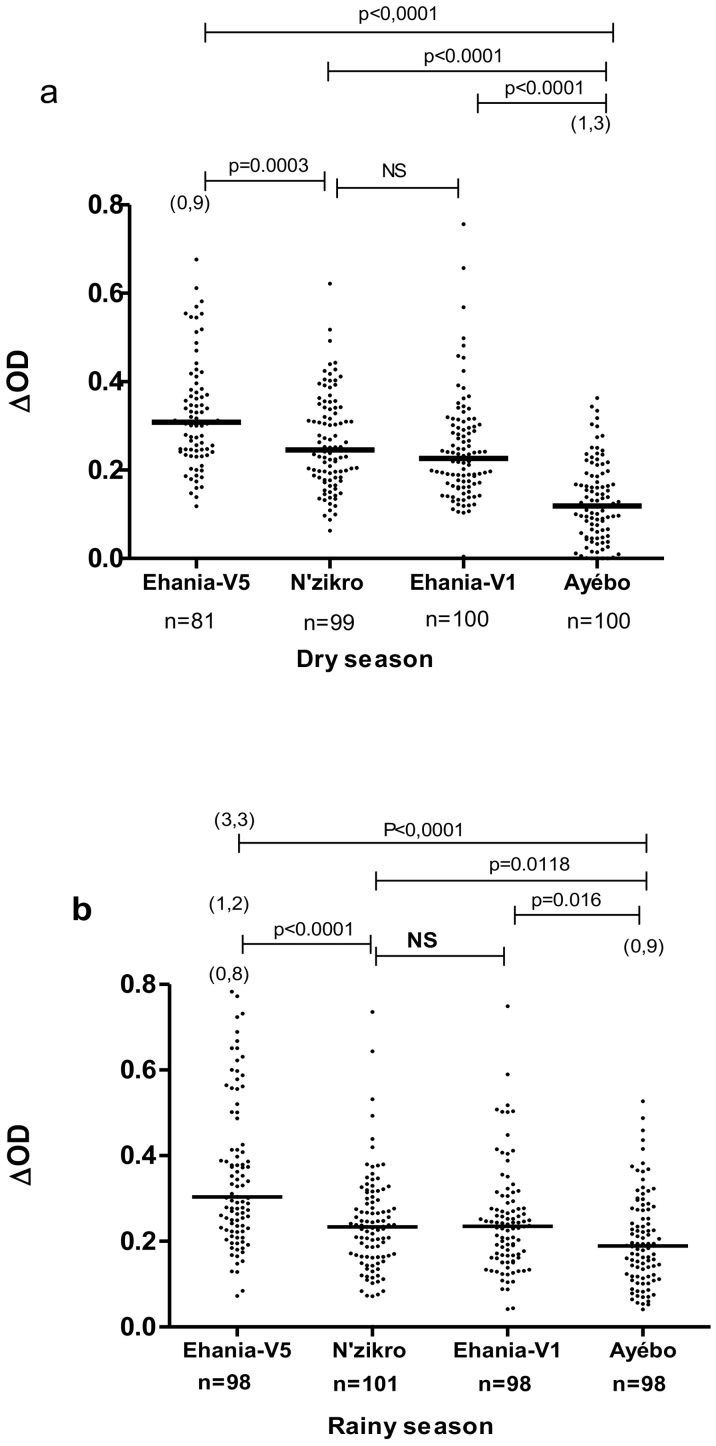
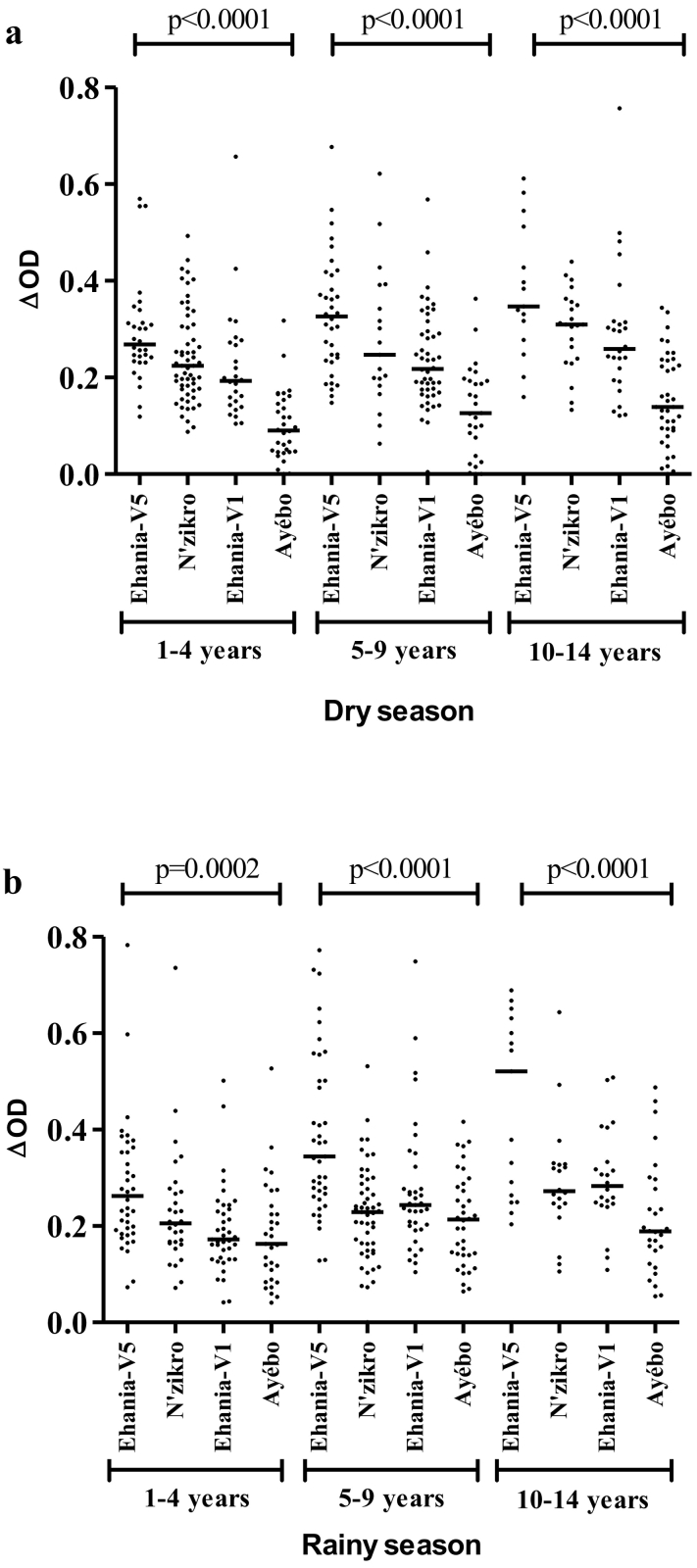
Environmental changes related to agricultural practices and activities can impact malaria transmission. In the objective to evaluate this impact on the human-vector contact, the level of human exposure to vector bites was assess by an immuno-epidemiological indicator based on the assessment of the human IgG antibody response to the gSG6-P1 salivary peptide, previously validated as a pertinent biomarker. Two cross-sectional surveys were carried out in the dry and rainy season in three villages with intensive agricultural plantations (N'Zikro with rubber cultivation, Ehania-V5 and Ehania-V1 with palm oil exploitation) and in a control village without plantations (Ayébo). Overall, 775 blood samples were collected in filter papers from children aged 1 to 14 years-old for immunological analysis by ELISA. The IgG levels to the gSG6-P1 salivary peptide significantly differed between studied villages both in the dry and the rainy seasons ( < 0.0001) and were higher in agricultural villages compared to the control area. In particular, the level of specific IgG in Ehania-V5, located in the heart of palm oil plantations, was higher compared to other agricultural villages. Interestingly, the level of specific IgG levels classically increased between the dry and the rainy season in the control village (P < 0.0001) whereas it remained high in the dry season as observed in the rainy season in agricultural villages. The present study indicated that rubber and oil palm plantations could maintain a high level of human exposure to bites during both the dry and rainy seasons. These agricultural activities could therefore represent a permanent factor of malaria transmission risk.
与农业生产活动相关的环境变化会影响疟疾传播。为评估这种变化对人与媒介接触的影响,基于对人免疫球蛋白G(IgG)抗体对gSG6-P1唾液肽反应的评估,采用一种免疫流行病学指标来评估人类暴露于媒介叮咬的水平,该指标先前已被验证为一个相关生物标志物。在旱季和雨季,对三个有集约化农业种植园的村庄(种植橡胶的恩齐克罗村、从事棕榈油开采的埃尼亚维亚5村和埃尼亚维亚1村)以及一个没有种植园的对照村庄(阿耶博村)开展了两项横断面调查。总体而言,从1至14岁儿童的滤纸样本中采集了775份血样,通过酶联免疫吸附测定(ELISA)进行免疫分析。在旱季和雨季,各研究村庄中针对gSG6-P1唾液肽的IgG水平均存在显著差异(<0.0001),且农业村庄中的该水平高于对照地区。特别是,位于棕榈油种植园中心地带的埃尼亚维亚5村的特异性IgG水平高于其他农业村庄。有趣的是,对照村庄中特异性IgG水平通常在旱季和雨季之间升高(P<0.0001),而在农业村庄中,旱季的该水平如在雨季时一样保持在高位。本研究表明,橡胶和油棕种植园在旱季和雨季期间均可使人维持较高的暴露于叮咬的水平。因此,这些农业活动可能是疟疾传播风险的一个持续因素。