Max Planck Florida Institute for Neuroscience, Jupiter, FL, USA.
Max Planck Florida Institute for Neuroscience, Jupiter, FL, USA.
Neuron. 2019 May 22;102(4):762-769.e4. doi: 10.1016/j.neuron.2019.03.010. Epub 2019 Mar 27.
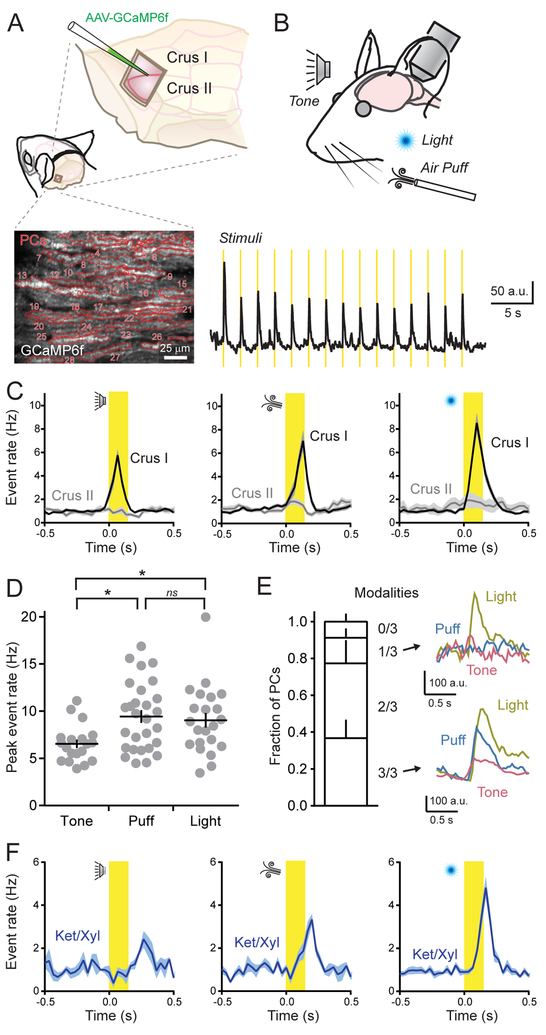
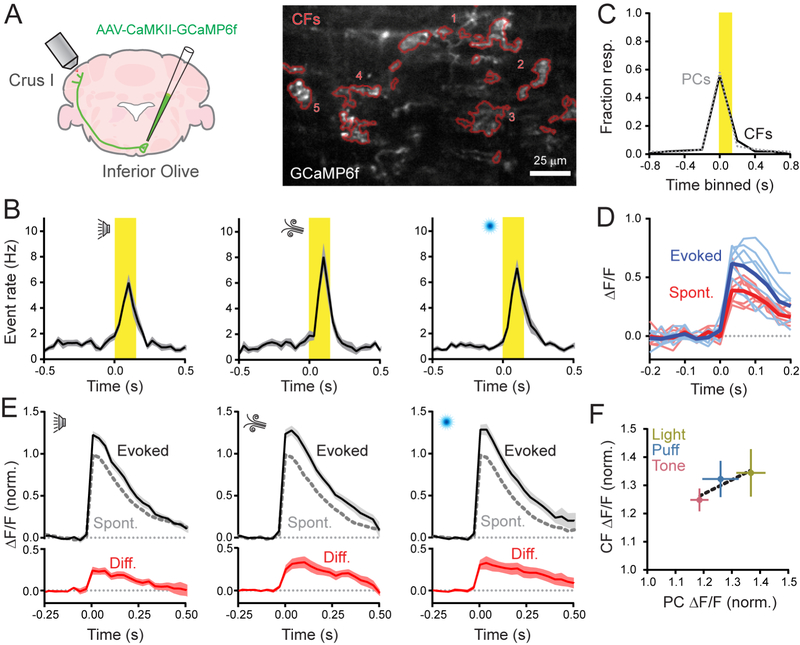
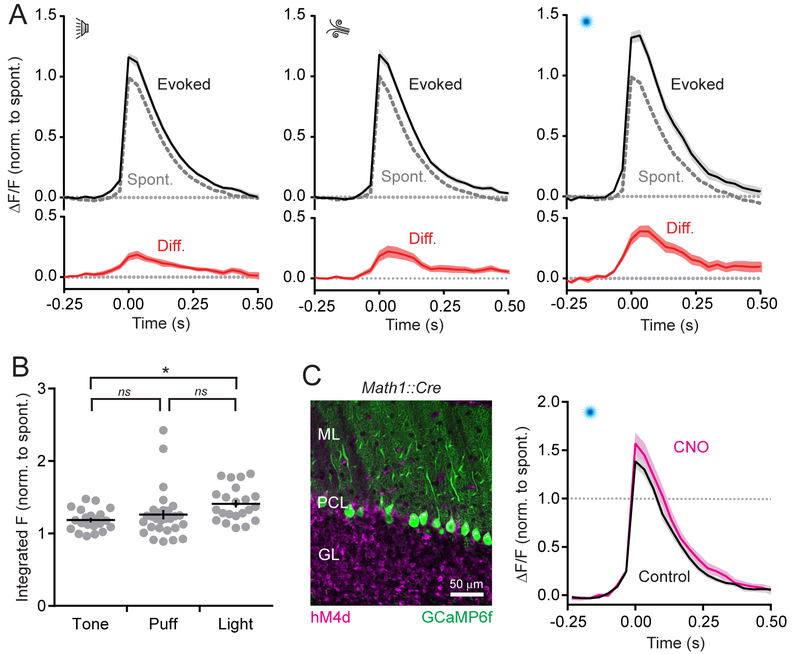
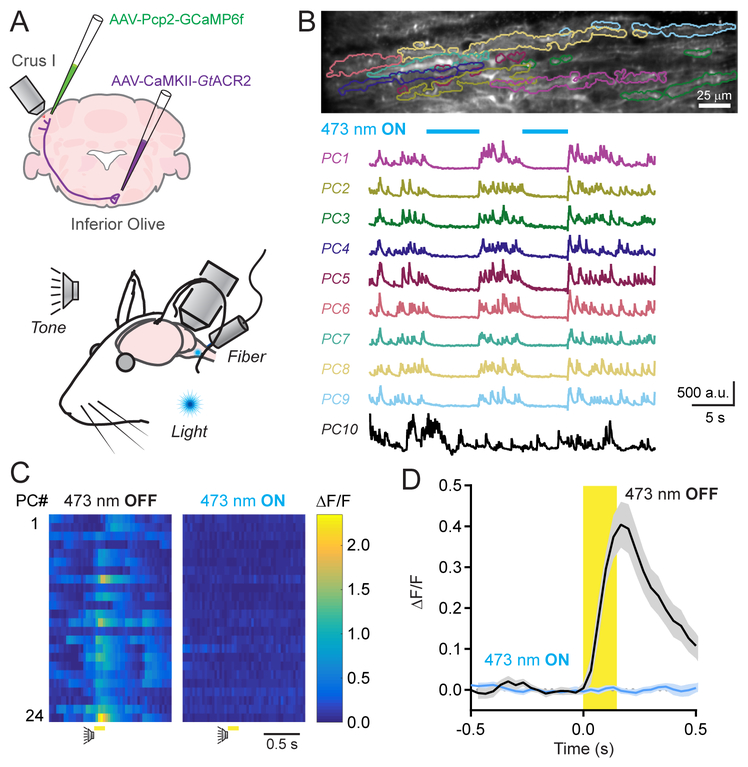
The brain must make sense of external stimuli to generate relevant behavior. We used a combination of in vivo approaches to investigate how the cerebellum processes sensory-related information. We found that the inferior olive encodes contexts of sensory-associated external cues in a graded manner, apparent in the presynaptic activity of their axonal projections (climbing fibers) in the cerebellar cortex. Individual climbing fibers were broadly responsive to different sensory modalities but relayed sensory-related information to the cortex in a lobule-dependent manner. Purkinje cell dendrites faithfully transformed this climbing fiber activity into dendrite-wide Ca signals without a direct contribution from the mossy fiber pathway. These results demonstrate that the size of climbing-fiber-evoked Ca signals in Purkinje cell dendrites is largely determined by the firing level of climbing fibers. This coding scheme emphasizes the overwhelming role of the inferior olive in generating salient signals useful for instructing plasticity and learning.
大脑必须理解外部刺激,以产生相关的行为。我们使用了体内方法的组合来研究小脑如何处理与感觉相关的信息。我们发现,下橄榄以分级的方式对感觉相关的外部线索的环境进行编码,这表现在其轴突投射( climbing fibers )在小脑皮层中的突触前活动中。单个 climbing fibers 对不同的感觉模态广泛反应,但以小叶依赖的方式将感觉相关的信息传递到皮层。浦肯野细胞树突忠实地将这种 climbing fiber 活动转化为树突广泛的 Ca 信号,而没有苔藓纤维途径的直接贡献。这些结果表明,浦肯野细胞树突中 climbing fiber 诱发的 Ca 信号的大小在很大程度上取决于 climbing fibers 的放电水平。这种编码方案强调了下橄榄在产生有用的显著信号以指导可塑性和学习方面的压倒性作用。