Zhao Junting, Meng Zhaopeng, Wei Leyi, Sun Changming, Zou Quan, Su Ran
School of Computer Software, College of Intelligence and Computing, Tianjin University, Tianjin, China.
Tianjin University of Traditional Chinese Medicine, Tianjin, China.
Front Neurosci. 2019 Mar 14;13:144. doi: 10.3389/fnins.2019.00144. eCollection 2019.
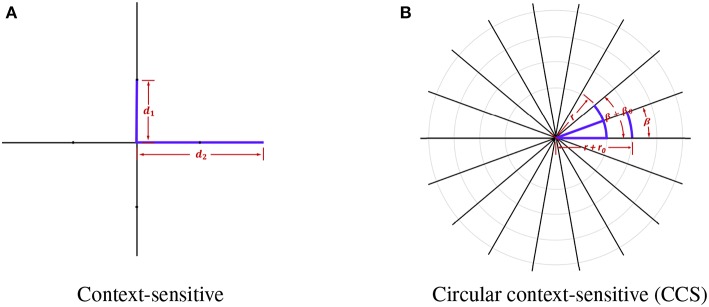
Gliomas have the highest mortality rate and prevalence among the primary brain tumors. In this study, we proposed a supervised brain tumor segmentation method which detects diverse tumoral structures of both high grade gliomas and low grade gliomas in magnetic resonance imaging (MRI) images based on two types of features, the gradient features and the context-sensitive features. Two-dimensional gradient and three-dimensional gradient information was fully utilized to capture the gradient change. Furthermore, we proposed a circular context-sensitive feature which captures context information effectively. These features, totally 62, were compressed and optimized based on an mRMR algorithm, and random forest was used to classify voxels based on the compact feature set. To overcome the class-imbalanced problem of MRI data, our model was trained on a class-balanced region of interest dataset. We evaluated the proposed method based on the 2015 Brain Tumor Segmentation Challenge database, and the experimental results show a competitive performance.
神经胶质瘤在原发性脑肿瘤中死亡率和发病率最高。在本研究中,我们提出了一种监督式脑肿瘤分割方法,该方法基于梯度特征和上下文敏感特征这两种特征,在磁共振成像(MRI)图像中检测高级别神经胶质瘤和低级别神经胶质瘤的各种肿瘤结构。充分利用二维梯度和三维梯度信息来捕捉梯度变化。此外,我们提出了一种圆形上下文敏感特征,可有效捕捉上下文信息。这些总共62个特征基于mRMR算法进行压缩和优化,并使用随机森林基于紧凑特征集对体素进行分类。为了克服MRI数据的类别不平衡问题,我们的模型在类别平衡的感兴趣区域数据集上进行训练。我们基于2015年脑肿瘤分割挑战赛数据库对所提出的方法进行了评估,实验结果显示出具有竞争力的性能。