Department of Genetics, Faculty of Science, Shahrekord University, Shahrekord, Iran.
Department of Biochemistry and Molecular Biology, LSUHSC School of Medicine, New Orleans, USA.
Mol Cancer. 2019 Apr 2;18(1):75. doi: 10.1186/s12943-019-0991-5.
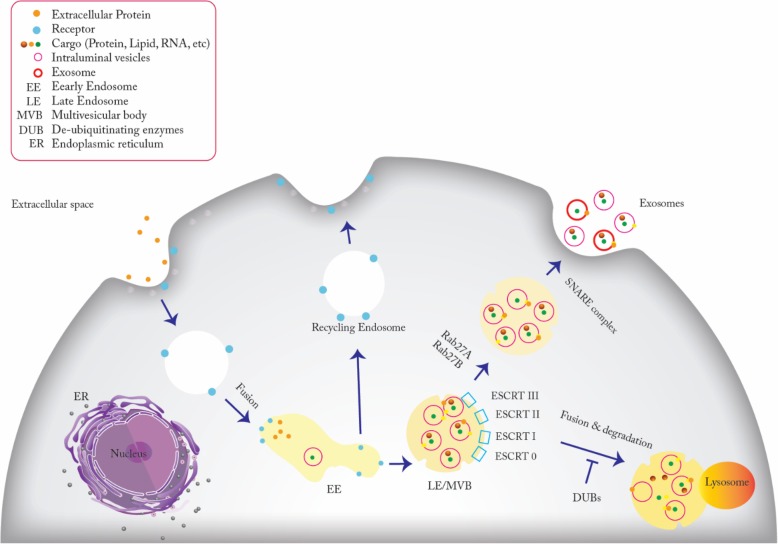
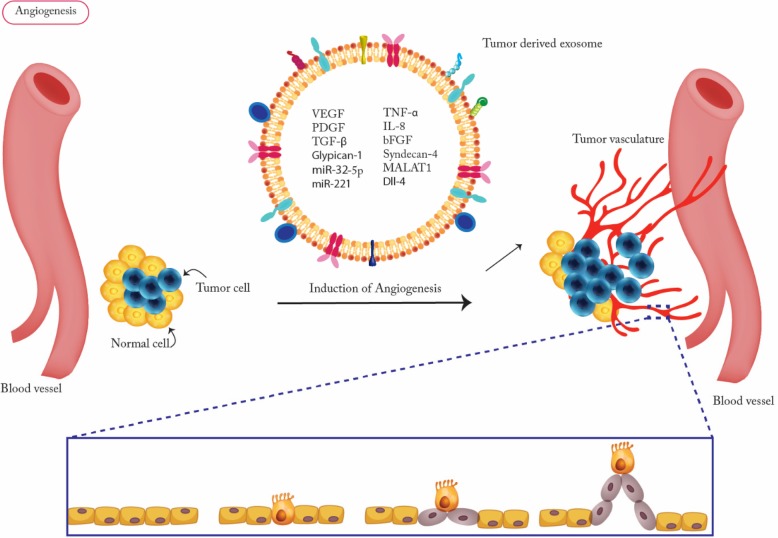
Tumor-derived exosomes (TDEs) participate in formation and progression of different cancer processes, including tumor microenvironment (TME) remodeling, angiogenesis, invasion, metastasis and drug-resistance. Exosomes initiate or suppress various signaling pathways in the recipient cells via transmitting heterogeneous cargoes. In this review we discuss exosome biogenesis, exosome mediated metastasis and chemoresistance. Furthermore, tumor derived exosomes role in tumor microenvironment remodeling, and angiogenesis is reviewed. Also, exosome induction of epithelial mesenchymal transition (EMT) is highlighted. More importantly, we discuss extensively how exosomes regulate drug resistance in several cancers. Thus, understanding exosome biogenesis, their contents and the molecular mechanisms and signaling pathways that are responsible for metastasis and drug-resistance mediated by TDEs may help to devise novel therapeutic approaches for cancer progression particularly to overcome therapy-resistance and preventing metastasis as major factors of cancer mortality.
肿瘤衍生的外泌体(TDEs)参与了不同癌症过程的形成和进展,包括肿瘤微环境(TME)重塑、血管生成、侵袭、转移和耐药性。外泌体通过传递异质性货物在受体细胞中启动或抑制各种信号通路。在这篇综述中,我们讨论了外泌体的生物发生、外泌体介导的转移和化疗耐药性。此外,还回顾了肿瘤衍生外泌体在肿瘤微环境重塑和血管生成中的作用。还强调了外泌体诱导上皮间质转化(EMT)的作用。更重要的是,我们广泛讨论了外泌体如何调节几种癌症中的耐药性。因此,了解外泌体的生物发生、它们的内容以及负责 TDEs 介导的转移和耐药性的分子机制和信号通路,可能有助于设计针对癌症进展的新的治疗方法,特别是克服治疗耐药性和防止转移,因为转移是癌症死亡率的主要因素。