Tobío Araceli, Bandara Geethani, Morris Denise A, Kim Do-Kyun, O'Connell Michael P, Komarow Hirsh D, Carter Melody C, Smrz Daniel, Metcalfe Dean D, Olivera Ana
Mast Cell Biology Section, Laboratory of Allergic Diseases, National Institute of Allergy and Infectious Diseases, National Institutes of Health, Bethesda, MD, USA.
Genetics and Pathogenesis of Allergy Section, Laboratory of Allergic Diseases, National Institute of Allergy and Infectious Diseases, National Institutes of Health, Bethesda, MD, USA.
Haematologica. 2020 Jan;105(1):124-135. doi: 10.3324/haematol.2018.212126. Epub 2019 Apr 4.
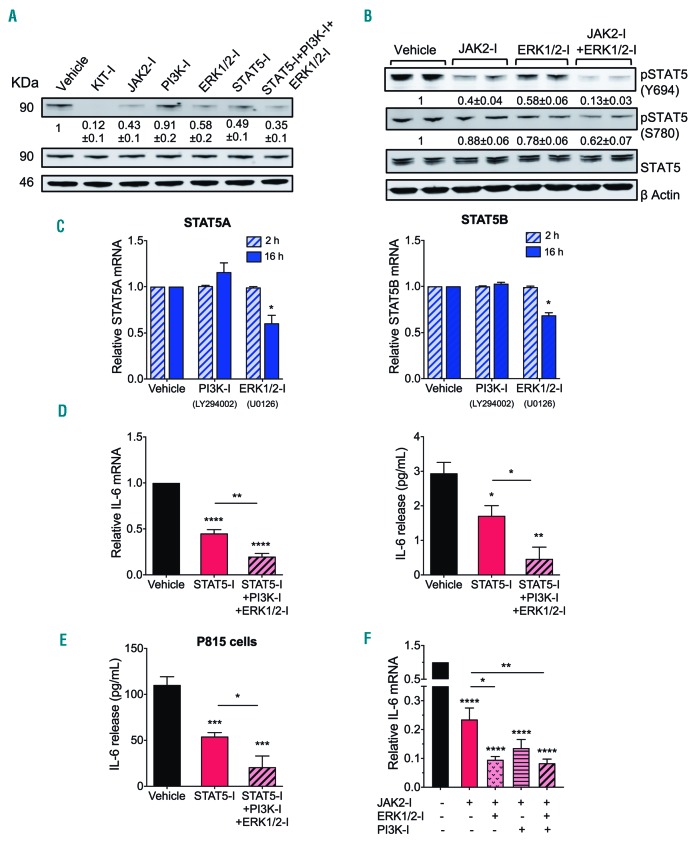
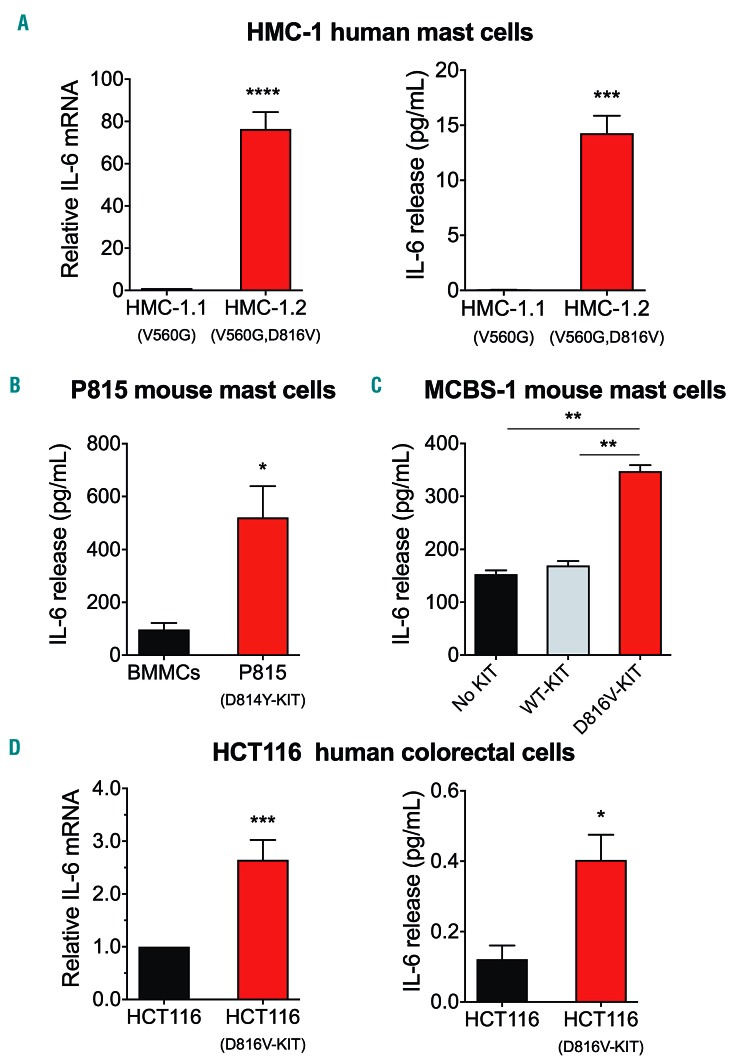
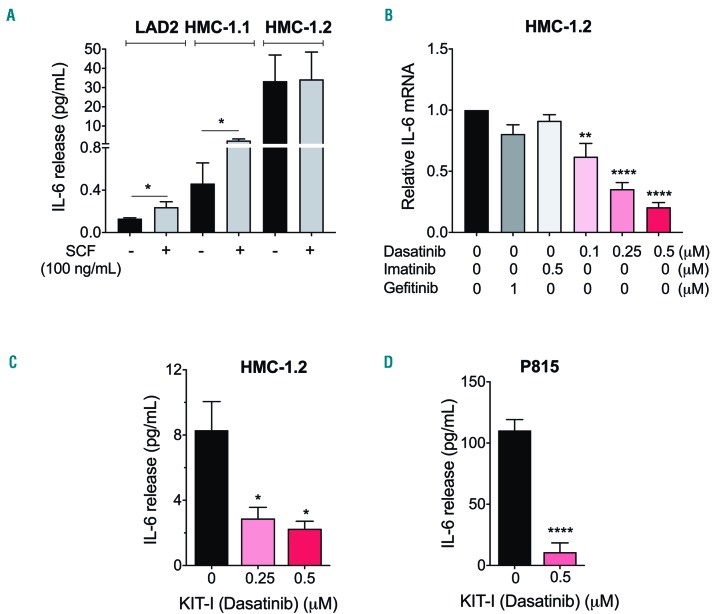
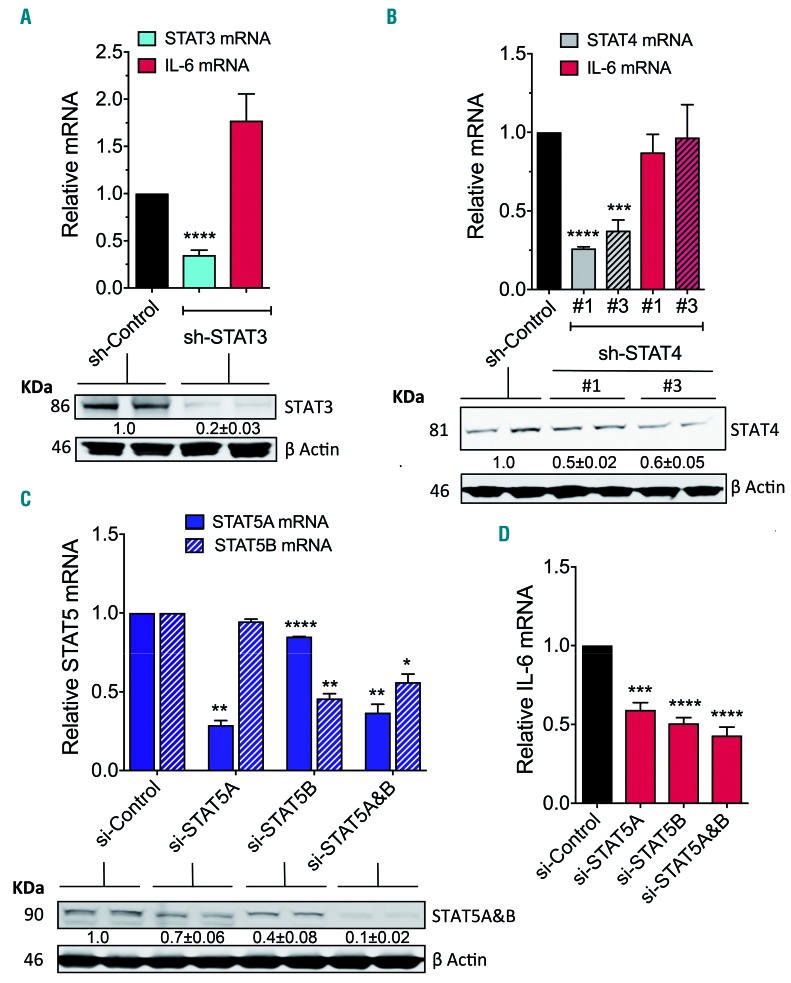
Persistent dysregulation of IL-6 production and signaling have been implicated in the pathology of various cancers. In systemic mastocytosis, increased serum levels of IL-6 associate with disease severity and progression, although the mechanisms involved are not well understood. Since systemic mastocytosis often associates with the presence in hematopoietic cells of a somatic gain-of-function variant in KIT, D816V-KIT, we examined its potential role in IL-6 upregulation. Bone marrow mononuclear cultures from patients with greater D816V allelic burden released increased amounts of IL-6 which correlated with the percentage of mast cells in the cultures. Intracellular IL-6 staining by flow cytometry and immunofluorescence was primarily associated with mast cells and suggested a higher percentage of IL-6 positive mast cells in patients with higher D816V allelic burden. Furthermore, mast cell lines expressing D816V-KIT, but not those expressing normal KIT or other KIT variants, produced constitutively high IL-6 amounts at the message and protein levels. We further demonstrate that aberrant KIT activity and signaling are critical for the induction of IL-6 and involve STAT5 and PI3K pathways but not STAT3 or STAT4. Activation of STAT5A and STAT5B downstream of D816V-KIT was mediated by JAK2 but also by MEK/ERK1/2, which not only promoted STAT5 phosphorylation but also its long-term transcription. Our study thus supports a role for mast cells and D816V-KIT activity in IL-6 dysregulation in mastocytosis and provides insights into the intracellular mechanisms. The findings contribute to a better understanding of the physiopathology of mastocytosis and suggest the importance of therapeutic targeting of these pathways.
白细胞介素-6(IL-6)产生和信号传导的持续失调与多种癌症的病理过程有关。在系统性肥大细胞增多症中,血清IL-6水平升高与疾病严重程度和进展相关,但其涉及的机制尚不清楚。由于系统性肥大细胞增多症常与造血细胞中存在KIT的体细胞功能获得性变体D816V-KIT相关,我们研究了其在IL-6上调中的潜在作用。来自D816V等位基因负担较重患者的骨髓单核细胞培养物释放出更多的IL-6,这与培养物中肥大细胞的百分比相关。通过流式细胞术和免疫荧光进行的细胞内IL-6染色主要与肥大细胞相关,并且表明D816V等位基因负担较高的患者中IL-6阳性肥大细胞的百分比更高。此外,表达D816V-KIT的肥大细胞系,而不是表达正常KIT或其他KIT变体的肥大细胞系,在信使和蛋白质水平上持续产生高水平的IL-6。我们进一步证明,异常的KIT活性和信号传导对于IL-6的诱导至关重要,并且涉及STAT5和PI3K途径,但不涉及STAT3或STAT4。D816V-KIT下游的STAT5A和STAT5B的激活由JAK2介导,但也由MEK/ERK1/2介导,这不仅促进了STAT5的磷酸化,还促进了其长期转录。因此,我们的研究支持肥大细胞和D816V-KIT活性在肥大细胞增多症中IL-6失调中的作用,并提供了对细胞内机制的见解。这些发现有助于更好地理解肥大细胞增多症的生理病理学,并表明靶向这些途径进行治疗的重要性。