Communicable Diseases Policy Research Group, Department of Global Health and Development, London School of Hygiene and Tropical Medicine, London, United Kingdom; Faculty of Public Health, Mahidol University, Bangkok, Thailand.
Center of Infectiology Christophe Mérieux of Laos, Vientiane, Laos.
PLoS One. 2019 Apr 5;14(4):e0214207. doi: 10.1371/journal.pone.0214207. eCollection 2019.
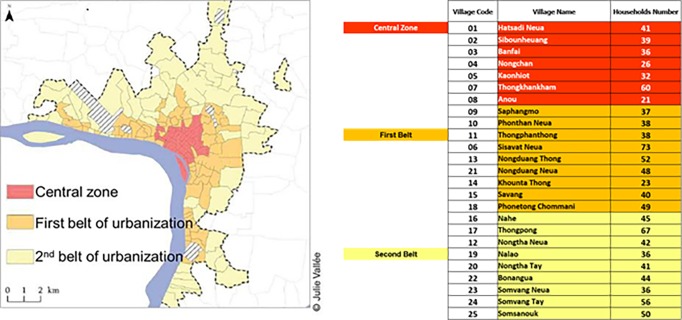
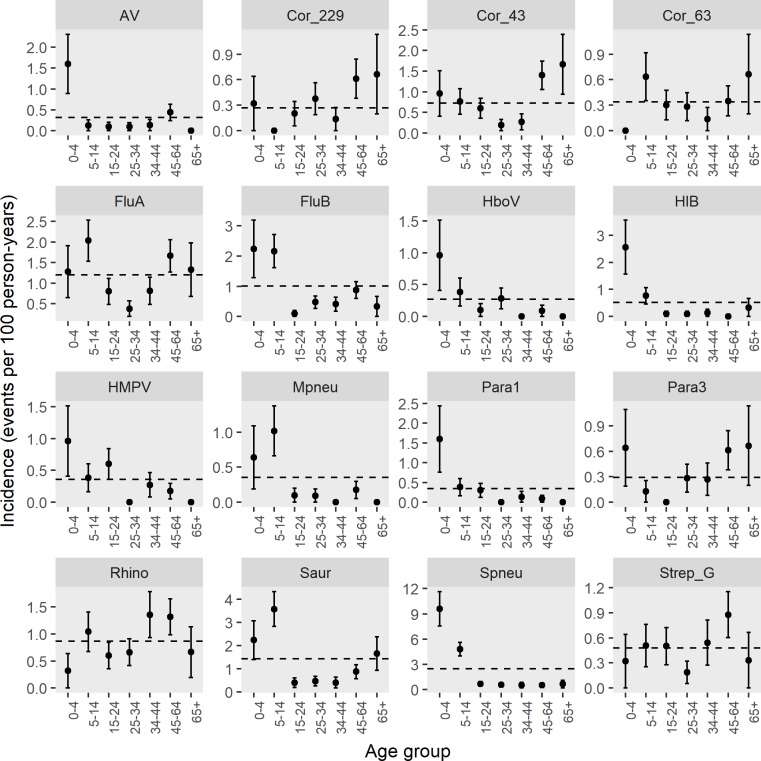
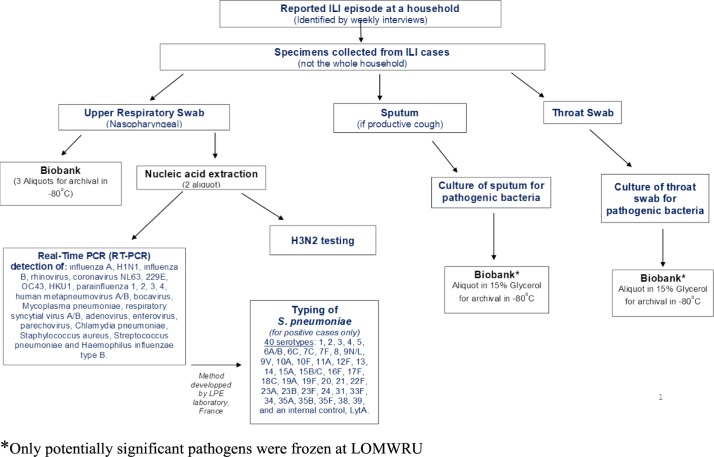
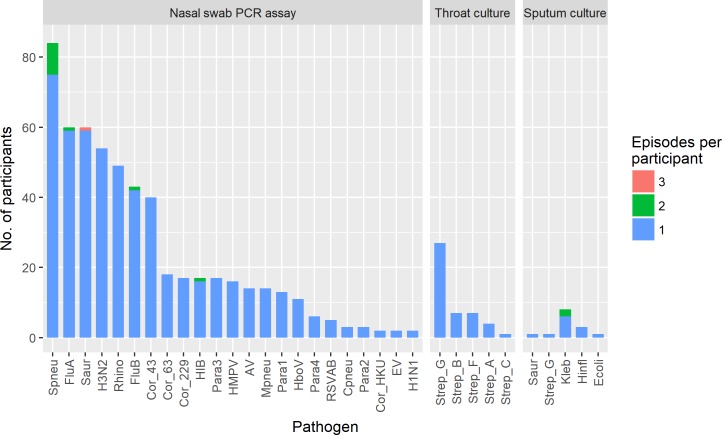
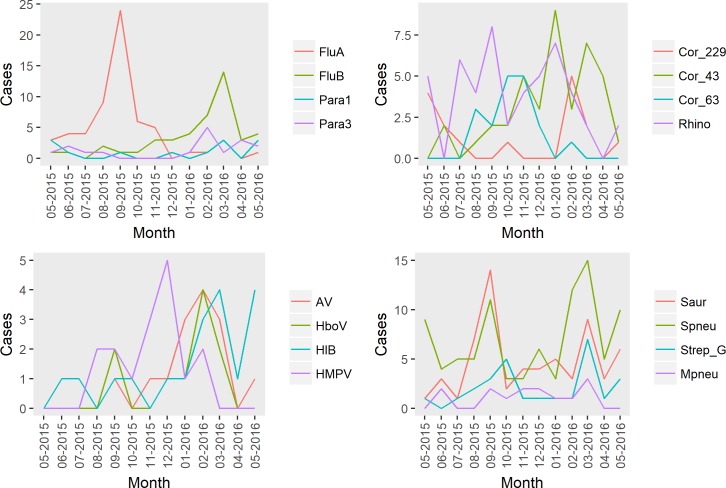
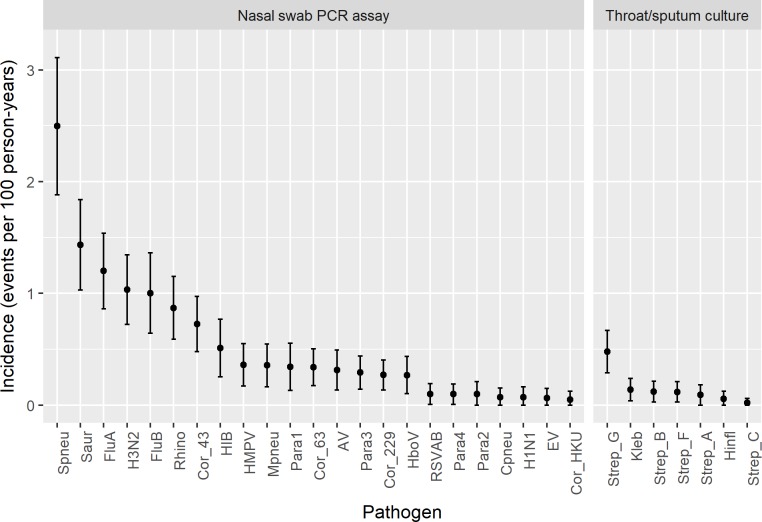
Respiratory diseases are a major contributor to morbidity and mortality in many tropical countries, including Lao PDR. However, little has been published regarding viral or bacterial pathogens that can contribute to influenza-like illness (ILI) in a community setting. We report on the results of a community-based surveillance that prospectively monitored the incidence of ILI and its causative pathogens in Vientiane capital in Lao PDR. A cohort of 995 households, including 4885 study participants, were followed-up between May 2015 and May 2016. Nasopharyngeal swabs, throat swabs, and sputum specimens were collected from ILI cases identified through active case-finding. Real-Time PCR was used to test nasopharyngeal swabs for 21 respiratory pathogens, while throat and sputum samples were subjected to bacterial culture. Generalized linear mixed models were used to assess potential risk factors for associations with ILI. In total, 548 episodes of ILI were reported among 476 (9.7%) of the study participants and 330 (33.2%) of the study households. The adjusted estimated incidence of ILI within the study area was 10.7 (95%CI: 9.4-11.9) episodes per 100 person-years. ILI was significantly associated with age group (p<0.001), sex (p<0.001), and number of bedrooms (p = 0.04) in multivariate analysis. In 548 nasopharyngeal swabs, the most commonly detected potential pathogens were Streptococcus pneumoniae (17.0%), Staphylococcus aureus (11.3%), influenza A (11.1%; mostly subtype H3N2), rhinovirus (7.5%), and influenza B (8.0%). Streptococci were isolated from 42 (8.6%) of 536 throat swabs, most (27) of which were Lancefield Group G. Co-infections were observed in 132 (24.1%) of the 548 ILI episodes. Our study generated valuable data on respiratory disease burden and patterns of etiologies associated with community-acquired acute respiratory illness Laos. Establishment of a surveillance strategy in Laos to monitor trends in the epidemiology and burden of acute respiratory infections is required to minimize their impact on human health.
呼吸道疾病是许多热带国家(包括老挝人民民主共和国)发病率和死亡率的主要原因。然而,关于在社区环境中导致流感样疾病(ILI)的病毒或细菌病原体,发表的研究很少。我们报告了一项基于社区的监测结果,该监测前瞻性地监测了老挝万象市ILI 的发病率及其病原体。在 2015 年 5 月至 2016 年 5 月期间,对 995 户家庭(包括 4885 名研究参与者)进行了随访。从通过主动病例发现确定的 ILI 病例中采集鼻咽拭子、咽喉拭子和痰标本。使用实时 PCR 检测鼻咽拭子中的 21 种呼吸道病原体,同时对咽喉和痰样本进行细菌培养。使用广义线性混合模型评估与 ILI 相关的潜在危险因素。共有 476 名(9.7%)研究参与者和 330 户(33.2%)家庭报告了 548 例 ILI 发作。研究区域内调整后的 ILI 估计发病率为每 100 人年 10.7(95%CI:9.4-11.9)例。在多变量分析中,ILI 与年龄组(p<0.001)、性别(p<0.001)和卧室数量(p=0.04)显著相关。在 548 份鼻咽拭子中,最常检测到的潜在病原体是肺炎链球菌(17.0%)、金黄色葡萄球菌(11.3%)、甲型流感(11.1%;主要为 H3N2 亚型)、鼻病毒(7.5%)和乙型流感(8.0%)。从 536 份咽喉拭子中分离出链球菌 42 株(8.6%),其中 27 株为 Lancefield 组 G。在 548 例 ILI 发作中观察到合并感染 132 例(24.1%)。我们的研究提供了有关呼吸道疾病负担和与社区获得性急性呼吸道疾病相关病因模式的有价值数据。老挝需要建立监测策略来监测急性呼吸道感染的流行病学和负担趋势,以最大程度地减少其对人类健康的影响。