Departments of Neurology, Geriatric Research Education and Clinical Centerand, University of California, Los Angeles (UCLA), United States of America; Departments of Veterans Affairs Greater Los Angeles Healthcare System, Geriatric Research Education and Clinical Center, University of California, Los Angeles (UCLA), United States of America; Alzheimer's Translational Center, Veterans Administration (Research 151), Bldg. 114, Rm. 114-1, 11301 Wilshire Blvd, Los Angeles, CA 90073, United States of America.
Departments of Neurology, Geriatric Research Education and Clinical Centerand, University of California, Los Angeles (UCLA), United States of America; Departments of Veterans Affairs Greater Los Angeles Healthcare System, Geriatric Research Education and Clinical Center, University of California, Los Angeles (UCLA), United States of America.
Neurobiol Dis. 2019 Jul;127:432-448. doi: 10.1016/j.nbd.2019.02.015. Epub 2019 Apr 2.
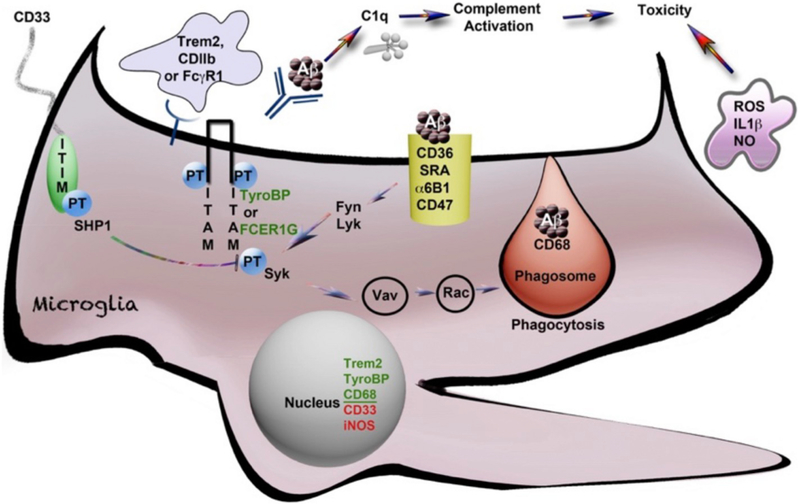
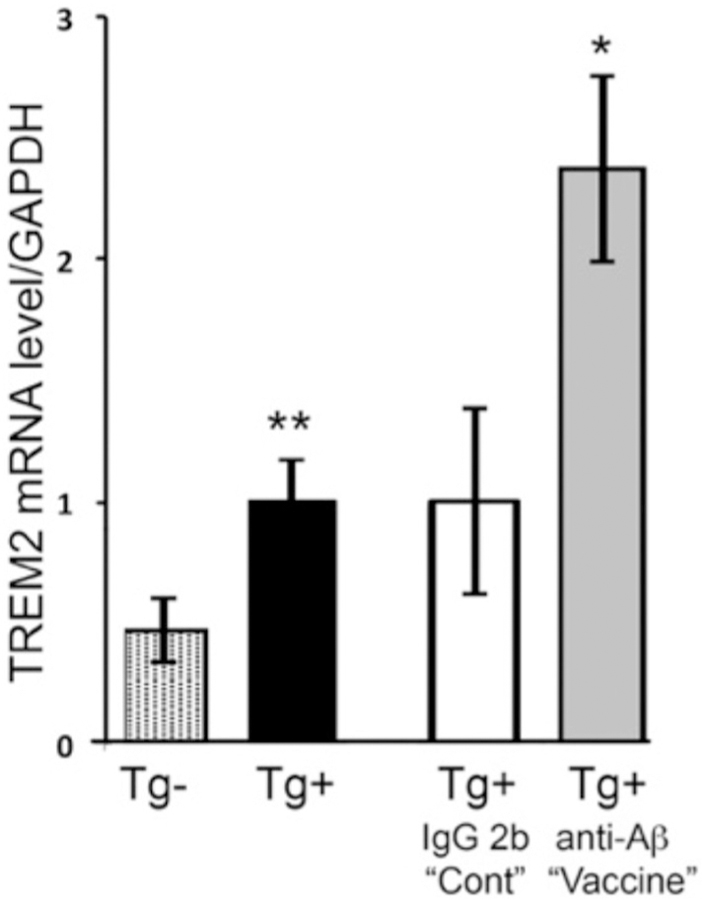
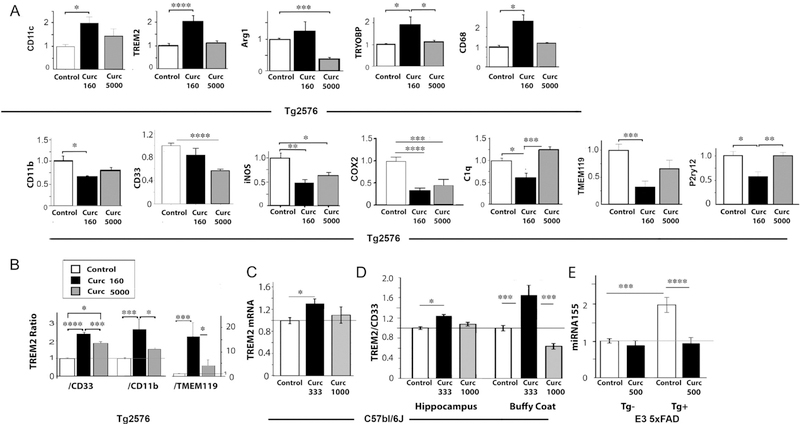
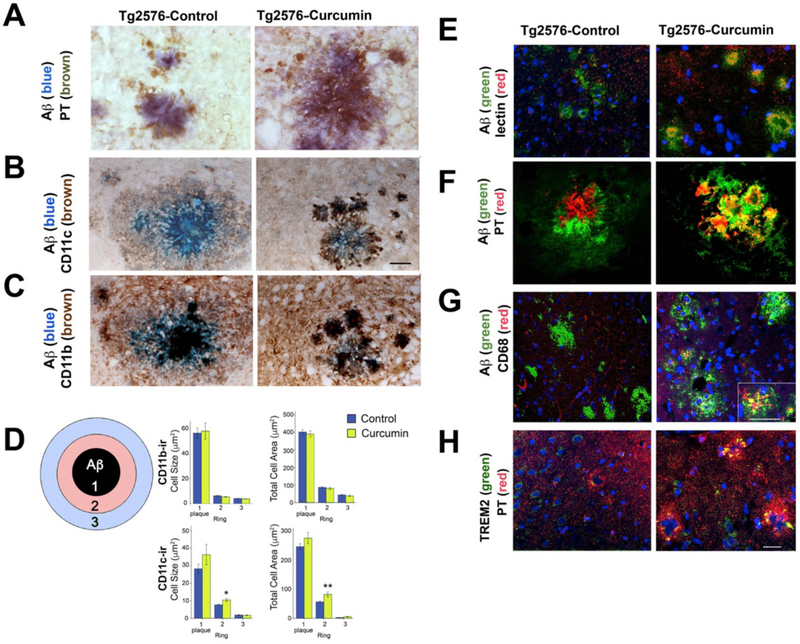
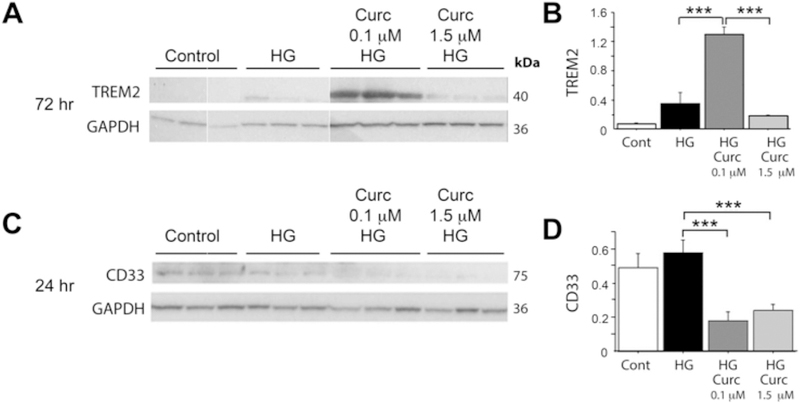
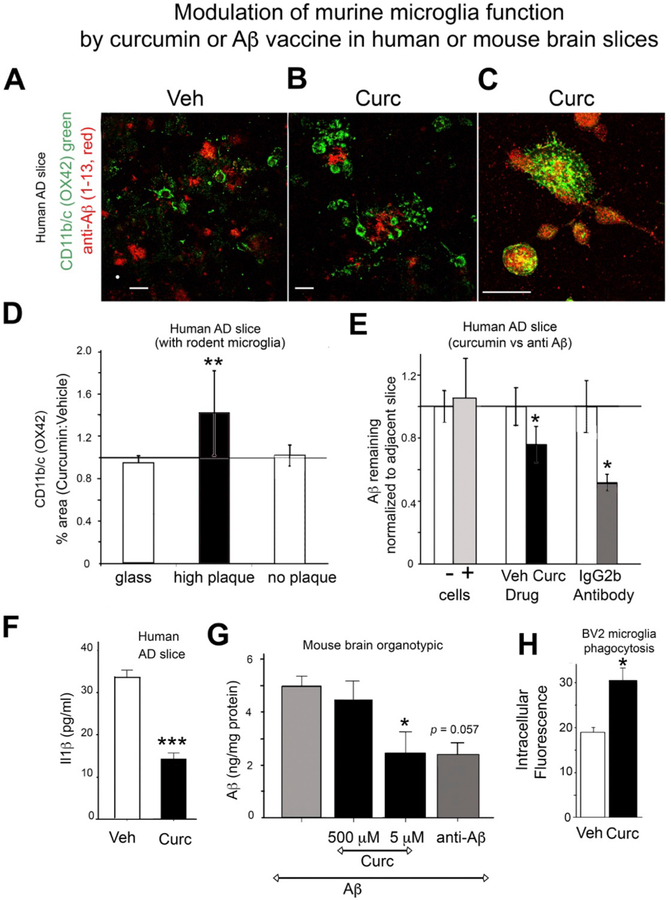
Alzheimer's disease (AD) genetics implies a causal role for innate immune genes, TREM2 and CD33, products that oppose each other in the downstream Syk tyrosine kinase pathway, activating microglial phagocytosis of amyloid (Aβ). We report effects of low (Curc-lo) and high (Curc-hi) doses of curcumin on neuroinflammation in APPsw transgenic mice. Results showed that Curc-lo decreased CD33 and increased TREM2 expression (predicted to decrease AD risk) and also increased TyroBP, which controls a neuroinflammatory gene network implicated in AD as well as phagocytosis markers CD68 and Arg1. Curc-lo coordinately restored tightly correlated relationships between these genes' expression levels, and decreased expression of genes characteristic of toxic pro-inflammatory M1 microglia (CD11b, iNOS, COX-2, IL1β). In contrast, very high dose curcumin did not show these effects, failed to clear amyloid plaques, and dysregulated gene expression relationships. Curc-lo stimulated microglial migration to and phagocytosis of amyloid plaques both in vivo and in ex vivo assays of sections of human AD brain and of mouse brain. Curcumin also reduced levels of miR-155, a micro-RNA reported to drive a neurodegenerative microglial phenotype. In conditions without amyloid (human microglial cells in vitro, aged wild-type mice), Curc-lo similarly decreased CD33 and increased TREM2. Like curcumin, anti-Aβ antibody (also reported to engage the Syk pathway, increase CD68, and decrease amyloid burden in human and mouse brain) increased TREM2 in APPsw mice and decreased amyloid in human AD sections ex vivo. We conclude that curcumin is an immunomodulatory treatment capable of emulating anti-Aβ vaccine in stimulating phagocytic clearance of amyloid by reducing CD33 and increasing TREM2 and TyroBP, while restoring neuroinflammatory networks implicated in neurodegenerative diseases.
阿尔茨海默病(AD)的遗传学表明,先天免疫基因 TREM2 和 CD33 起着因果作用,它们在下游 Syk 酪氨酸激酶途径中相互拮抗,激活小胶质细胞对淀粉样蛋白(Aβ)的吞噬作用。我们报告了低(Curc-lo)和高(Curc-hi)剂量姜黄素对 APPsw 转基因小鼠神经炎症的影响。结果表明,Curc-lo 降低了 CD33 并增加了 TREM2 的表达(预计会降低 AD 风险),同时还增加了 TyroBP,后者控制着与 AD 相关的神经炎症基因网络以及吞噬标记物 CD68 和 Arg1。Curc-lo 协调地恢复了这些基因表达水平之间紧密相关的关系,并降低了有毒促炎 M1 小胶质细胞的特征基因(CD11b、iNOS、COX-2、IL1β)的表达。相比之下,非常高剂量的姜黄素没有显示出这些效果,未能清除淀粉样斑块,并扰乱了基因表达关系。Curc-lo 刺激小胶质细胞向淀粉样斑块迁移并吞噬淀粉样斑块,无论是在体内还是在人 AD 脑和鼠脑切片的离体实验中。姜黄素还降低了 micro-RNA miR-155 的水平,该 micro-RNA 据报道可驱动神经退行性小胶质细胞表型。在没有淀粉样蛋白的情况下(体外人小胶质细胞、老年野生型小鼠),Curc-lo 同样降低了 CD33 并增加了 TREM2。与姜黄素一样,抗 Aβ 抗体(也据报道通过激活 Syk 途径、增加 CD68 并减少人和鼠脑中的淀粉样斑块负荷)增加了 APPsw 小鼠中的 TREM2,并减少了人 AD 切片的体外淀粉样斑块。我们的结论是,姜黄素是一种免疫调节治疗方法,能够通过降低 CD33 和增加 TREM2 和 TyroBP 来模拟抗 Aβ 疫苗,刺激淀粉样蛋白的吞噬清除,同时恢复与神经退行性疾病相关的神经炎症网络。