Division of Pharmacoepidemiology and Clinical Pharmacology, Utrecht Institute for Pharmaceutical Sciences (UIPS), Utrecht University, Universiteitsweg 99, 3584CG, Utrecht, The Netherlands.
Division of Global Health, Department of Health Sciences, University of Groningen, University Medical Center Groningen, Antonius Deusinglaan 1, 9713 AV, Groningen, The Netherlands.
Eur J Health Econ. 2019 Aug;20(6):857-867. doi: 10.1007/s10198-019-01048-z. Epub 2019 Apr 5.
High budget impact (BI) estimates of new drugs limit access to patients due to concerns regarding affordability and displacement effects. The accuracy and methodological quality of BI analyses are often low, potentially mis-informing reimbursement decision making. Using hepatitis C as a case study, we aim to quantify the accuracy of the BI predictions used in Dutch reimbursement decision-making and to characterize the influence of market-dynamics on actual BI.
We selected hepatitis C direct-acting antivirals (DAAs) that were introduced in the Netherlands between January 2014 and March 2018. Dutch National Health Care Institute (ZIN) BI estimates were derived from the reimbursement dossiers. Actual Dutch BI data were provided by FarmInform. BI prediction accuracy was assessed by comparing the ZIN BI estimates with the actual BI data.
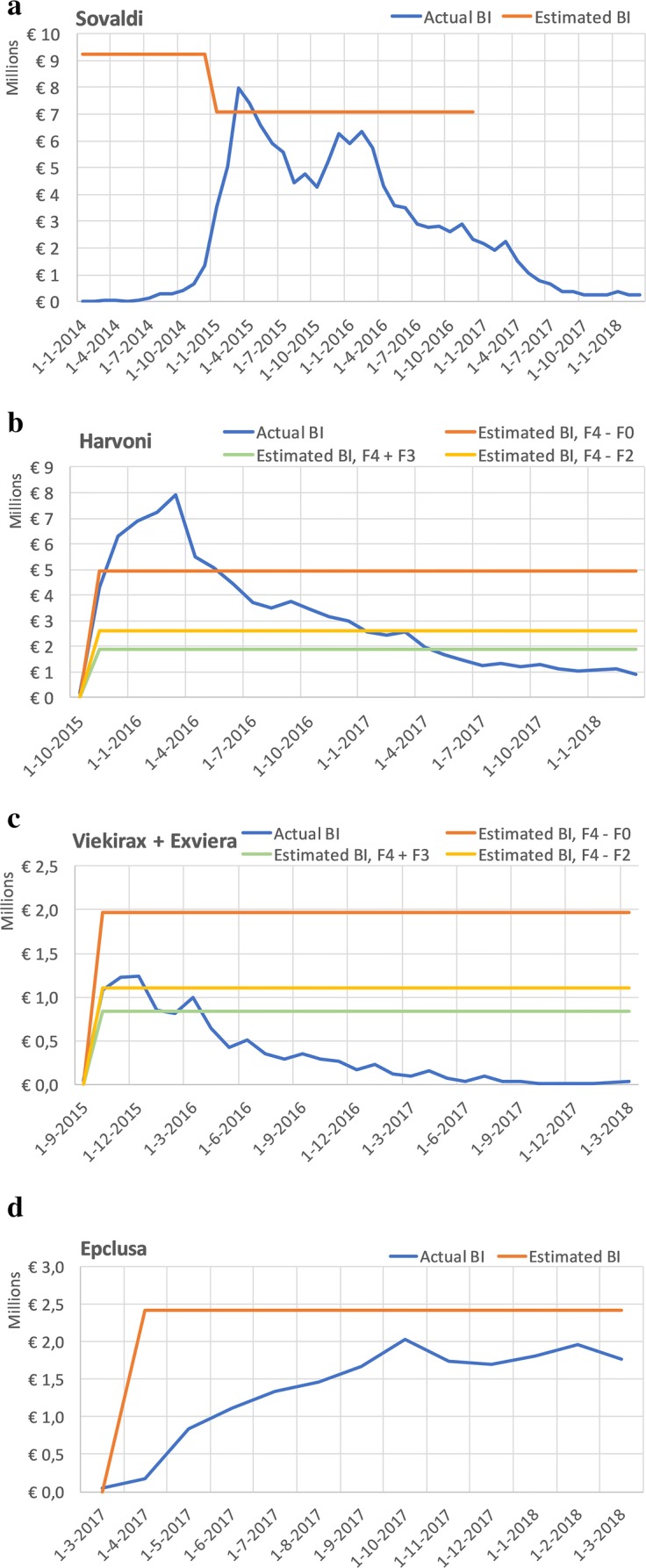
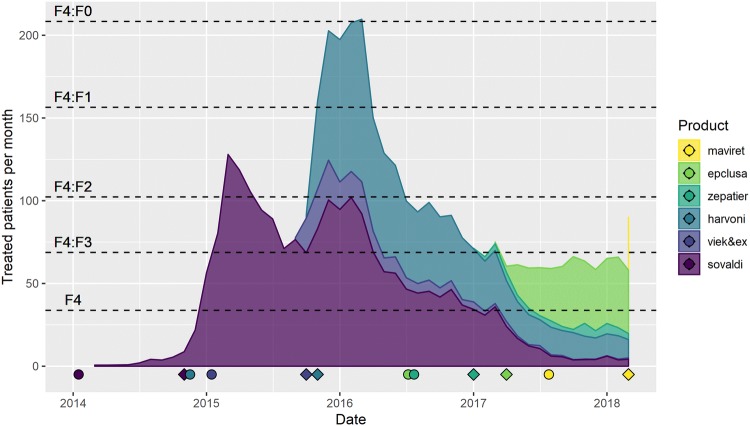
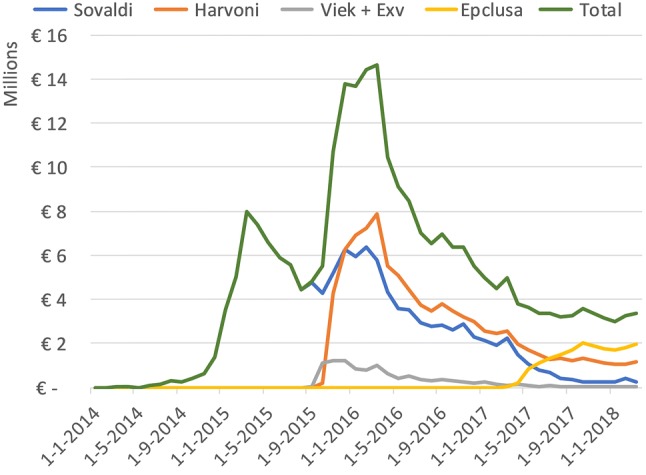
Actual BI, from 1 Jan 2014 to 1 March 2018, was €248 million whilst the BI estimates ranged from €388-€510 million. The latter figure represents the estimated BI for the reimbursement scenario that was adopted, implying a €275 million overestimation. Absent incorporation of timing of regulatory decisions and inadequate correction for the introduction of new products were main drivers of BI overestimation, as well as uncertainty regarding the patient population size and the impact of the final reimbursement decision.
BI in reimbursement dossiers largely overestimated actual BI of hepatitis C DAAs. When BI analysis is performed according to existing guidelines, the resulting more accurate BI estimates may lead to better informed reimbursement decisions.
新药物的高预算影响(BI)估计限制了患者的可及性,因为人们担心负担能力和替代效应。BI 分析的准确性和方法质量往往较低,可能会错误地影响报销决策。本研究以丙型肝炎为例,旨在量化荷兰报销决策中 BI 预测的准确性,并描述市场动态对实际 BI 的影响。
我们选择了 2014 年 1 月至 2018 年 3 月期间在荷兰推出的丙型肝炎直接作用抗病毒药物(DAAs)。荷兰国家卫生保健研究所(ZIN)的 BI 估计值来自报销文件。实际的荷兰 BI 数据由 FarmInform 提供。通过比较 ZIN BI 估计值与实际 BI 数据来评估 BI 预测的准确性。
从 2014 年 1 月 1 日至 2018 年 3 月 1 日,实际 BI 为 2.48 亿欧元,而 BI 估计值在 3.88 亿至 5.10 亿欧元之间。后者代表采用的报销方案的估计 BI,意味着高估了 2.75 亿欧元。监管决策时间的缺失和新产品引入时校正不足是 BI 高估的主要驱动因素,以及患者人群规模和最终报销决策的影响的不确定性。
报销文件中的 BI 在很大程度上高估了丙型肝炎 DAAs 的实际 BI。当根据现有指南进行 BI 分析时,更准确的 BI 估计可能会导致更明智的报销决策。