Kossmeier Michael, Themanns Madeleine, Hatapoglu Lena, Kogler Bernhard, Keuerleber Simon, Lichtenecker Jutta, Sauermann Robert, Bucsics Anna, Freissmuth Michael, Zebedin-Brandl Eva
Federation of Social Insurances, Vienna, Austria.
MoCA (Mechanism of Coordinated Access to Orphan Medicinal Products), Brussels, Belgium.
Front Pharmacol. 2021 Aug 13;12:726758. doi: 10.3389/fphar.2021.726758. eCollection 2021.
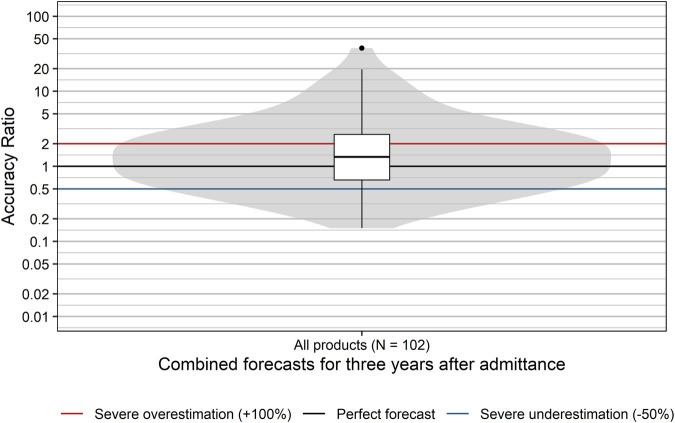
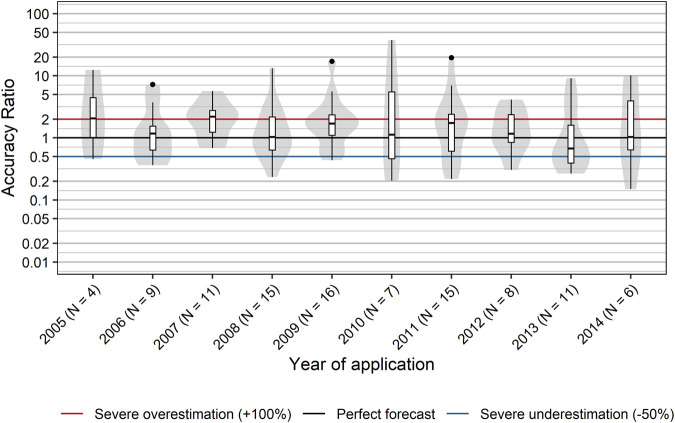
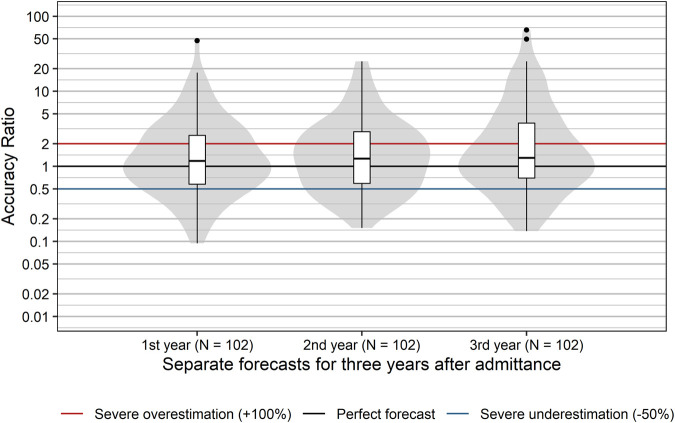
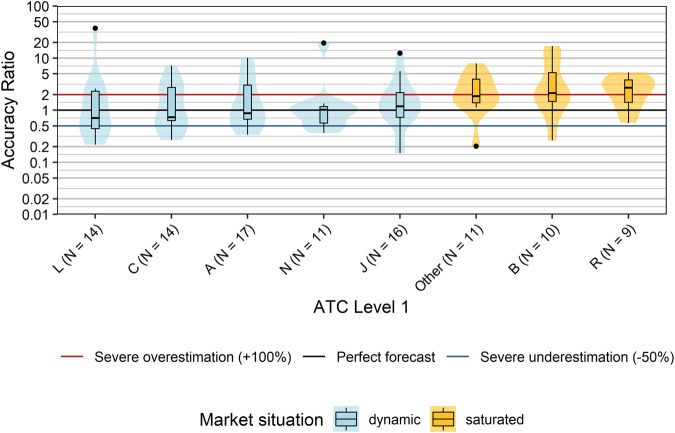
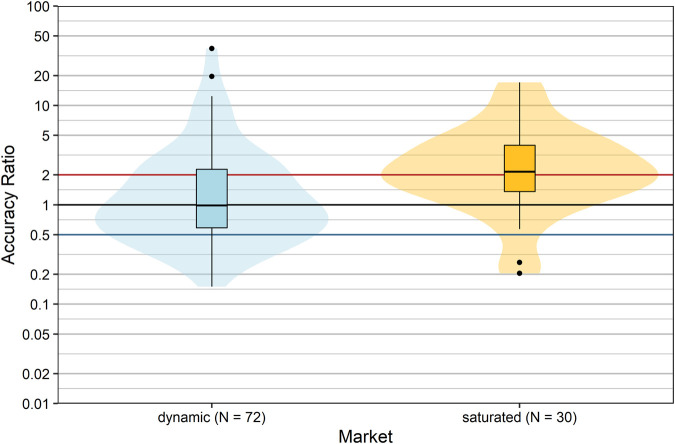
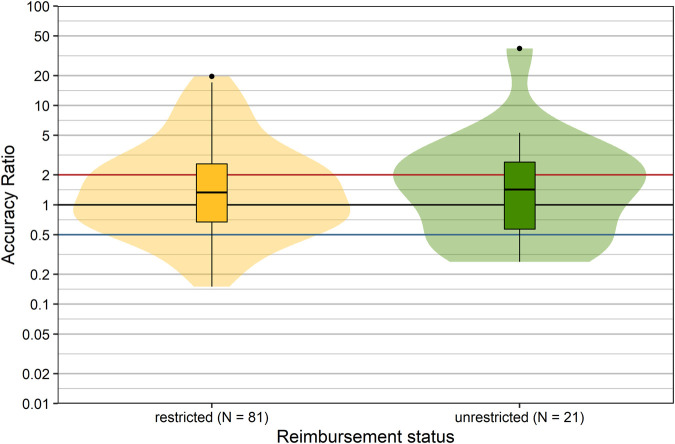
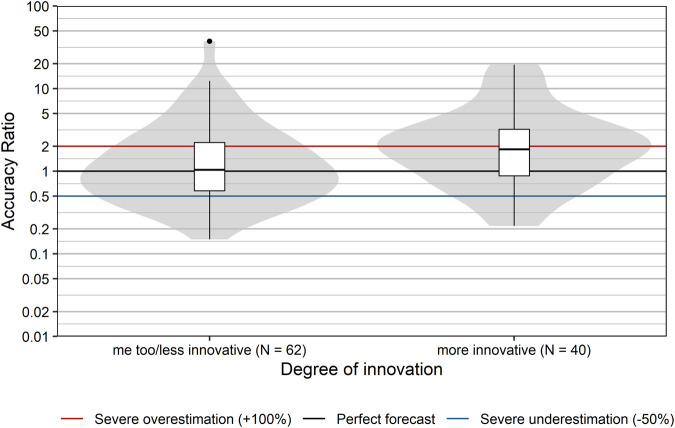
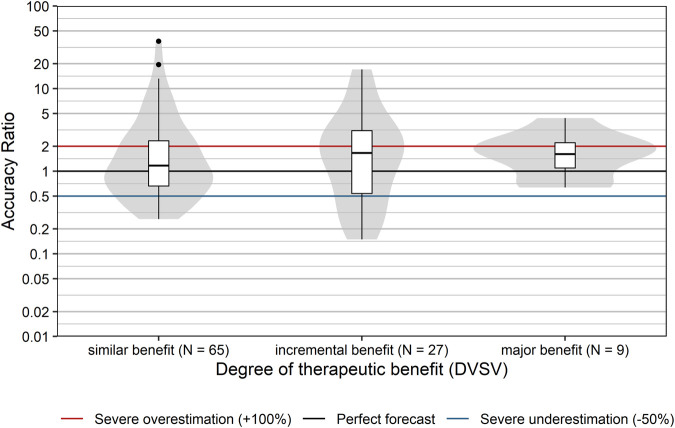
Reimbursement decisions on new medicines require an assessment of their value. In Austria, when applying for reimbursement of new medicines, pharmaceutical companies are also obliged to submit forecasts of future sales. We systematically examined the accuracy of these pharmaceutical sales forecasts and hence the usefulness of these forecasts for reimbursement evaluations. We retrospectively analyzed reimbursement applications of 102 new drugs submitted between 2005 and 2014, which were accepted for reimbursement outside of hospitals, and for which actual reimbursed sales were available for at least 3 years. The main outcome variable was the accuracy ratio, defined as the ratio of forecasted sales submitted by pharmaceutical companies when applying for reimbursement to actual sales from reimbursement data. The median accuracy ratio [95% confidence interval] was 1.33 [1.03; 1.74, range 0.15-37.5], corresponding to a median overestimation of actual sales by 33%. Forecasts of actual sales for 55.9% of all examined products either overestimated actual sales by more than 100% or underestimated them by more than 50%. The accuracy of sales forecasts did not show systematic change over the analyzed decade nor was it discernibly influenced by reimbursement status (restricted or unrestricted), the degree of therapeutic benefit, or the therapeutic area of the pharmaceutical product. Sales forecasts of drugs with a higher degree of innovation and those within a dynamic market tended to be slightly more accurate. The majority of sales forecasts provided by applicants for reimbursement evaluations in Austria were highly inaccurate and were on average too optimistic. This is in line with published results for other jurisdictions and highlights the need for caution when using such forecasts for reimbursement procedures.
对新药的报销决策需要评估其价值。在奥地利,制药公司在申请新药报销时,还必须提交未来销售额的预测。我们系统地研究了这些药品销售预测的准确性,以及这些预测对报销评估的有用性。我们回顾性分析了2005年至2014年间提交的102种新药的报销申请,这些申请在医院外被接受报销,且实际报销销售额至少有3年的数据。主要结果变量是准确率,定义为制药公司在申请报销时提交的预测销售额与报销数据中的实际销售额之比。中位数准确率[95%置信区间]为1.33[1.03;1.74,范围0.15 - 37.5],相当于实际销售额中位数被高估了33%。在所有被检查的产品中,55.9%的实际销售额预测要么高估实际销售额超过100%,要么低估超过50%。在分析的十年中,销售预测的准确性没有显示出系统性变化,也没有明显受到报销状态(受限或不受限)、治疗益处程度或药品治疗领域的影响。创新程度较高的药物以及处于动态市场中的药物的销售预测往往略为准确。奥地利报销评估申请人提供的大多数销售预测都极不准确,且平均过于乐观。这与其他司法管辖区公布的结果一致,并突出了在报销程序中使用此类预测时需要谨慎的必要性。