Department of Orthopedics, Shanghai Sixth People's Hospital East Affiliated to Shanghai University of Medicine and Health Sciences, Pudong New Area, Shanghai, 201306, People's Republic of China.
Department of Sports Medicine, Shanghai Jiao Tong University Affiliated Sixth People's Hospital, Xuhui District, Shanghai, 200233, China.
BMC Musculoskelet Disord. 2019 Apr 6;20(1):146. doi: 10.1186/s12891-019-2530-3.
Although the stenotic femoral intercondylar notch was associated with anterior cruciate ligament (ACL) injuries, the parameters for notch assessment were numerous. The present study aimed to compare the 2-dimensional (2D) femoral notch parameters, including the notch width (NW) and notch width index (NWI), with the 3-dimensional (3D) notch volume based on magnetic resonance imaging (MRI), to determine appropriate femoral parameters for ACL injuries.
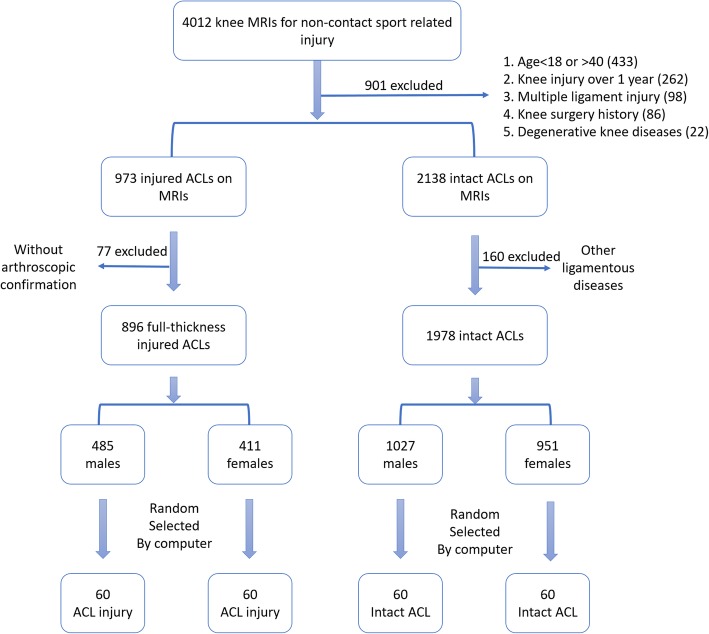
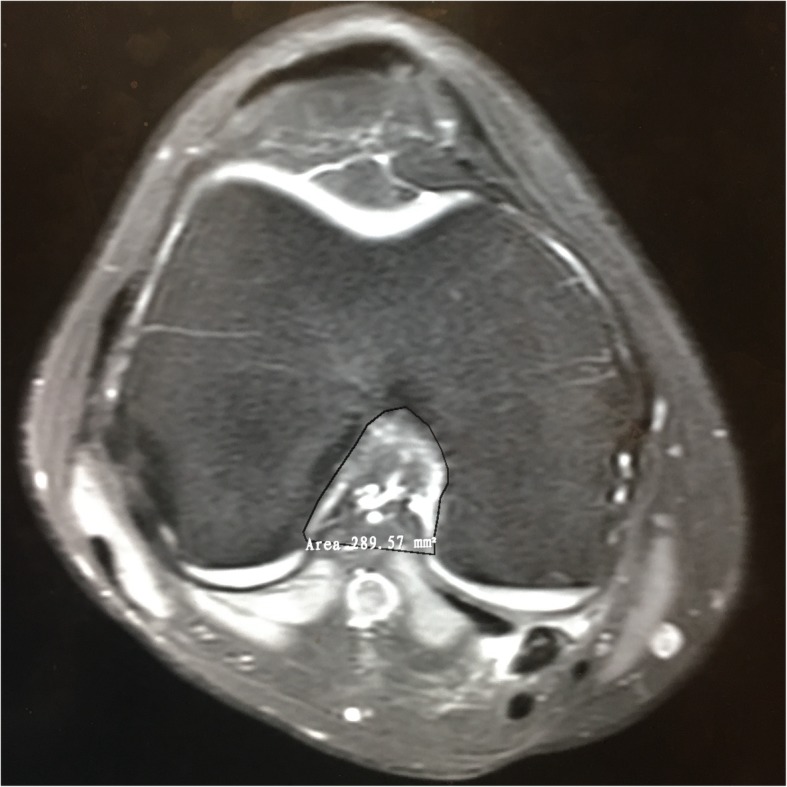
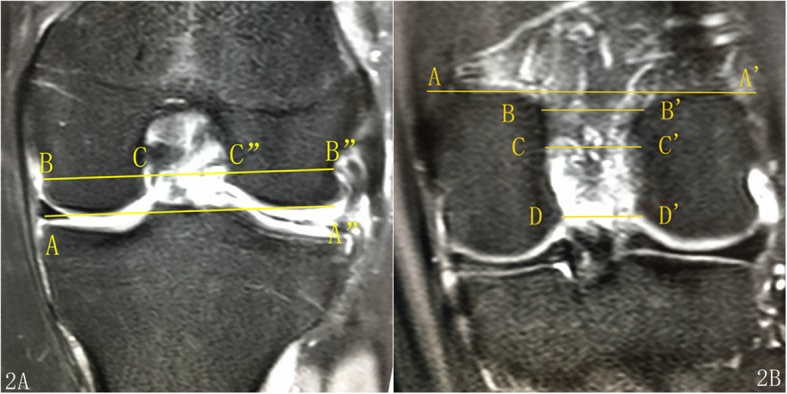
Two hundred forty individuals were included in this study, including 120 patients with ACL ruptures and 120 age- and gender-matched individuals without ACL ruptures. The NWs and NWIs were measured at four sites (the popliteal groove, the notch inlet and outlet, and the ACL attachment), and the notch volumes were calculated. The Pearson correlation coefficients between the 2D and 3D parameters were calculated. A multivariate analysis of the ACL injuries was conducted with these parameters and the demographic data.
The associations of the NW and NWI with the notch volume at each of the four locations of the femoral notch were poor in the subgroup analysis, with the exception of the NW in the male ACL-intact group (R = 0.307, 0.256, 0.404 and 0.387 at the popliteal groove, notch inlet and outlet, and ACL attachment, respectively). The multivariate analysis revealed that the notch volume (OR = 0.679, P < 0.001) and the NW at the popliteal groove (OR = 0.844, P = 0.004), notch inlet (OR = 0.720, P < 0.001) and ACL attachment (OR = 0.871, P = 0.028) were predictable parameters to the risk of ACL injuries.
The correlations between the 2D parameters and the 3D volumes were weak. The notch volume and the NW at the popliteal groove, notch inlet and ACL attachment were useful parameters for predicting the risk of ACL injuries.
Level III, case-control study.
虽然狭窄的股骨髁间切迹与前交叉韧带(ACL)损伤有关,但切迹评估的参数很多。本研究旨在比较二维(2D)股骨切迹参数,包括切迹宽度(NW)和切迹宽度指数(NWI)与基于磁共振成像(MRI)的三维(3D)切迹容积,以确定 ACL 损伤的合适股骨参数。
本研究纳入了 240 人,包括 120 例 ACL 断裂患者和 120 例年龄和性别匹配的无 ACL 断裂患者。在四个部位(腘窝、切迹入口和出口以及 ACL 附着处)测量 NWs 和 NWI,并计算切迹容积。计算 2D 和 3D 参数之间的 Pearson 相关系数。使用这些参数和人口统计学数据对 ACL 损伤进行多变量分析。
在亚组分析中,除了男性 ACL 完整组的 NW(在腘窝、切迹入口和出口以及 ACL 附着处的 R 值分别为 0.307、0.256、0.404 和 0.387)外,NW 和 NWI 与股骨切迹四个部位的切迹容积之间的相关性均较差。多变量分析显示,切迹容积(OR=0.679,P<0.001)和腘窝切迹(OR=0.844,P=0.004)、切迹入口(OR=0.720,P<0.001)和 ACL 附着处(OR=0.871,P=0.028)的 NW 是 ACL 损伤风险的预测参数。
2D 参数与 3D 容积之间的相关性较弱。切迹容积和腘窝、切迹入口和 ACL 附着处的 NW 是预测 ACL 损伤风险的有用参数。
III 级,病例对照研究。