Moreno Santiago G, Epstein David
Department of Market Access & Public Affairs, Novartis Pharma AG., Basel, Switzerland.
Department of Applied Economics, University of Granada, Campus de Cartuja, Granada, Spain.
J Mark Access Health Policy. 2019 Mar 20;7(1):1583536. doi: 10.1080/20016689.2019.1583536. eCollection 2019.
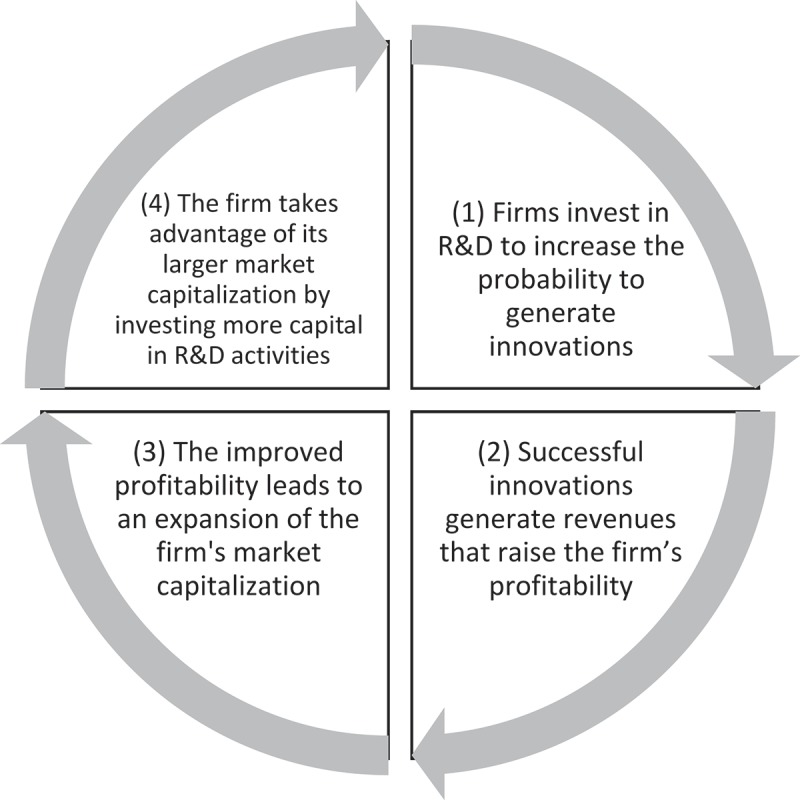
The debate on drug prices has reached new heights with the controversy around the role of prices in promoting innovation. Critics claim that prices of innovative drugs are excessive and argue that lowering prices will not harm the flourishing innovation. On the opposite end, the pharmaceutical industry insists that restrictive pricing policies will have a detrimental impact on their ability to generate innovation. Amid these two divergent positions, this manuscript presents a conceptual framework to better understand the role played by drug prices to influence the ability of pharmaceutical firms to raise money in capital markets and hence finance pharmaceutical innovation. We argue that deviations from established value-based pricing principles, by either firms or payers, will distort access by firms to capital and lead to an undesirable level of innovation in the long term. We hope that this framework helps policy-makers anticipate the impact of their proposals, and ultimately guide policies towards setting optimal drug prices as a means to maximise social welfare.
围绕药品价格在促进创新中所起作用的争议,使得药品价格辩论达到了新的高度。批评者称创新药物价格过高,并认为降低价格不会损害蓬勃发展的创新。而另一方面,制药行业坚称限制性定价政策将对其创新能力产生不利影响。在这两种截然不同的立场之间,本手稿提出了一个概念框架,以更好地理解药品价格在影响制药公司在资本市场筹集资金的能力从而为药物创新提供资金方面所起的作用。我们认为,无论是公司还是付款方,偏离既定的基于价值的定价原则都会扭曲公司获取资本的渠道,并从长远来看导致不理想的创新水平。我们希望这个框架能帮助政策制定者预测其提议的影响,并最终指导制定最优药品价格的政策,以此作为最大化社会福利的一种手段。