a Department of Infection Biology , Wageningen BioVeterinary Research (WBVR) , Lelystad , The Netherlands.
b Host Microbe Interactions , Wageningen UR , Wageningen , The Netherlands.
Virulence. 2019 Dec;10(1):334-351. doi: 10.1080/21505594.2019.1599669.
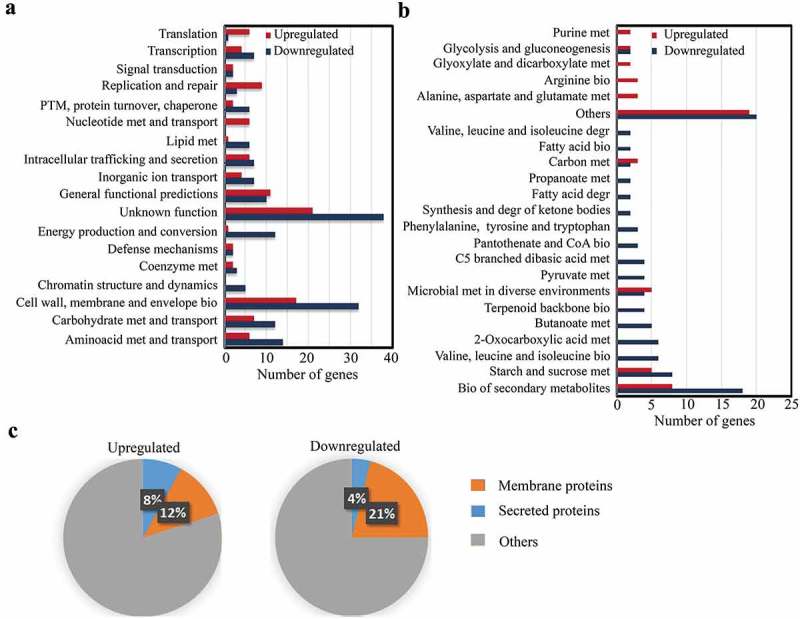
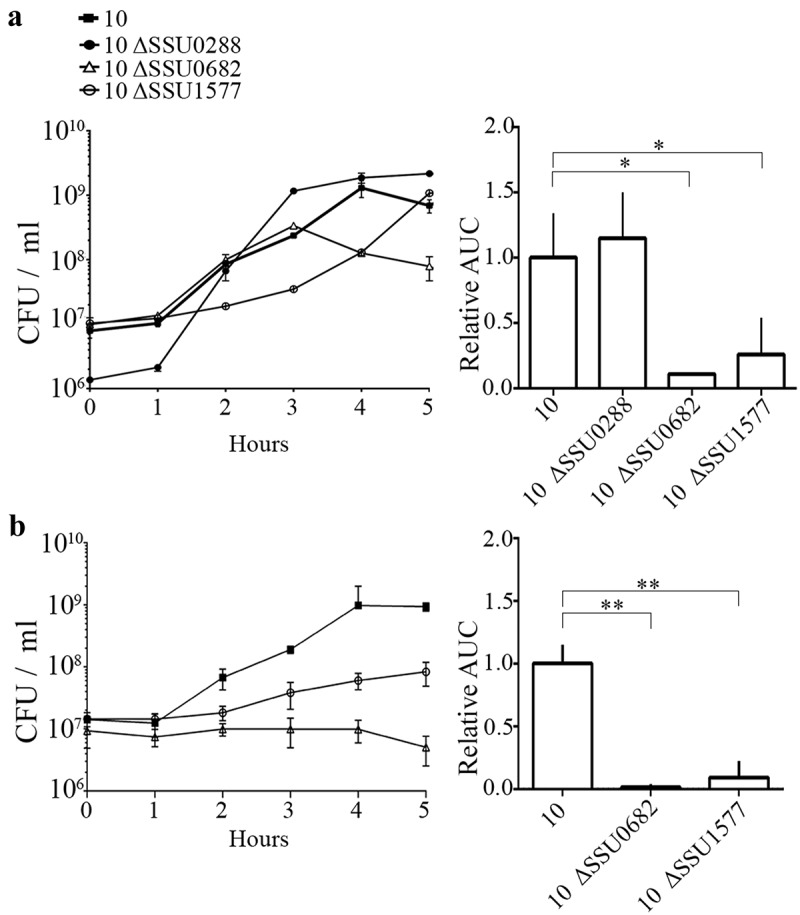
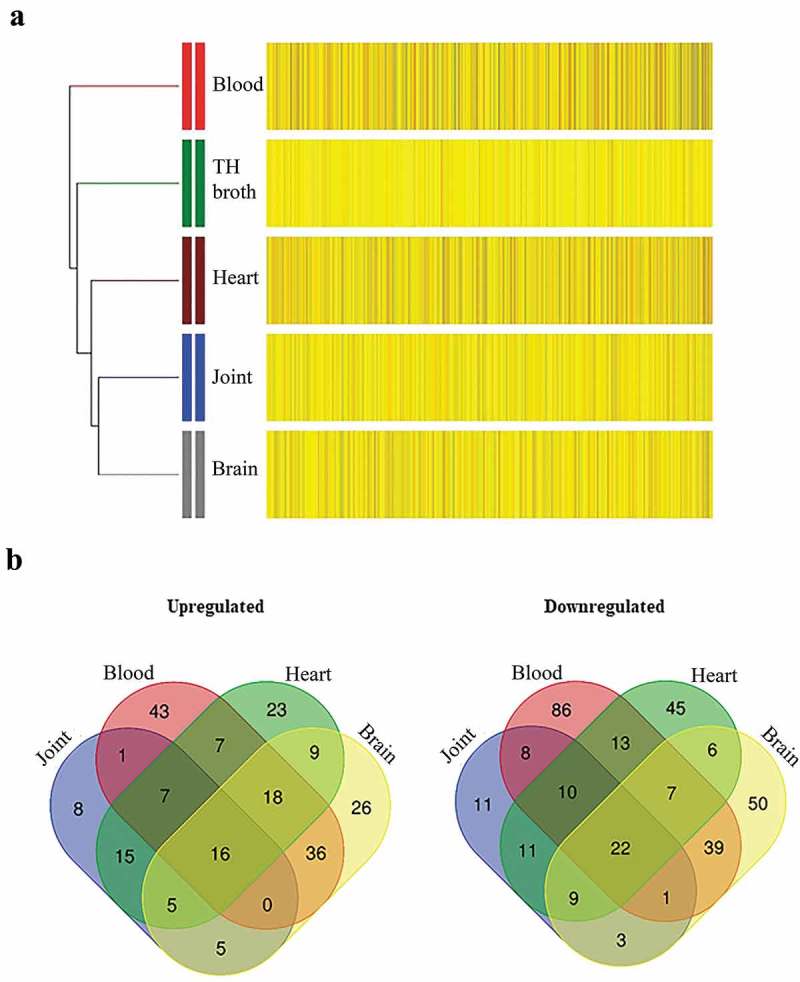
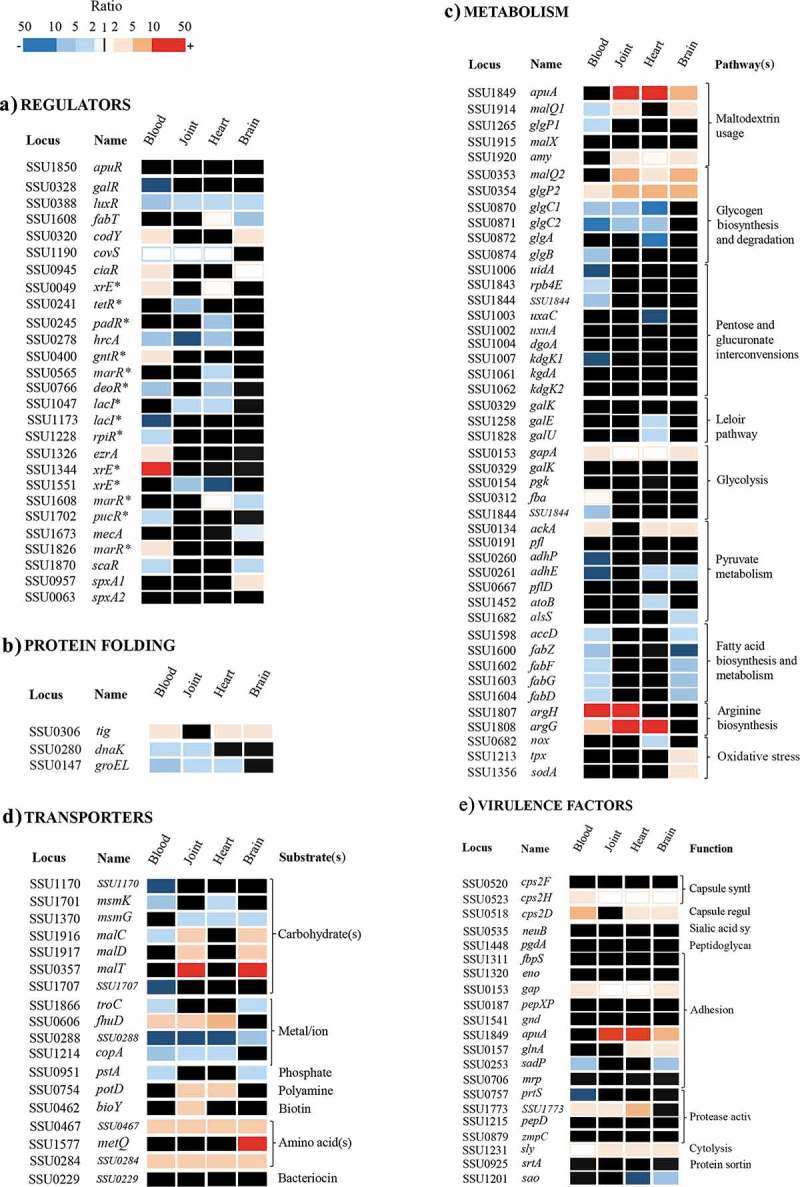
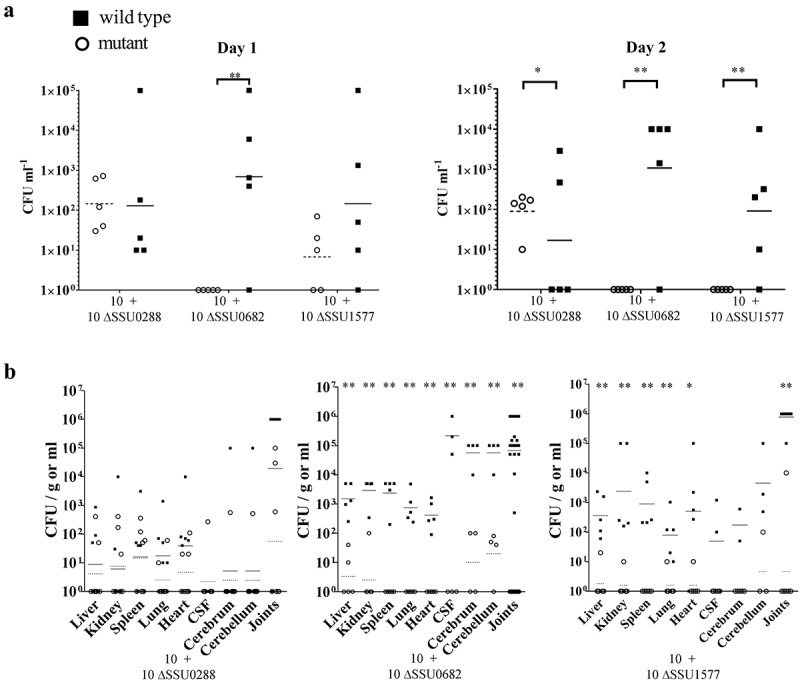
Streptococcus suis is a Gram-positive bacterium and a zoonotic pathogen residing in the nasopharynx or the gastrointestinal tract of pigs with a potential of causing life-threatening invasive disease. It is endemic in the porcine production industry worldwide, and it is also an emerging human pathogen. After invasion, the pathogen adapts to cause bacteremia and disseminates to different organs including the brain. To gain insights in this process, we infected piglets with a highly virulent strain of S. suis, and bacterial transcriptomes were obtained from blood and different organs (brain, joints, and heart) when animals had severe clinical symptoms of infection. Microarrays were used to determine the genome-wide transcriptional profile at different infection sites and during growth in standard growth medium in vitro. We observed differential expression of around 30% of the Open Reading Frames (ORFs) and infection-site specific patterns of gene expression. Genes with major changes in expression were involved in transcriptional regulation, metabolism, nutrient acquisition, stress defenses, and virulence, amongst others, and results were confirmed for a subset of selected genes using RT-qPCR. Mutants were generated in two selected genes, and the encoded proteins, i.e., NADH oxidase and MetQ, were shown to be important virulence factors in coinfection experiments and in vitro assays. The knowledge derived from this study regarding S. suis gene expression in vivo and identification of virulence factors is important for the development of novel diagnostic and therapeutic strategies to control S. suis disease.
猪链球菌是一种革兰氏阳性菌,也是一种居住在猪的鼻咽部或胃肠道中的动物源性致病菌,具有引起危及生命的侵袭性疾病的潜力。它在全球范围内存在于养猪业中,也是一种新兴的人类病原体。入侵后,病原体适应并引起菌血症,并传播到包括大脑在内的不同器官。为了深入了解这一过程,我们用一种高毒力的猪链球菌菌株感染仔猪,当动物出现严重感染症状时,从血液和不同器官(大脑、关节和心脏)中获得细菌转录组。使用微阵列确定在不同感染部位和体外标准生长培养基中生长时的全基因组转录谱。我们观察到大约 30%的开放阅读框(ORFs)的差异表达和感染部位特异性基因表达模式。表达变化较大的基因涉及转录调控、代谢、营养获取、应激防御和毒力等,并用 RT-qPCR 对选定基因的一部分进行了验证。在两个选定基因中生成了突变体,并且编码的蛋白质,即 NADH 氧化酶和 MetQ,在共感染实验和体外测定中被证明是重要的毒力因子。本研究中关于猪链球菌体内基因表达和鉴定毒力因子的知识对于开发新型诊断和治疗策略来控制猪链球菌病非常重要。