Center for Consciousness Science, University of Michigan Medical School, Ann Arbor, United States; Department of Anesthesiology, University of Michigan Medical School, Ann Arbor, United States.
Center for Consciousness Science, University of Michigan Medical School, Ann Arbor, United States; Department of Anesthesiology, University of Michigan Medical School, Ann Arbor, United States; Neuroscience Graduate Program, University of Michigan Medical School, Ann Arbor, United States.
Neuroimage. 2019 Aug 1;196:32-40. doi: 10.1016/j.neuroimage.2019.03.076. Epub 2019 Apr 5.
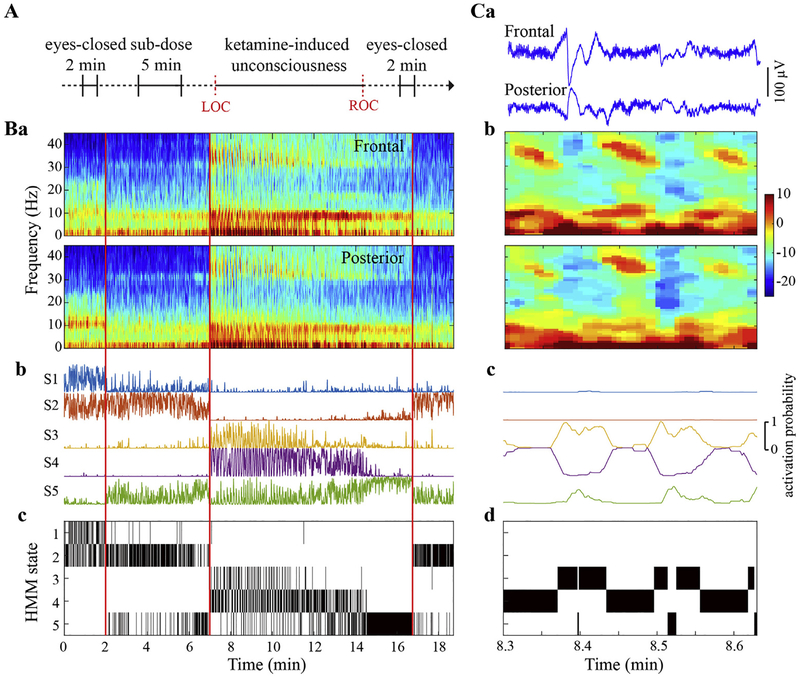
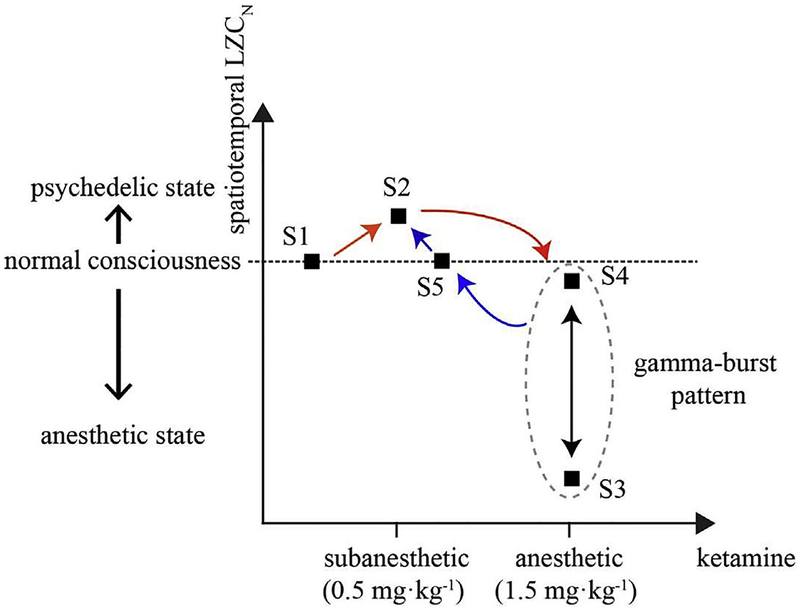
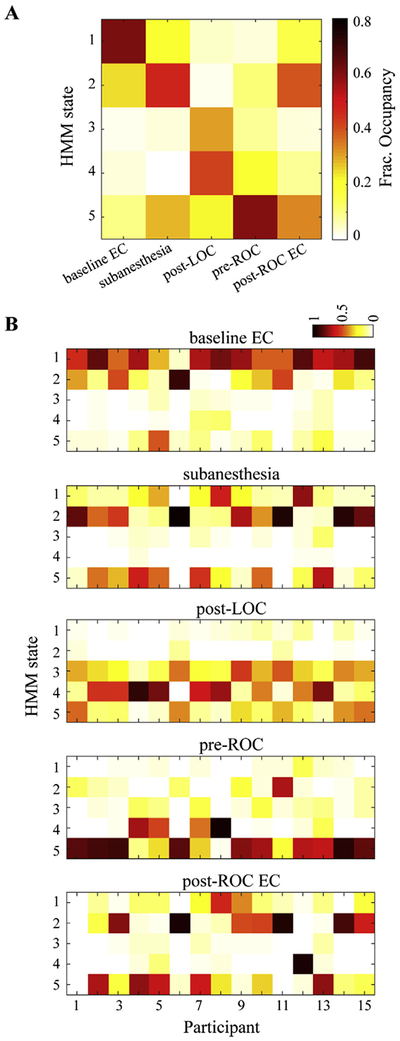
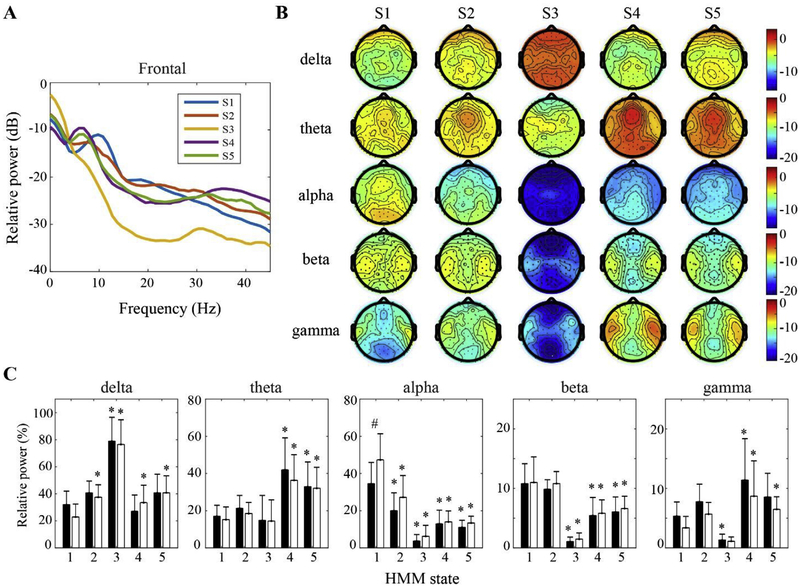
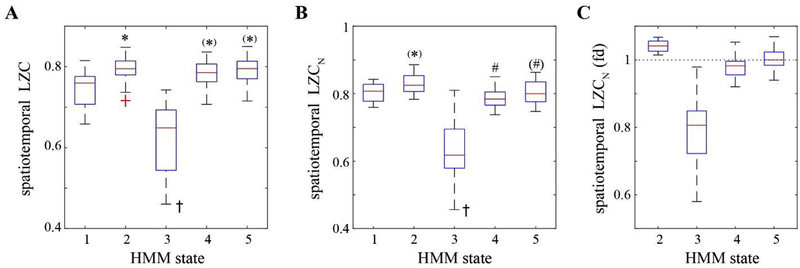
Ketamine is a unique drug that has psychedelic and anesthetic properties in a dose-dependent manner. Recent studies have shown that ketamine anesthesia appears to maintain the spatiotemporal complexity of cortical activation evoked by transcranial magnetic stimulation, while a psychedelic dose of ketamine is associated with increased spontaneous magnetoencephalographic signal diversity. However, a systematic investigation of the dose-dependent effects of ketamine on cortical complexity using the same modality is required. Furthermore, it is unknown whether the complexity level stabilizes or fluctuates over time for the duration of ketamine exposure. Here we investigated the spatiotemporal complexity of spontaneous high-density scalp electroencephalography (EEG) signals in healthy volunteers during alterations of consciousness induced by both subanesthetic and anesthetic doses of ketamine. Given the fast transient spectral dynamics, especially during the gamma-burst pattern after loss of consciousness, we employed a method based on Hidden Markov modeling to classify the EEG signals into a discrete set of brain states that correlated with different behavioral states. We characterized the spatiotemporal complexity specific for each brain state as measured through the Lempel-Ziv complexity algorithm. After controlling for signal diversity due to spectral changes, we found that the subanesthetic dose of ketamine is associated with an elevated complexity level relative to baseline, while the brain activity following an anesthetic dose of ketamine is characterized by alternating low and high complexity levels until stabilizing at a high level comparable to that during baseline. Thus, spatiotemporal complexity associated with ketamine-induced state transitions has features of general anesthesia, normal consciousness, and altered states of consciousness. These results improve our understanding of the complex pharmacological, neurophysiological, and phenomenological properties of ketamine.
氯胺酮是一种独特的药物,其具有剂量依赖性的致幻和麻醉特性。最近的研究表明,氯胺酮麻醉似乎维持了经颅磁刺激诱发的皮质激活的时空复杂性,而致幻剂量的氯胺酮与自发脑磁图信号多样性增加有关。然而,需要使用相同的模态系统地研究氯胺酮对皮质复杂性的剂量依赖性影响。此外,氯胺酮暴露期间,皮质复杂性的水平是否稳定或随时间波动尚不清楚。在这里,我们研究了健康志愿者在亚麻醉和麻醉剂量的氯胺酮诱导的意识改变期间,自发高密度头皮脑电图 (EEG) 信号的时空复杂性。鉴于快速瞬态谱动力学,特别是在意识丧失后的伽马爆发模式期间,我们采用了一种基于隐马尔可夫模型的方法将 EEG 信号分类为离散的脑状态集,这些脑状态与不同的行为状态相关。我们通过 Lempel-Ziv 复杂度算法来测量每个脑状态的时空复杂度,并将其特征化。在控制了由于光谱变化引起的信号多样性后,我们发现,与基线相比,亚麻醉剂量的氯胺酮与升高的复杂度水平相关,而麻醉剂量的氯胺酮后的大脑活动的特点是交替的低复杂度和高复杂度水平,直到稳定在与基线相当的高水平。因此,与氯胺酮诱导的状态转变相关的时空复杂性具有全身麻醉、正常意识和意识改变状态的特征。这些结果提高了我们对氯胺酮复杂的药理学、神经生理学和现象学特性的理解。