• 文献检索
  • 文档翻译
  • 深度研究
  • 学术资讯
  • Suppr Zotero 插件Zotero 插件
  • 邀请有礼
  • 套餐&价格
  • 历史记录
应用&插件
Suppr Zotero 插件Zotero 插件浏览器插件Mac 客户端Windows 客户端微信小程序
定价
高级版会员购买积分包购买API积分包
服务
文献检索文档翻译深度研究API 文档MCP 服务
关于我们
关于 Suppr公司介绍联系我们用户协议隐私条款
关注我们

Suppr 超能文献

核心技术专利:CN118964589B侵权必究
粤ICP备2023148730 号-1Suppr @ 2026

文献检索

告别复杂PubMed语法,用中文像聊天一样搜索,搜遍4000万医学文献。AI智能推荐,让科研检索更轻松。

立即免费搜索

文件翻译

保留排版,准确专业,支持PDF/Word/PPT等文件格式,支持 12+语言互译。

免费翻译文档

深度研究

AI帮你快速写综述,25分钟生成高质量综述,智能提取关键信息,辅助科研写作。

立即免费体验

基于聚(3-羟基丁酸酯-3-羟基戊酸酯)/聚醋酸乙烯酯与木薯淀粉的生物聚合物共混物的挤出变量和马来酸酐含量的优化

Optimization of Extrusion Variables and Maleic Anhydride Content on Biopolymer Blends Based on Poly(hydroxybutyrate--hydroxyvalerate)/Poly(vinyl acetate) with Tapioca Starch.

作者信息

Wu Chia-Yang, Lui Wai-Bun, Peng Jinchyau

机构信息

Department of Bio-Industrial Mechatronics Engineering, National Chung Hsing University, Taichung 402, Taiwan.

Department of English, National Pei-Kang Agricultural and Industrial Vocational High School, Yunlin 651, Taiwan.

出版信息

Polymers (Basel). 2018 Jul 26;10(8):827. doi: 10.3390/polym10080827.

DOI:10.3390/polym10080827
PMID:30960752
原文链接:https://pmc.ncbi.nlm.nih.gov/articles/PMC6403955/
Abstract

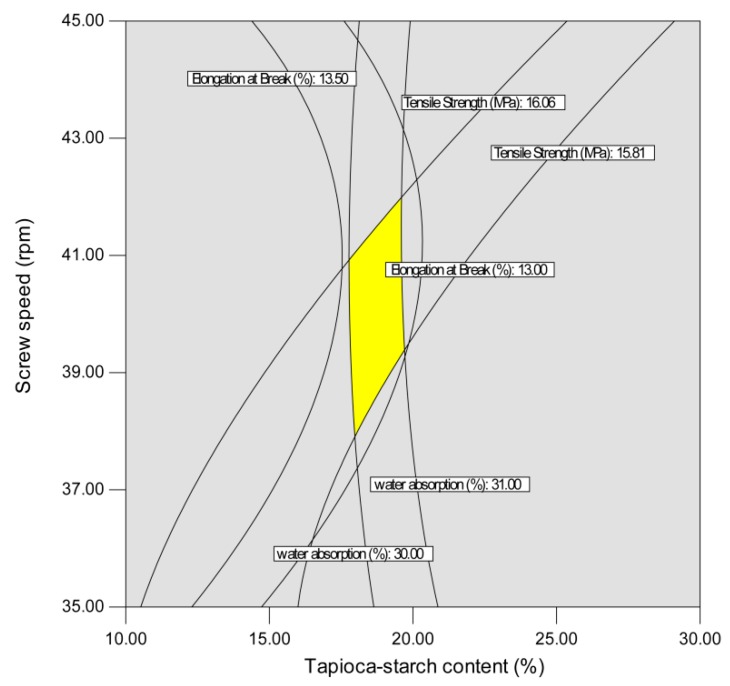
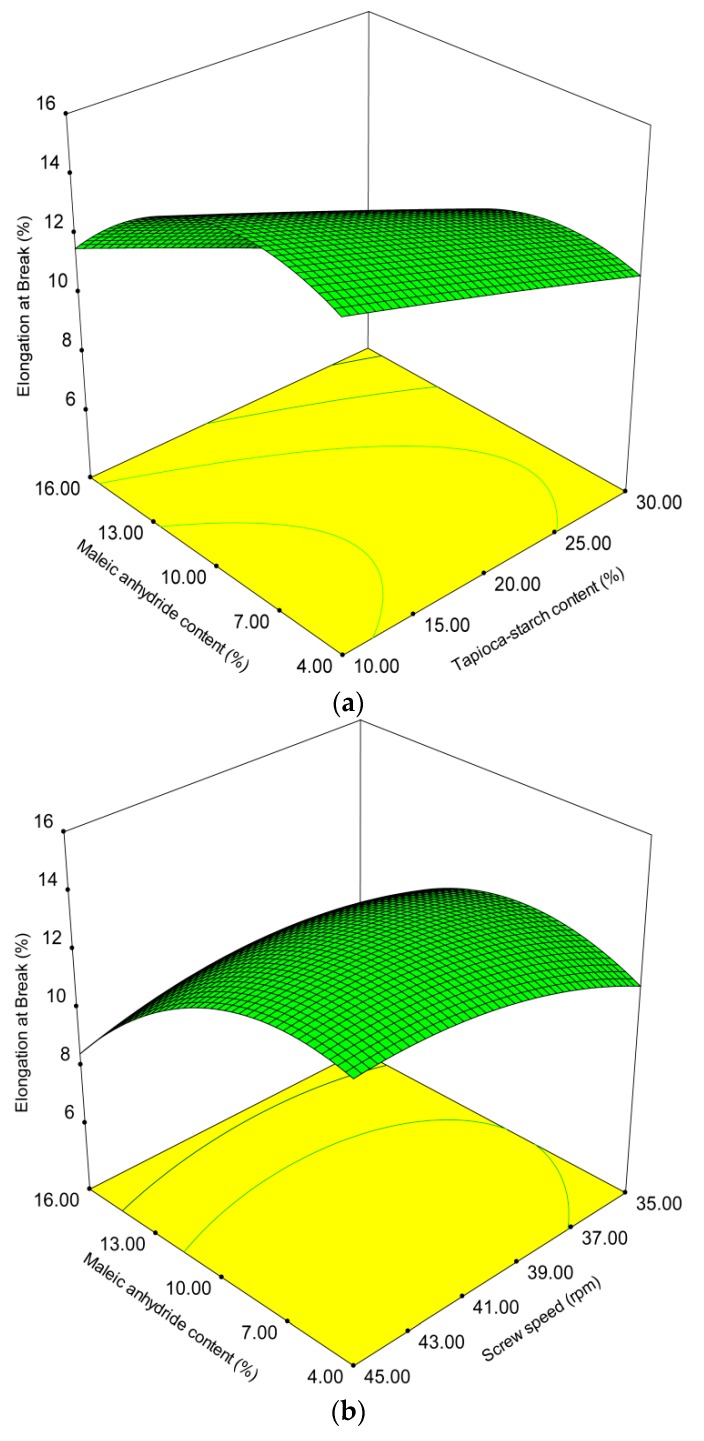
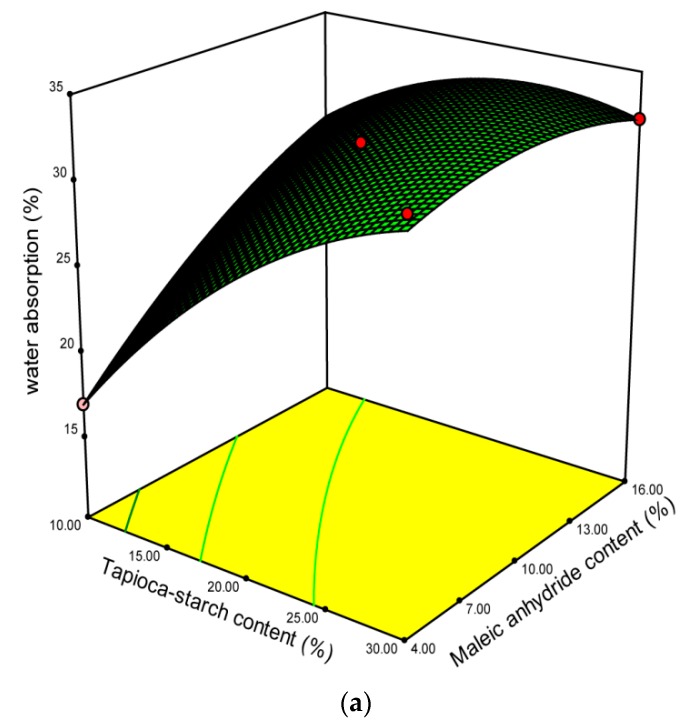
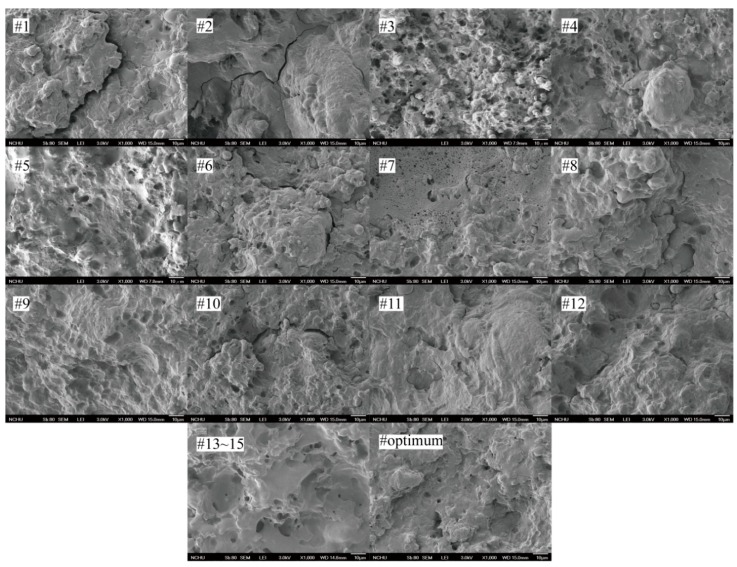
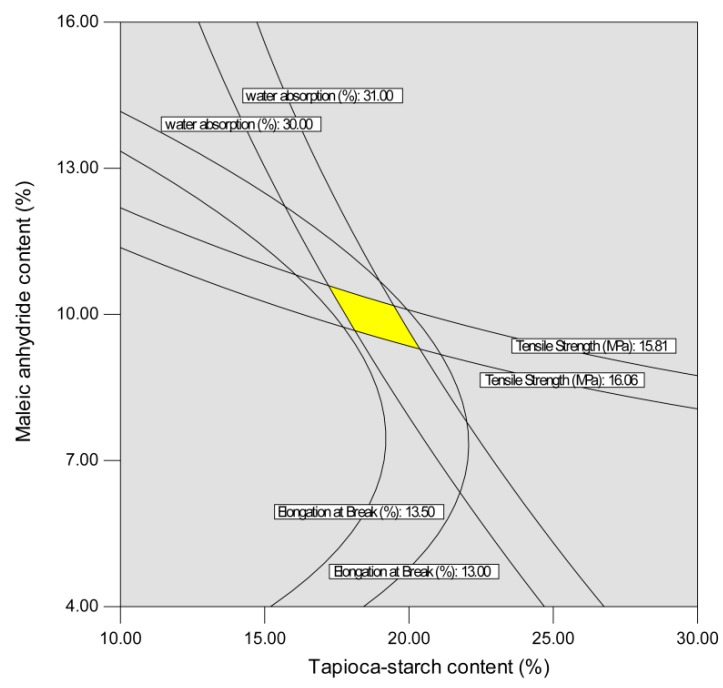
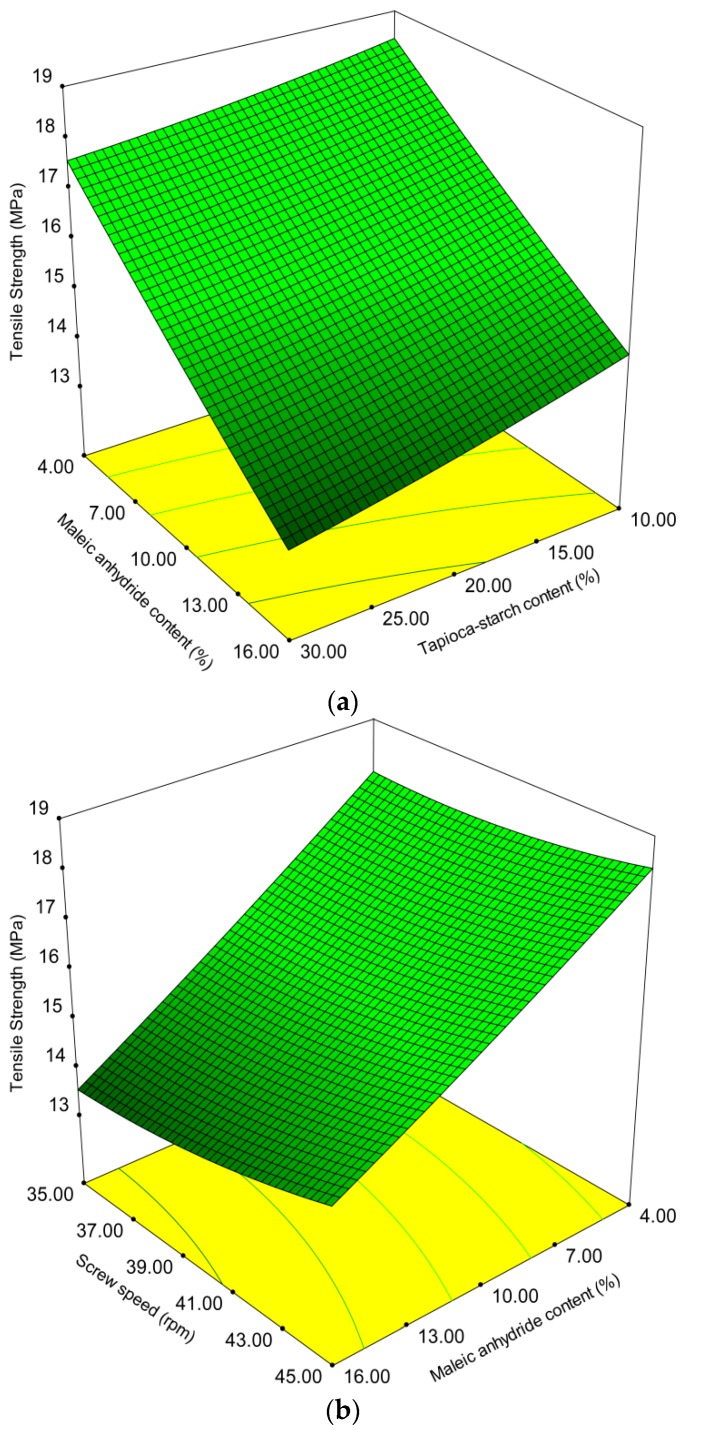
Poly(3-hyroxybutyrate--3-hydroxyvalerate) (PHBV), poly(vinyl acetate) (PVAc), and tapioca starch are environment-friendly materials. The present study used these materials to produce biodegradable plastic pellets by melt extrusion. The tapioca starch content of composite formulations, the maleic anhydride content, and the screw speed of the extruder were chosen as variables for the extrusion process. A Box-Behnken response surface design was used to establish mathematical models to predict the relationship between the operating variables and the objective attributes (tensile strength, elongation at break, and water absorption) of the blends. Blend morphology was also assessed. The regression coefficients revealed that the extrusion parameters most significantly affecting extrudate responses were tapioca starch content and maleic anhydride content, both showing significant ( < 0.01) linear effects. The results of the analysis of variance found the models are in good agreement with experimental results as informed by high correlation coefficients (² > 0.9), with no significant lack of fit. From the numerical analysis, optimized operating variables (20.13% tapioca starch content, 10.14% maleic anhydride content, and a screw speed of 41.3 rpm) produced a product with optimum values of 16.4 MPa tensile strength, 13.2% elongation at break, and 30.94% water absorption.

摘要

聚(3-羟基丁酸酯-3-羟基戊酸酯)(PHBV)、聚醋酸乙烯酯(PVAc)和木薯淀粉都是环保材料。本研究使用这些材料通过熔融挤出生产可生物降解的塑料颗粒。复合配方中的木薯淀粉含量、马来酸酐含量和挤出机的螺杆转速被选为挤出过程的变量。采用Box-Behnken响应面设计建立数学模型,以预测操作变量与共混物的目标属性(拉伸强度、断裂伸长率和吸水率)之间的关系。还对共混物形态进行了评估。回归系数表明,对挤出物响应影响最显著的挤出参数是木薯淀粉含量和马来酸酐含量,两者均显示出显著(<0.01)的线性效应。方差分析结果表明,模型与实验结果高度吻合,相关系数较高(²>0.9),不存在显著的失拟现象。通过数值分析,优化的操作变量(木薯淀粉含量20.13%、马来酸酐含量10.14%和螺杆转速41.3 rpm)生产出的产品具有最佳值,拉伸强度为16.4 MPa、断裂伸长率为13.2%、吸水率为30.94%。
https://cdn.ncbi.nlm.nih.gov/pmc/blobs/f81c/6403955/912facfb1b87/polymers-10-00827-g006.jpg
https://cdn.ncbi.nlm.nih.gov/pmc/blobs/f81c/6403955/fe34fcaa0232/polymers-10-00827-g001.jpg
https://cdn.ncbi.nlm.nih.gov/pmc/blobs/f81c/6403955/03b87afba02b/polymers-10-00827-g002.jpg
https://cdn.ncbi.nlm.nih.gov/pmc/blobs/f81c/6403955/905e62de2b48/polymers-10-00827-g003a.jpg
https://cdn.ncbi.nlm.nih.gov/pmc/blobs/f81c/6403955/074554c24e7b/polymers-10-00827-g004.jpg
https://cdn.ncbi.nlm.nih.gov/pmc/blobs/f81c/6403955/1d8491edbb7f/polymers-10-00827-g005.jpg
https://cdn.ncbi.nlm.nih.gov/pmc/blobs/f81c/6403955/912facfb1b87/polymers-10-00827-g006.jpg
https://cdn.ncbi.nlm.nih.gov/pmc/blobs/f81c/6403955/fe34fcaa0232/polymers-10-00827-g001.jpg
https://cdn.ncbi.nlm.nih.gov/pmc/blobs/f81c/6403955/03b87afba02b/polymers-10-00827-g002.jpg
https://cdn.ncbi.nlm.nih.gov/pmc/blobs/f81c/6403955/905e62de2b48/polymers-10-00827-g003a.jpg
https://cdn.ncbi.nlm.nih.gov/pmc/blobs/f81c/6403955/074554c24e7b/polymers-10-00827-g004.jpg
https://cdn.ncbi.nlm.nih.gov/pmc/blobs/f81c/6403955/1d8491edbb7f/polymers-10-00827-g005.jpg
https://cdn.ncbi.nlm.nih.gov/pmc/blobs/f81c/6403955/912facfb1b87/polymers-10-00827-g006.jpg

相似文献

1
Optimization of Extrusion Variables and Maleic Anhydride Content on Biopolymer Blends Based on Poly(hydroxybutyrate--hydroxyvalerate)/Poly(vinyl acetate) with Tapioca Starch.基于聚(3-羟基丁酸酯-3-羟基戊酸酯)/聚醋酸乙烯酯与木薯淀粉的生物聚合物共混物的挤出变量和马来酸酐含量的优化
Polymers (Basel). 2018 Jul 26;10(8):827. doi: 10.3390/polym10080827.
2
Performance Enhancement of Biopolyester Blends by Reactive Compatibilization with Maleic Anhydride-Grafted Poly(butylene succinate--adipate).通过与马来酸酐接枝聚(丁二酸丁二醇酯-己二酸酯)进行反应性增容提高生物聚酯共混物的性能
Polymers (Basel). 2024 Aug 16;16(16):2325. doi: 10.3390/polym16162325.
3
Structure-property relationships of reactively compatibilized PHB/EVA/starch blends.反应性增容 PHB/EVA/淀粉共混物的结构-性能关系。
Carbohydr Polym. 2014 Aug 8;108:299-306. doi: 10.1016/j.carbpol.2014.02.058. Epub 2014 Feb 24.
4
Properties of Styrene-Maleic Anhydride Copolymer Compatibilized Polyamide 66/Poly (Phenylene Ether) Blends: Effect of Maleic Anhydride Concentration and Copolymer Content.苯乙烯-马来酸酐共聚物增容聚酰胺66/聚亚苯基醚共混物的性能:马来酸酐浓度和共聚物含量的影响
Materials (Basel). 2020 Mar 9;13(5):1237. doi: 10.3390/ma13051237.
5
Morphology and mechanical properties of poly(butylene adipate-co-terephthalate)/potato starch blends in the presence of synthesized reactive compatibilizer or modified poly(butylene adipate-co-terephthalate).合成反应性增容剂或改性聚(己二酸丁二醇酯-对苯二甲酸酯)存在下的聚(己二酸丁二醇酯-对苯二甲酸酯)/马铃薯淀粉共混物的形态和力学性能。
Carbohydr Polym. 2015 Jun 5;123:275-82. doi: 10.1016/j.carbpol.2015.01.058. Epub 2015 Feb 4.
6
Effects of Endic Anhydride Grafted PPC on the Properties of PHBV Blends.马来酸酐接枝聚丙交酯对聚(3-羟基丁酸酯-co-3-羟基戊酸酯)共混物性能的影响
Materials (Basel). 2022 Sep 5;15(17):6179. doi: 10.3390/ma15176179.
7
Ternary Blends from Biological Poly(3-hydroxybutyrate--3-hydroxyhexanoate), Poly(propylene carbonate) and Poly(vinyl acetate) with Balanced Properties.具有平衡性能的生物聚(3-羟基丁酸酯-3-羟基己酸酯)、聚碳酸亚丙酯和聚醋酸乙烯酯的三元共混物。
Polymers (Basel). 2023 Oct 31;15(21):4281. doi: 10.3390/polym15214281.
8
Experimental data for extrusion processing and tensile properties of poly(hydroxybutyrate-co-hydroxyvalerate) (PHBV) polymer and wood fibre reinforced PHBV biocomposites.聚(3-羟基丁酸酯-co-3-羟基戊酸酯)(PHBV)聚合物及木纤维增强PHBV生物复合材料的挤出加工与拉伸性能实验数据。
Data Brief. 2018 Dec 29;22:687-692. doi: 10.1016/j.dib.2018.12.084. eCollection 2019 Feb.
9
Super-tough poly (l-lactide) materials: Reactive blending with maleic anhydride grafted starch and poly (ethylene glycol) diacrylate.超韧聚(L-丙交酯)材料:马来酸酐接枝淀粉和聚乙二醇二丙烯酸酯的反应共混。
Int J Biol Macromol. 2019 Sep 1;136:1069-1075. doi: 10.1016/j.ijbiomac.2019.06.141. Epub 2019 Jun 20.
10
Toughening of Biodegradable Poly(3-hydroxybutyrate--3-hydroxyvalerate)/Poly(ε-caprolactone) Blends by In Situ Reactive Compatibilization.通过原位反应增容对生物可降解聚(3-羟基丁酸酯-3-羟基戊酸酯)/聚(ε-己内酯)共混物进行增韧
ACS Omega. 2020 Jun 16;5(25):14900-14910. doi: 10.1021/acsomega.9b04379. eCollection 2020 Jun 30.

引用本文的文献

1
Effects of Cavity Thickness on the Replication of Micro Injection Molded Parts with Microstructure Array.型腔厚度对带有微结构阵列的微注塑成型零件复制的影响。
Polymers (Basel). 2022 Dec 14;14(24):5471. doi: 10.3390/polym14245471.
2
Reducing the Burn Marks on Injection-Molded Parts by External Gas-Assisted Injection Molding.通过外部气体辅助注塑成型减少注塑件上的烧痕
Polymers (Basel). 2021 Nov 24;13(23):4087. doi: 10.3390/polym13234087.
3
Manufacturing and Analysis of Overmolded Hybrid Fiber Polyamide 6 Composite.包覆成型混合纤维聚酰胺6复合材料的制造与分析

本文引用的文献

1
Current progress on bio-based polymers and their future trends.生物基聚合物的当前进展及其未来趋势。
Prog Biomater. 2013 Mar 18;2(1):8. doi: 10.1186/2194-0517-2-8.
2
Bacterial polyhydroxyalkanoates: Still fabulous?细菌聚羟基脂肪酸酯:依旧出色?
Microbiol Res. 2016 Nov;192:271-282. doi: 10.1016/j.micres.2016.07.010. Epub 2016 Aug 7.
3
New blends of ethylene-butyl acrylate copolymers with thermoplastic starch. Characterization and bacterial biodegradation.新型乙烯-丁基丙烯酸酯共聚物与热塑性淀粉的共混物。特性与细菌生物降解。
Polymers (Basel). 2021 Nov 4;13(21):3820. doi: 10.3390/polym13213820.
4
Properties of Luffa Fiber Reinforced PHBV Biodegradable Composites.丝瓜纤维增强聚(3-羟基丁酸酯-co-3-羟基戊酸酯)生物可降解复合材料的性能
Polymers (Basel). 2019 Oct 27;11(11):1765. doi: 10.3390/polym11111765.
5
Enhanced Interfacial Adhesion of Polylactide/Poly(ε-caprolactone)/Walnut Shell Flour Composites by Reactive Extrusion with Maleinized Linseed Oil.通过与马来酸化亚麻籽油进行反应挤出增强聚丙交酯/聚(ε-己内酯)/核桃壳粉复合材料的界面附着力
Polymers (Basel). 2019 Apr 30;11(5):758. doi: 10.3390/polym11050758.
6
Optimization of Mechanical and Thermal Properties of iPP and LMPP Blend Fibres by Surface Response Methodology.基于表面响应法优化等规聚丙烯和线性低熔点聚丙烯共混纤维的力学与热性能
Polymers (Basel). 2018 Oct 12;10(10):1135. doi: 10.3390/polym10101135.
Carbohydr Polym. 2016 Sep 20;149:68-76. doi: 10.1016/j.carbpol.2016.04.075. Epub 2016 Apr 19.
4
Response Surface Methodology for the Optimization of Preparation of Biocomposites Based on Poly(lactic acid) and Durian Peel Cellulose.基于聚乳酸和榴莲皮纤维素的生物复合材料制备优化的响应面法
ScientificWorldJournal. 2015;2015:293609. doi: 10.1155/2015/293609. Epub 2015 Jun 18.
5
Marine pollution. Plastic waste inputs from land into the ocean.海洋污染。陆地输入海洋的塑料废物。
Science. 2015 Feb 13;347(6223):768-71. doi: 10.1126/science.1260352.
6
Effective dispersion and crosslinking in PVA/cellulose fiber biocomposites via solid-state mechanochemistry.通过固态机械化学实现聚乙烯醇/纤维素纤维生物复合材料的有效分散和交联
Int J Biol Macromol. 2015 Jan;72:855-61. doi: 10.1016/j.ijbiomac.2014.09.042. Epub 2014 Oct 7.
7
Structure-property relationships of reactively compatibilized PHB/EVA/starch blends.反应性增容 PHB/EVA/淀粉共混物的结构-性能关系。
Carbohydr Polym. 2014 Aug 8;108:299-306. doi: 10.1016/j.carbpol.2014.02.058. Epub 2014 Feb 24.
8
Poly(lactic acid) filled with cassava starch-g-soybean oil maleate.填充有木薯淀粉-g-马来酸大豆油的聚乳酸。
ScientificWorldJournal. 2013 Nov 5;2013:860487. doi: 10.1155/2013/860487. eCollection 2013.
9
Evaluation of PHBHHx and PHBV/PLA fibers used as medical sutures.评价聚羟基丁酸己酸酯(PHBHHx)和聚羟基丁酸戊酸酯/聚乳酸(PHBV/PLA)纤维作为医用缝线的性能。
J Mater Sci Mater Med. 2014 Feb;25(2):561-71. doi: 10.1007/s10856-013-5073-4. Epub 2013 Nov 1.
10
Films of starch and poly(butylene adipate co-terephthalate) added of soybean oil (SO) and Tween 80.添加豆油(SO)和吐温 80 的淀粉和聚(己二酸丁二醇酯-co-对苯二甲酸酯)薄膜。
Carbohydr Polym. 2012 Nov 6;90(4):1452-60. doi: 10.1016/j.carbpol.2012.07.015. Epub 2012 Jul 14.