Choe Goeun, Park Junha, Park Hansoo, Lee Jae Young
School of Materials Science and Engineering, Gwangju Institute of Science and Technology (GIST), Gwangju 61005, Korea.
School of Integrative Engineering, Chung-Ang University, Seoul 06974, Korea.
Polymers (Basel). 2018 Sep 6;10(9):997. doi: 10.3390/polym10090997.
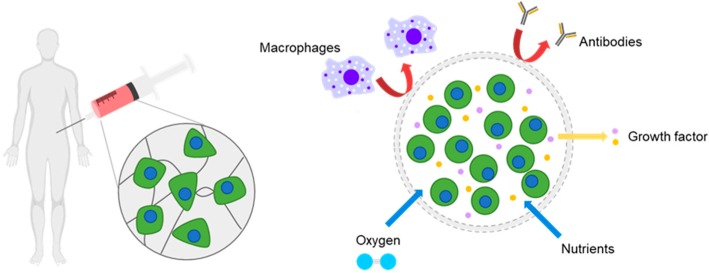
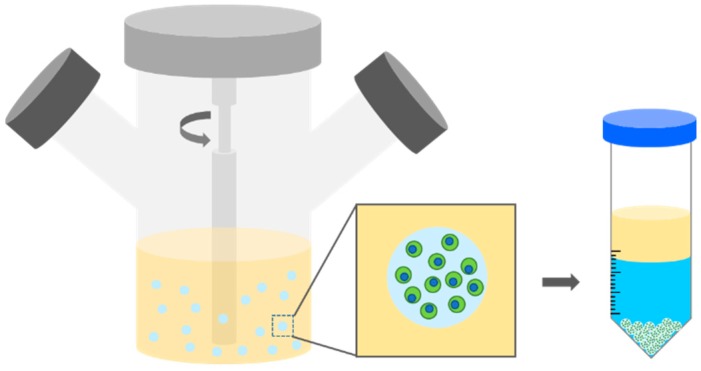
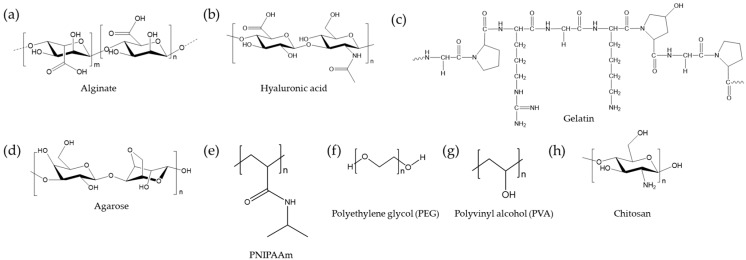
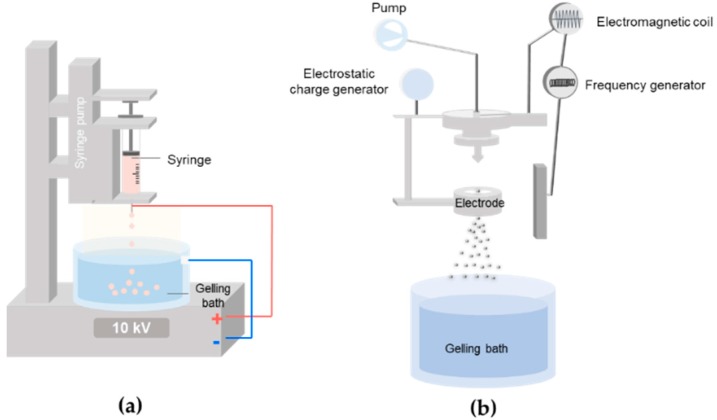
Stem cell transplantation has been recognized as a promising strategy to induce the regeneration of injured and diseased tissues and sustain therapeutic molecules for prolonged periods in vivo. However, stem cell-based therapy is often ineffective due to low survival, poor engraftment, and a lack of site-specificity. Hydrogels can offer several advantages as cell delivery vehicles, including cell stabilization and the provision of tissue-like environments with specific cellular signals; however, the administration of bulk hydrogels is still not appropriate to obtain safe and effective outcomes. Hence, stem cell encapsulation in uniform micro-sized hydrogels and their transplantation in vivo have recently garnered great attention for minimally invasive administration and the enhancement of therapeutic activities of the transplanted stem cells. Several important methods for stem cell microencapsulation are described in this review. In addition, various natural and synthetic polymers, which have been employed for the microencapsulation of stem cells, are reviewed in this article.
干细胞移植已被公认为是一种诱导受损和患病组织再生并在体内长时间维持治疗分子的有前景的策略。然而,基于干细胞的疗法往往因存活率低、植入性差和缺乏位点特异性而无效。水凝胶作为细胞递送载体具有多种优势,包括细胞稳定以及提供具有特定细胞信号的类似组织的环境;然而,大量水凝胶的给药仍不适用于获得安全有效的结果。因此,将干细胞封装在均匀的微米级水凝胶中并将其体内移植最近因微创给药和增强移植干细胞的治疗活性而备受关注。本文综述了几种干细胞微囊化的重要方法。此外,本文还综述了用于干细胞微囊化的各种天然和合成聚合物。