School of Biological Sciences, Faculty of Biology, Medicine and Health, University of Manchester, Manchester M13 9PT, United Kingdom.
School of Medical Sciences, Faculty of Biology, Medicine and Health, Manchester Academic Health Sciences Centre, University of Manchester, Manchester M13 9PT, United Kingdom.
Genome Res. 2019 May;29(5):723-736. doi: 10.1101/gr.243345.118. Epub 2019 Apr 8.
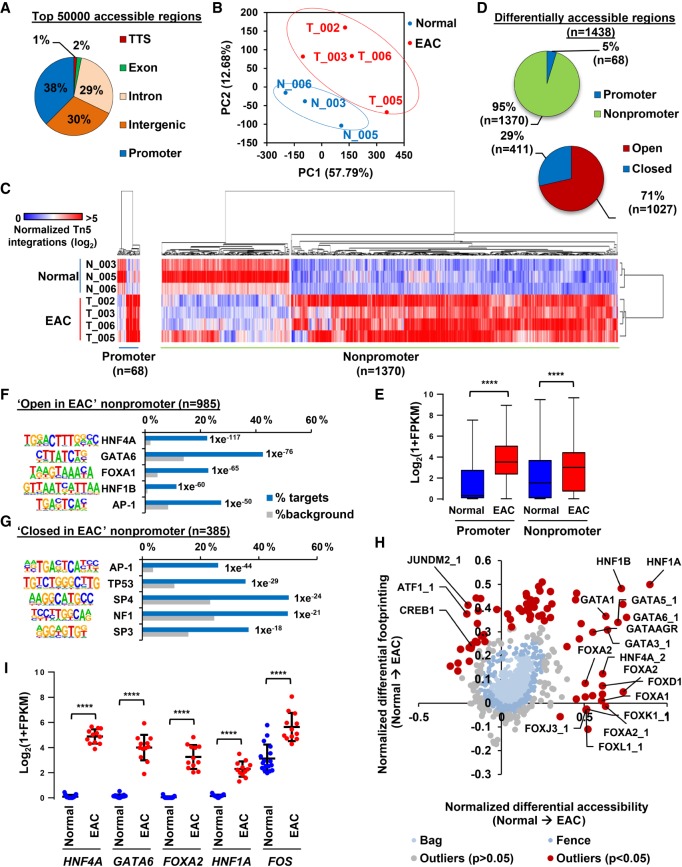
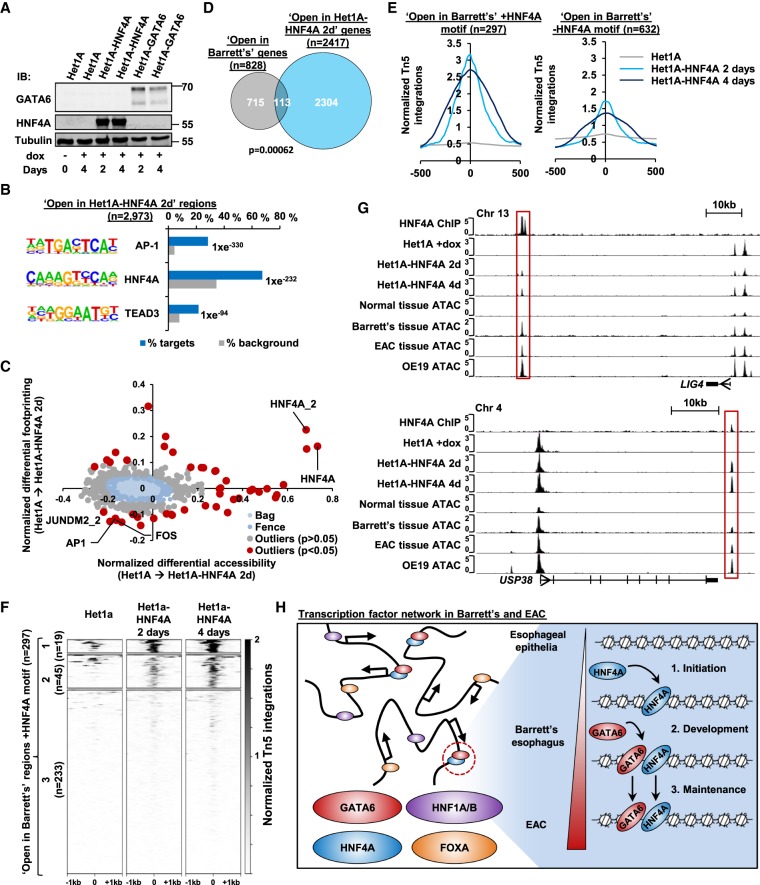
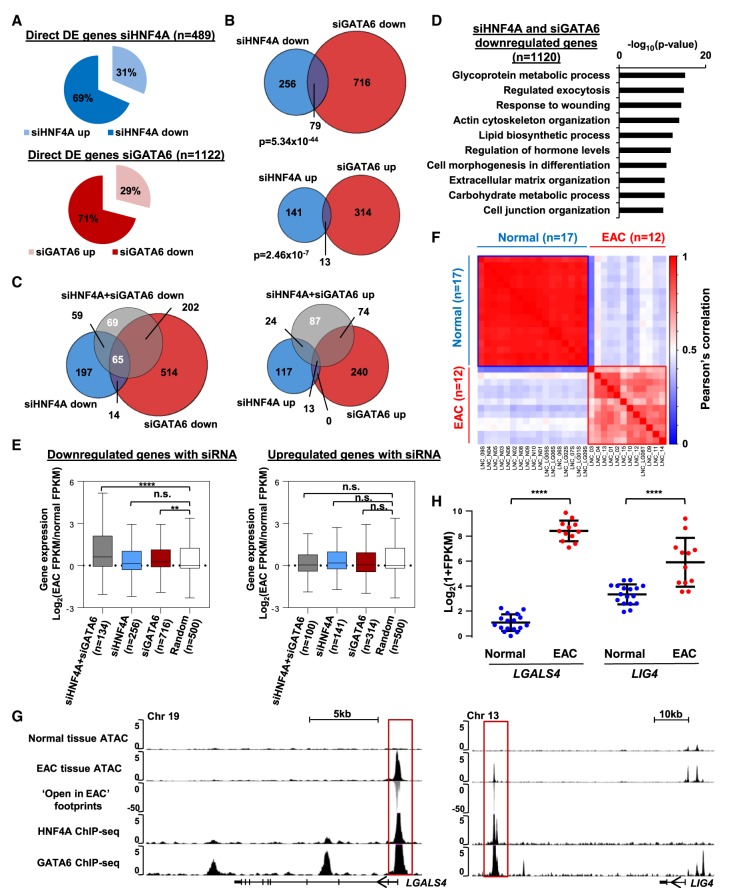
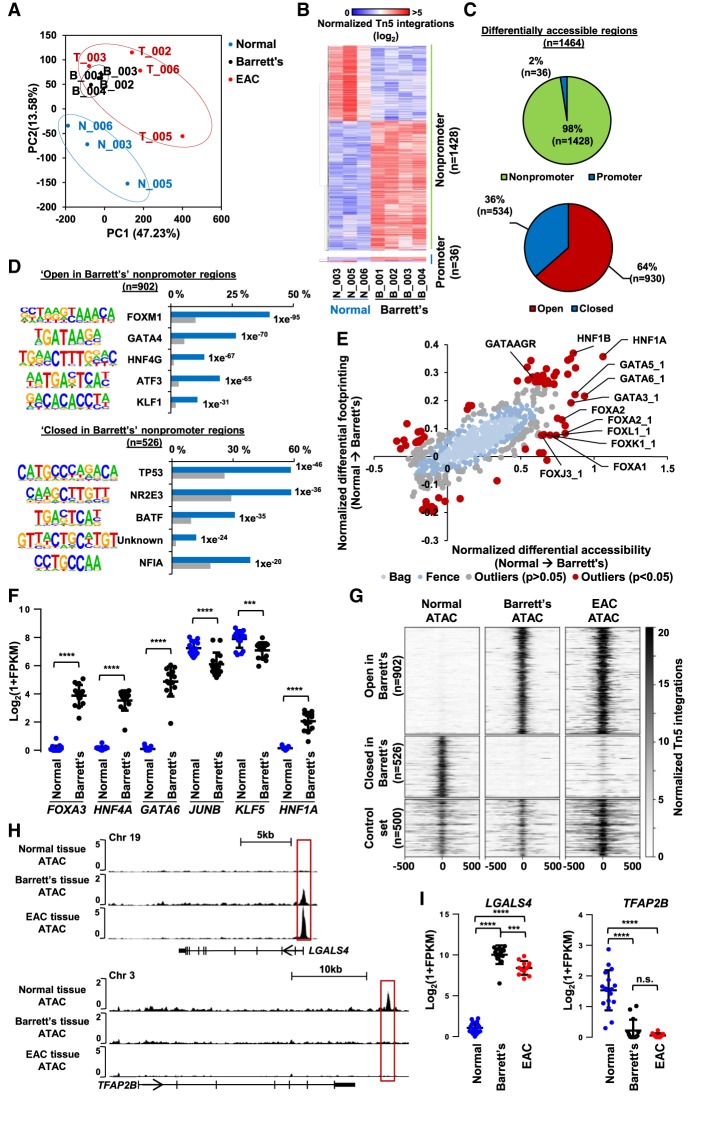
Esophageal adenocarcinoma (EAC) is one of the most frequent causes of cancer death, and yet compared to other common cancers, we know relatively little about the molecular composition of this tumor type. To further our understanding of this cancer, we have used open chromatin profiling to decipher the transcriptional regulatory networks that are operational in EAC. We have uncovered a transcription factor network that is usually found in primitive intestinal cells during embryonic development, centered on HNF4A and GATA6. These transcription factors work together to control the EAC transcriptome. We show that this network is activated in Barrett's esophagus, the putative precursor state to EAC, thereby providing novel molecular evidence in support of stepwise malignant transition. Furthermore, we show that HNF4A alone is sufficient to drive chromatin opening and activation of a Barrett's-like chromatin signature when expressed in normal human epithelial cells. Collectively, these data provide a new way to categorize EAC at a genome scale and implicate HNF4A activation as a potential pivotal event in its malignant transition from healthy cells.
食管腺癌 (EAC) 是癌症死亡的最常见原因之一,但与其他常见癌症相比,我们对这种肿瘤类型的分子组成知之甚少。为了进一步了解这种癌症,我们使用开放染色质分析来破译在 EAC 中起作用的转录调控网络。我们发现了一个转录因子网络,该网络通常存在于胚胎发育过程中的原始肠细胞中,以 HNF4A 和 GATA6 为中心。这些转录因子共同作用来控制 EAC 的转录组。我们表明,该网络在巴雷特食管中被激活,巴雷特食管是 EAC 的假定前体状态,从而提供了支持逐步恶性转化的新的分子证据。此外,我们表明,当在正常的人类上皮细胞中表达时,HNF4A 本身足以驱动染色质开放和巴雷特样染色质特征的激活。总之,这些数据提供了一种在全基因组范围内对 EAC 进行分类的新方法,并表明 HNF4A 的激活是其从健康细胞恶性转化的潜在关键事件。