School of Life Sciences, École Polytechnique Fédérale de Lausanne, 1015 Lausanne, Switzerland;
Institute for Evolution and Biodiversity, University of Muenster, 48149 Muenster, Germany.
Proc Natl Acad Sci U S A. 2019 Apr 23;116(17):8437-8444. doi: 10.1073/pnas.1821386116. Epub 2019 Apr 8.
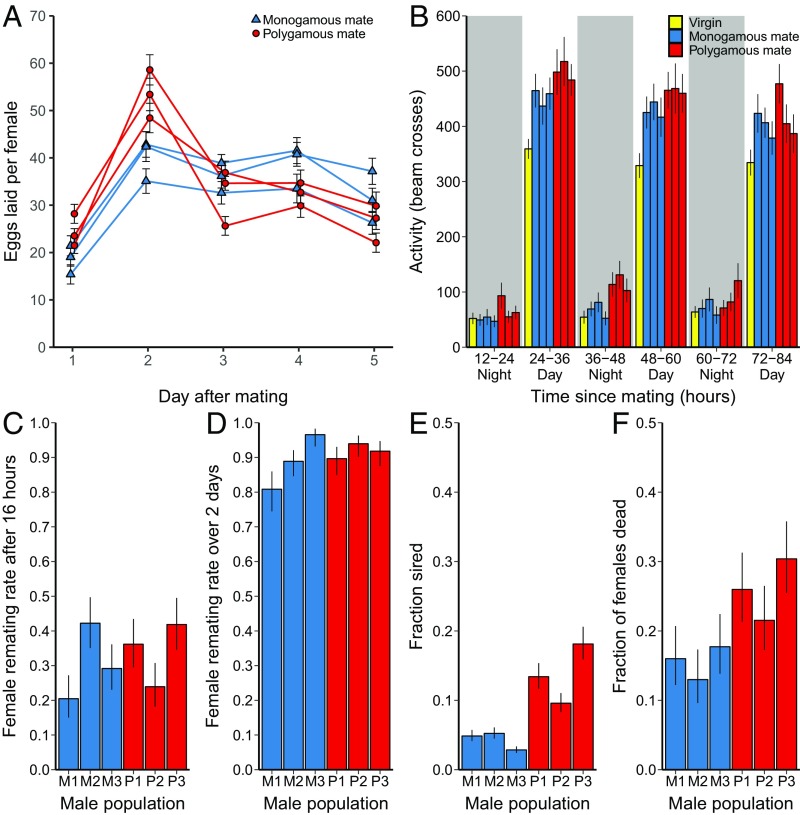
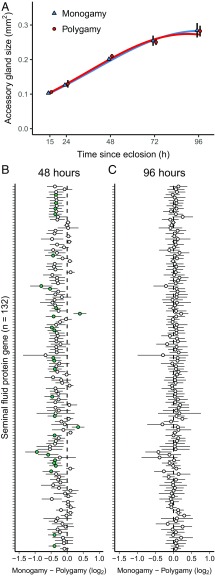
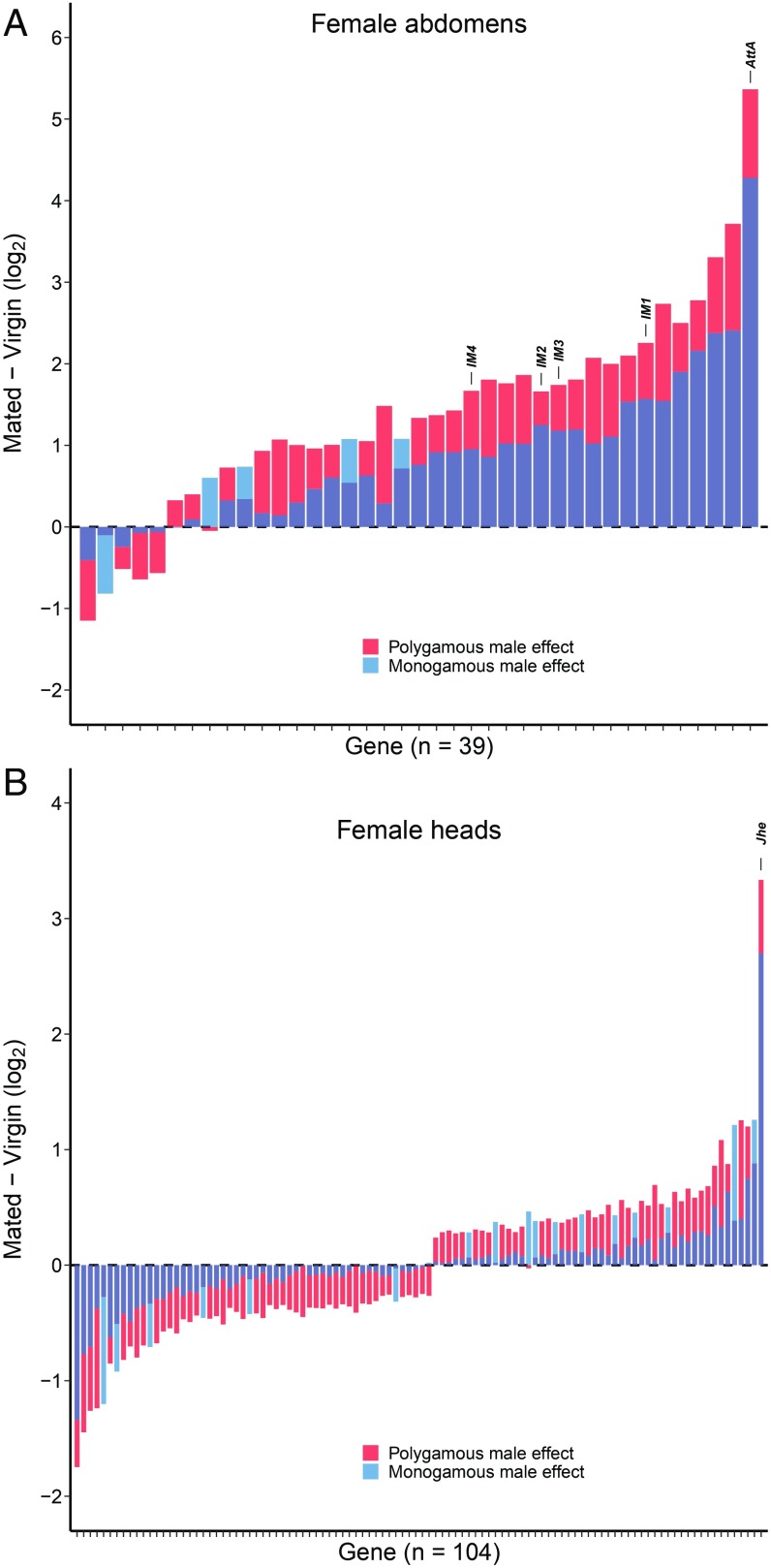
In many animals, females respond to mating with changes in physiology and behavior that are triggered by molecules transferred by males during mating. In , proteins in the seminal fluid are responsible for important female postmating responses, including temporal changes in egg production, elevated feeding rates and activity levels, reduced sexual receptivity, and activation of the immune system. It is unclear to what extent these changes are mutually beneficial to females and males or instead represent male manipulation. Here we use an experimental evolution approach in which females are randomly paired with a single male each generation, eliminating any opportunity for competition for mates or mate choice and thereby aligning the evolutionary interests of the sexes. After >150 generations of evolution, males from monogamous populations elicited a weaker postmating stimulation of egg production and activity than males from control populations that evolved with a polygamous mating system. Males from monogamous populations did not differ from males from polygamous populations in their ability to induce refractoriness to remating in females, but they were inferior to polygamous males in sperm competition. Mating-responsive genes in both the female abdomen and head showed a dampened response to mating with males from monogamous populations. Males from monogamous populations also exhibited lower expression of genes encoding seminal fluid proteins, which mediate the female response to mating. Together, these results demonstrate that the female postmating response, and the male molecules involved in eliciting this response, are shaped by ongoing sexual conflict.
在许多动物中,雌性在交配后会发生生理和行为上的变化,这些变化是由雄性在交配过程中传递的分子触发的。在 ,精液中的蛋白质负责重要的雌性交配后反应,包括卵子产量的暂时变化、摄食率和活动水平的提高、性接受能力的降低以及免疫系统的激活。目前还不清楚这些变化在多大程度上对雌性和雄性都是互惠互利的,还是代表了雄性的操纵。在这里,我们使用了一种实验进化的方法,即雌性每代随机与一只雄性交配,从而消除了对配偶的竞争或配偶选择的任何机会,从而使两性的进化利益保持一致。经过 >150 代的进化,来自一夫一妻制种群的雄性比来自具有多配偶制交配系统的对照组种群的雄性引起的产卵和活动的交配后刺激更弱。来自一夫一妻制种群的雄性在诱导雌性对再次交配产生抗性的能力上与来自多配偶制种群的雄性没有区别,但在精子竞争中却逊于多配偶制雄性。来自一夫一妻制种群的雄性与来自多配偶制种群的雄性交配后,雌性腹部和头部的交配反应基因的反应明显减弱。来自一夫一妻制种群的雄性还表现出编码精液蛋白的基因表达降低,这些蛋白介导了雌性对交配的反应。总之,这些结果表明,雌性交配后的反应,以及参与引发这种反应的雄性分子,都受到持续的性冲突的影响。