Department of Diagnostic Imaging, Breast Imaging Division, MD Anderson Center, University of Texas, 1515 Holcombe Blvd., Houston, TX, 77030, USA.
Voxel Imaging, Inc., 2711 N. Sepulveda Blvd., #284, Manhattan Beach, CA, 90266, USA.
J Digit Imaging. 2019 Aug;32(4):618-624. doi: 10.1007/s10278-018-0168-6.
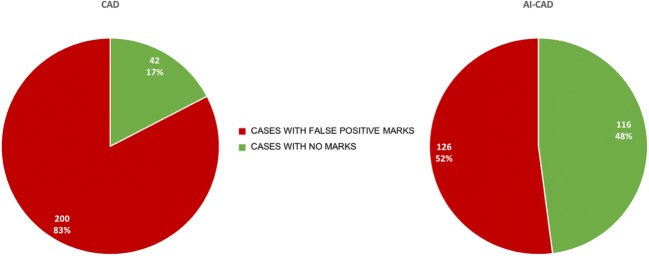
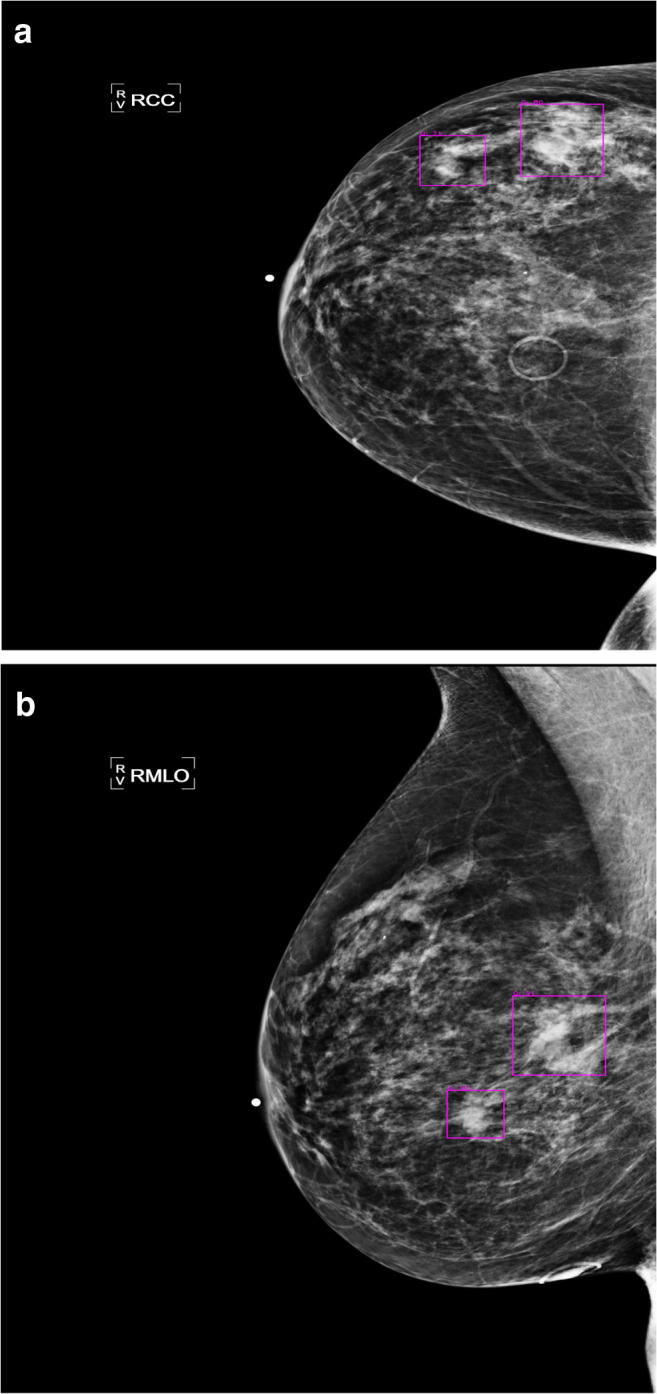
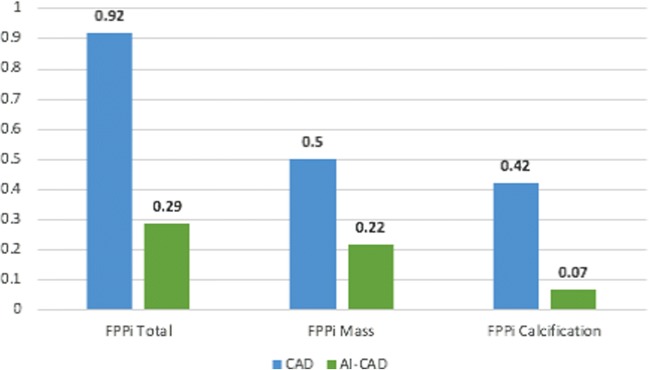
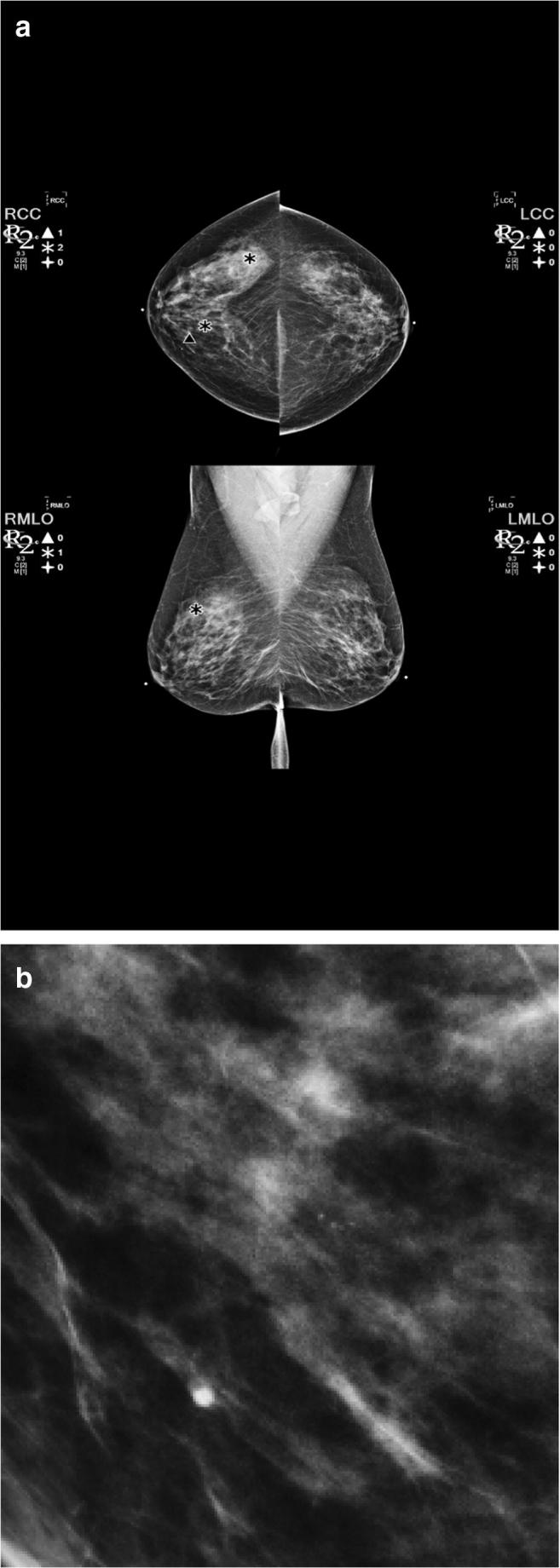
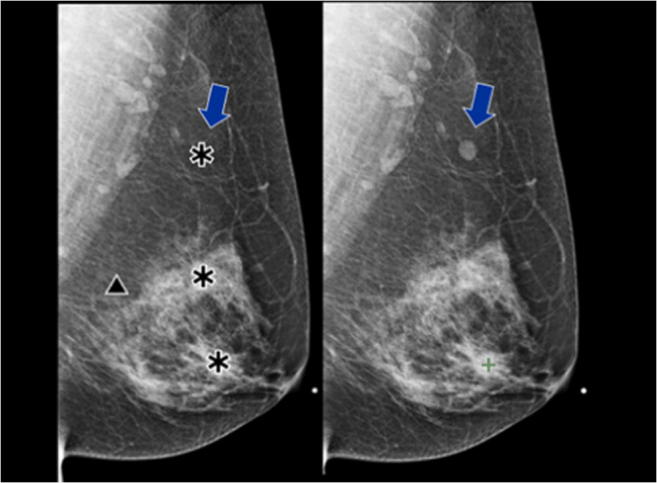
The aim was to determine whether an artificial intelligence (AI)-based, computer-aided detection (CAD) software can be used to reduce false positive per image (FPPI) on mammograms as compared to an FDA-approved conventional CAD. A retrospective study was performed on a set of 250 full-field digital mammograms between January 1, 2013, and March 31, 2013, and the number of marked regions of interest of two different systems was compared for sensitivity and specificity in cancer detection. The count of false-positive marks per image (FPPI) of the two systems was also evaluated as well as the number of cases that were completely mark-free. All results showed statistically significant reductions in false marks with the use of AI-CAD vs CAD (confidence interval = 95%) with no reduction in sensitivity. There is an overall 69% reduction in FPPI using the AI-based CAD as compared to CAD, consisting of 83% reduction in FPPI for calcifications and 56% reduction for masses. Almost half (48%) of cases showed no AI-CAD markings while only 17% show no conventional CAD marks. There was a significant reduction in FPPI with AI-CAD as compared to CAD for both masses and calcifications at all tissue densities. A 69% decrease in FPPI could result in a 17% decrease in radiologist reading time per case based on prior literature of CAD reading times. Additionally, decreasing false-positive recalls in screening mammography has many direct social and economic benefits.
目的在于确定人工智能(AI)辅助的计算机辅助检测(CAD)软件是否可用于减少全数字化乳腺摄影术(FFDM)中的每幅图像假阳性率(FPPI),与 FDA 批准的传统 CAD 相比。对 2013 年 1 月 1 日至 2013 年 3 月 31 日期间的一组 250 例全数字化乳腺摄影术进行了回顾性研究,比较了两种不同系统标记的感兴趣区域的数量,以评估其在癌症检测中的敏感性和特异性。还评估了两种系统的每幅图像假阳性标记数量(FPPI)以及完全无标记的病例数量。所有结果均表明,与 CAD 相比,使用 AI-CAD 可显著减少假阳性标记(置信区间为 95%),而不会降低敏感性。与 CAD 相比,使用基于 AI 的 CAD 可使 FPPI 总体减少 69%,其中钙化的 FPPI 减少 83%,肿块的 FPPI 减少 56%。几乎一半(48%)的病例没有 AI-CAD 标记,而只有 17%的病例没有传统 CAD 标记。在所有组织密度中,AI-CAD 与 CAD 相比,在肿块和钙化方面的 FPPI 均显著降低。基于 CAD 阅读时间的先前文献,FPPI 减少 69%可能导致每个病例的放射科医生阅读时间减少 17%。此外,减少筛查性乳腺摄影术的假阳性召回具有许多直接的社会效益和经济效益。