Departamento de Ecología de la Biodiversidad, Instituto de Ecología, Universidad Nacional Autónoma de México, Ciudad de México, México.
Centro de Investigaciones Regionales Dr Hideyo Noguchi, Universidad Autónoma de Yucatán, calle 96 s/n x av. Jacinto Canek y calle 47, Col. Paseo de las Fuentes, CP 97225, Mérida, Yucatán, México.
PLoS Negl Trop Dis. 2019 Apr 9;13(4):e0006859. doi: 10.1371/journal.pntd.0006859. eCollection 2019 Apr.
In Mexico, estimates of Chagas disease prevalence and burden vary widely. Updating surveillance data is therefore an important priority to ensure that Chagas disease does not remain a barrier to the development of Mexico's most vulnerable populations.
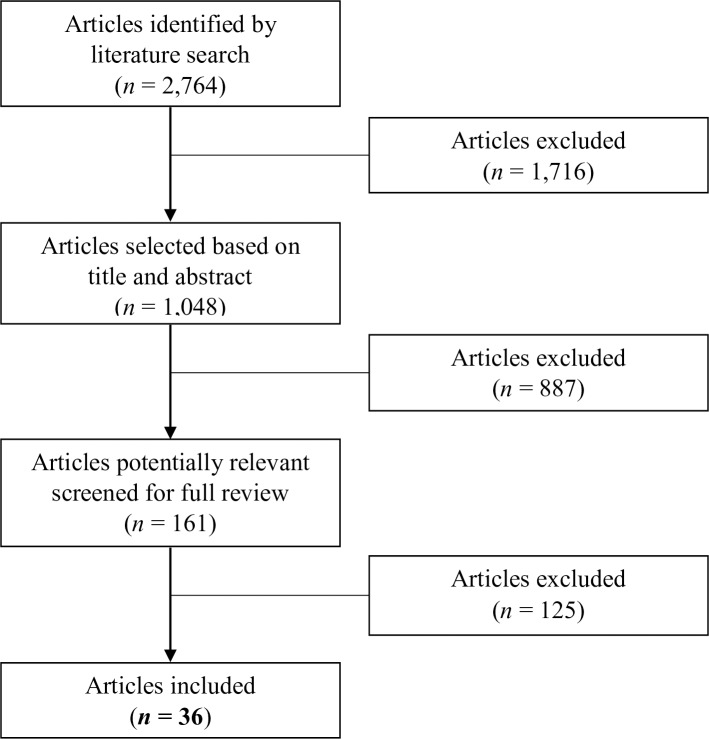
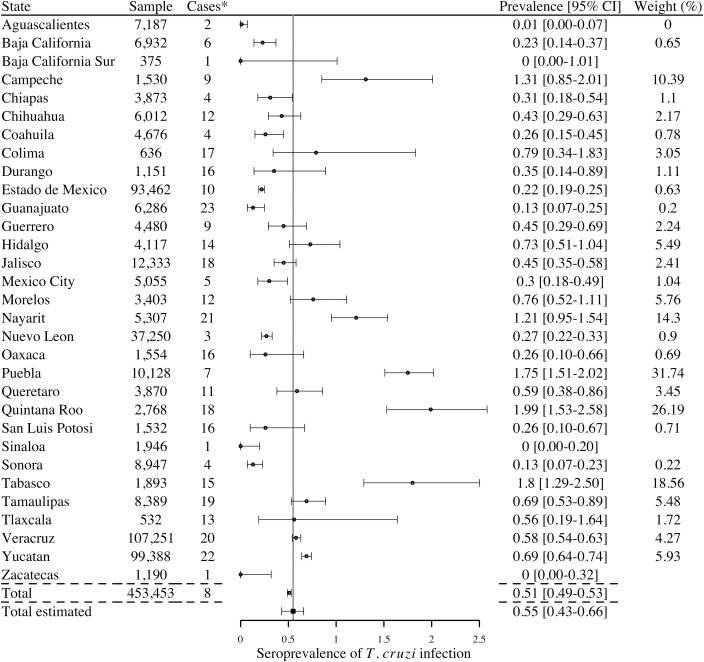
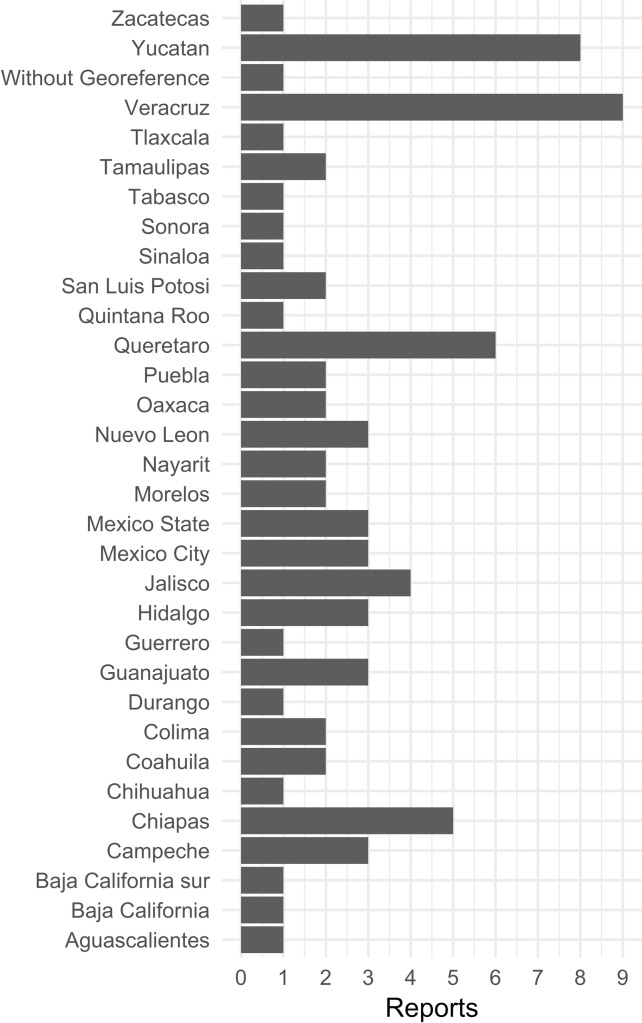
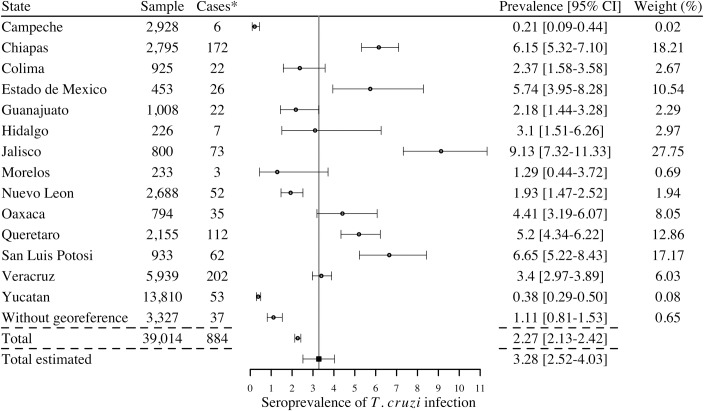
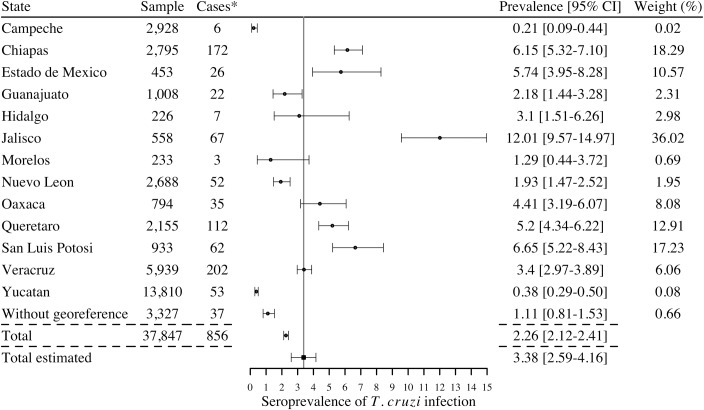
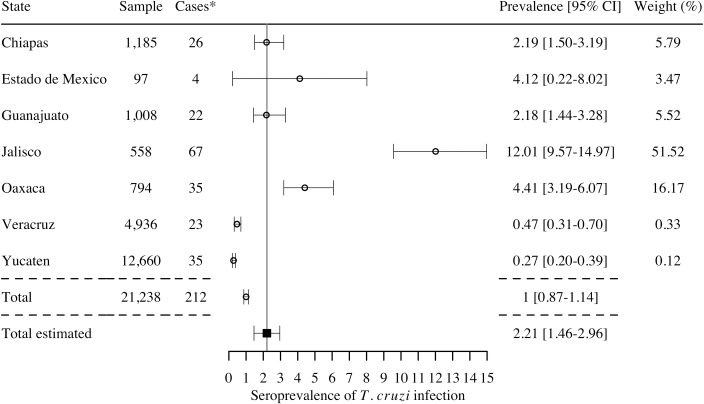
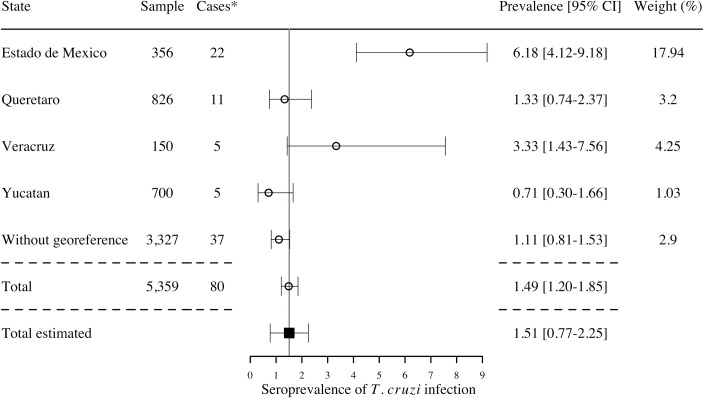
METHODOLOGY/PRINCIPAL FINDINGS: The aim of this systematic review and meta-analysis was to analyze the literature on epidemiological surveys to estimate Chagas disease prevalence and burden in Mexico, during the period 2006 to 2017. A total of 2,764 articles were screened and 36 were retained for the final analysis. Epidemiological surveys have been performed in most of Mexico, but with variable study scale and geographic coverage. Based on studies reporting confirmed cases (i.e. using at least 2 serological tests), and taking into account the differences in sample sizes, the national estimated seroprevalence of Trypanosoma cruzi infection was 3.38% [95%CI 2.59-4.16], suggesting that there are 4.06 million cases in Mexico. Studies focused on pregnant women, which may transmit the parasite to their newborn during pregnancy, reported an estimated seroprevalence of 2.21% [95%CI 1.46-2.96], suggesting that there are 50,675 births from T. cruzi infected pregnant women per year, and 3,193 cases of congenitally infected newborns per year. Children under 18 years had an estimated seropositivity rate of 1.51% [95%CI 0.77-2.25], which indicate ongoing transmission. Cases of T. cruzi infection in blood donors have also been reported in most states, with a national estimated seroprevalence of 0.55% [95%CI 0.43-0.66].
CONCLUSIONS/SIGNIFICANCE: Our analysis suggests a disease burden for T. cruzi infection higher than previously recognized, highlighting the urgency of establishing Chagas disease surveillance and control as a key national public health priority in Mexico, to ensure that it does not remain a major barrier to the economic and social development of the country's most vulnerable populations.
在墨西哥,对恰加斯病流行率和负担的估计差异很大。因此,更新监测数据是一项重要的优先事项,以确保恰加斯病不会继续成为墨西哥最脆弱人群发展的障碍。
方法/主要发现:本系统评价和荟萃分析的目的是分析 2006 年至 2017 年期间关于流行病学调查的文献,以估算墨西哥的恰加斯病流行率和负担。共筛选出 2764 篇文章,其中 36 篇被保留进行最终分析。墨西哥大部分地区都开展了流行病学调查,但研究规模和地理覆盖范围各不相同。基于报告确诊病例的研究(即使用至少 2 种血清学检测),并考虑到样本量的差异,全国感染克氏锥虫的血清学估计流行率为 3.38%[95%CI 2.59-4.16],表明墨西哥有 406 万例病例。针对孕妇的研究表明,孕妇在怀孕期间可能会将寄生虫传染给新生儿,估计血清阳性率为 2.21%[95%CI 1.46-2.96],表明每年有 50675 例由 T. cruzi 感染孕妇分娩,每年有 3193 例先天性感染新生儿。18 岁以下儿童的血清阳性率估计为 1.51%[95%CI 0.77-2.25],表明仍在传播。在大多数州也报告了献血者感染 T. cruzi 的病例,全国估计血清阳性率为 0.55%[95%CI 0.43-0.66]。
结论/意义:我们的分析表明,克氏锥虫感染的疾病负担高于先前的认识,这突显了在墨西哥建立恰加斯病监测和控制作为国家公共卫生重点的紧迫性,以确保它不会继续成为该国最脆弱人群经济和社会发展的主要障碍。