Department of Analytical Chemistry, Medical University of Bialystok, 15-222 Bialystok, Poland.
Department of Integrated Dentistry, Medical University of Bialystok, 15-230 Bialystok, Poland.
Cells. 2019 Apr 8;8(4):325. doi: 10.3390/cells8040325.
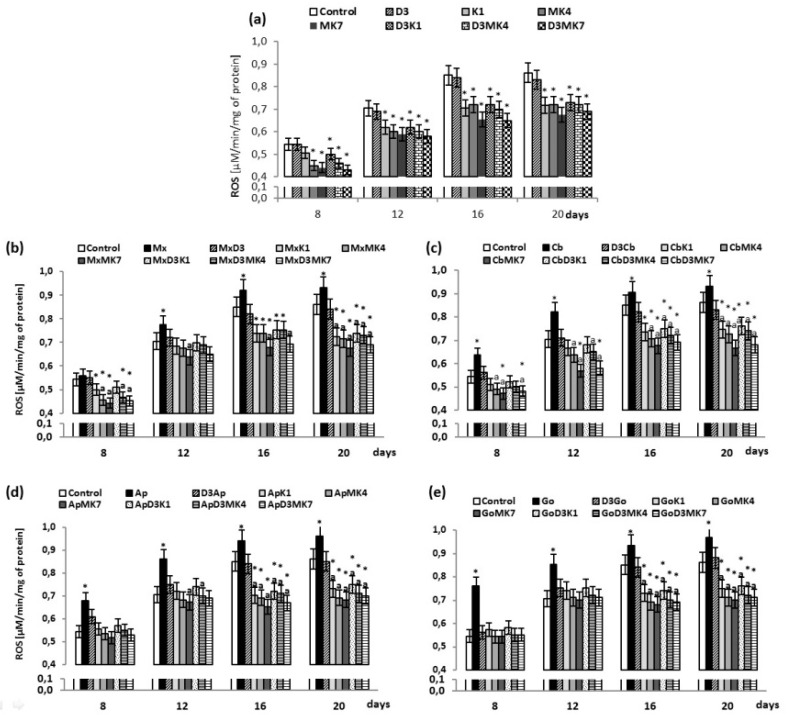
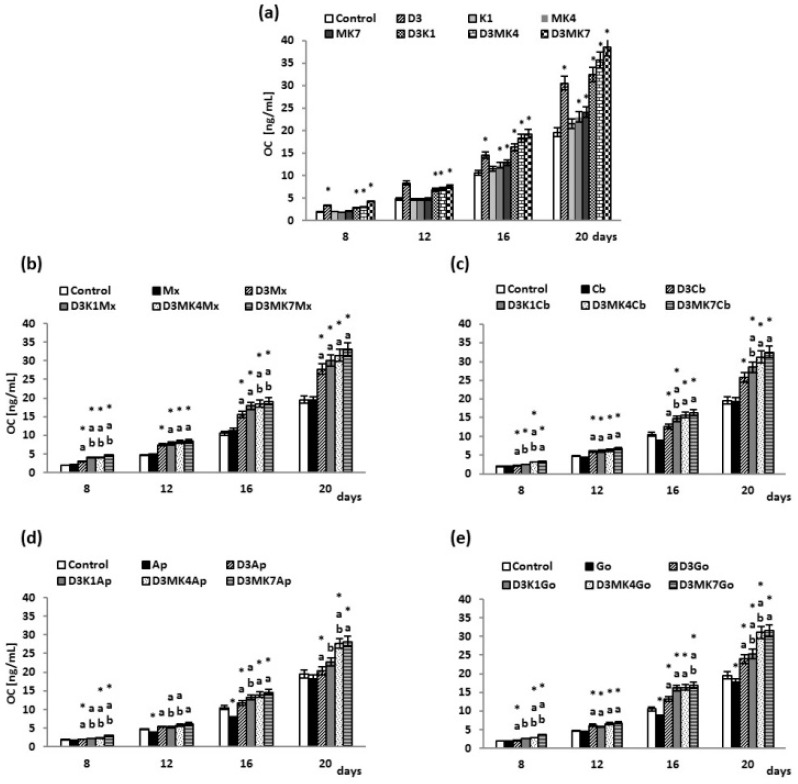
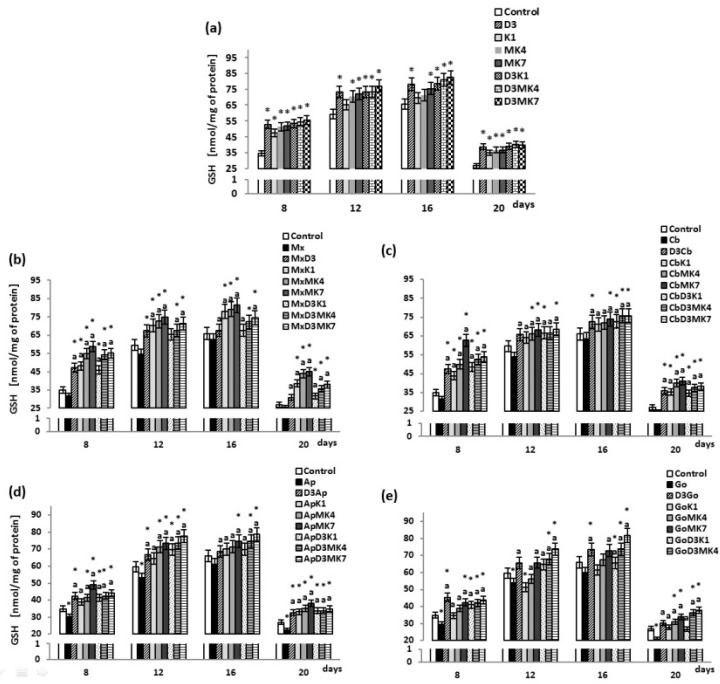
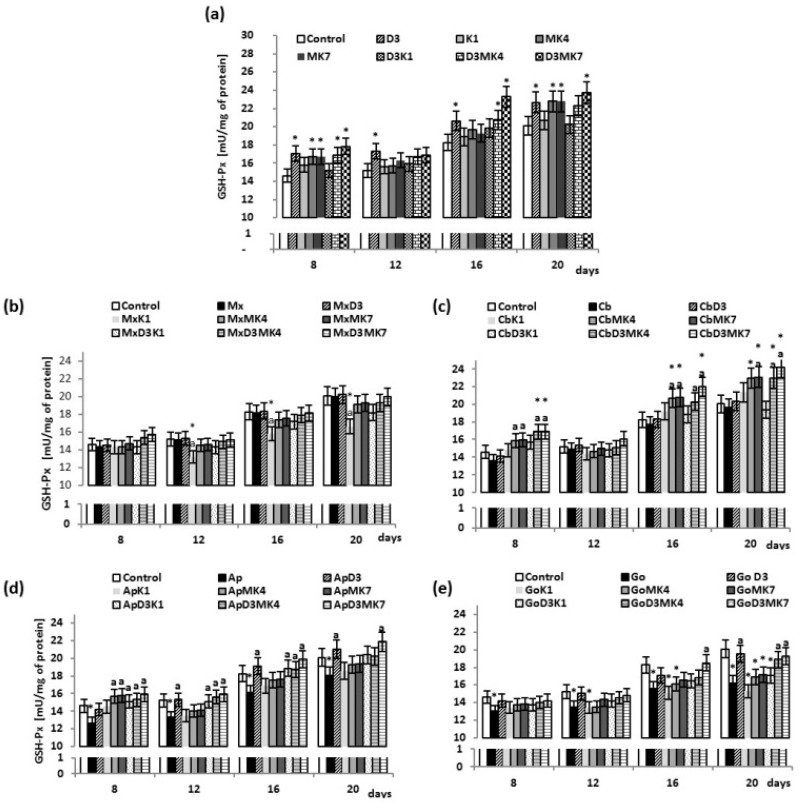
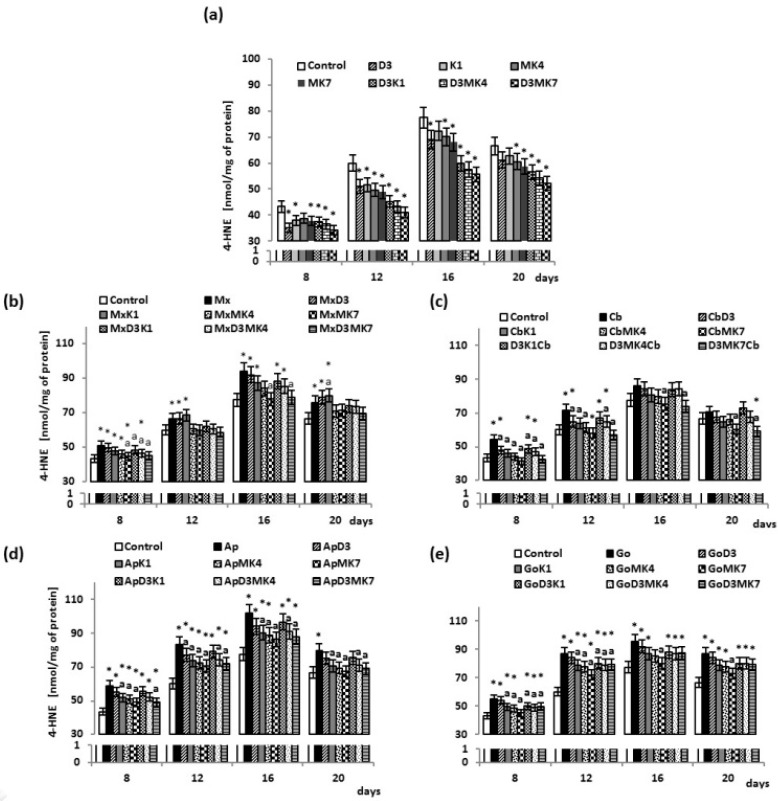
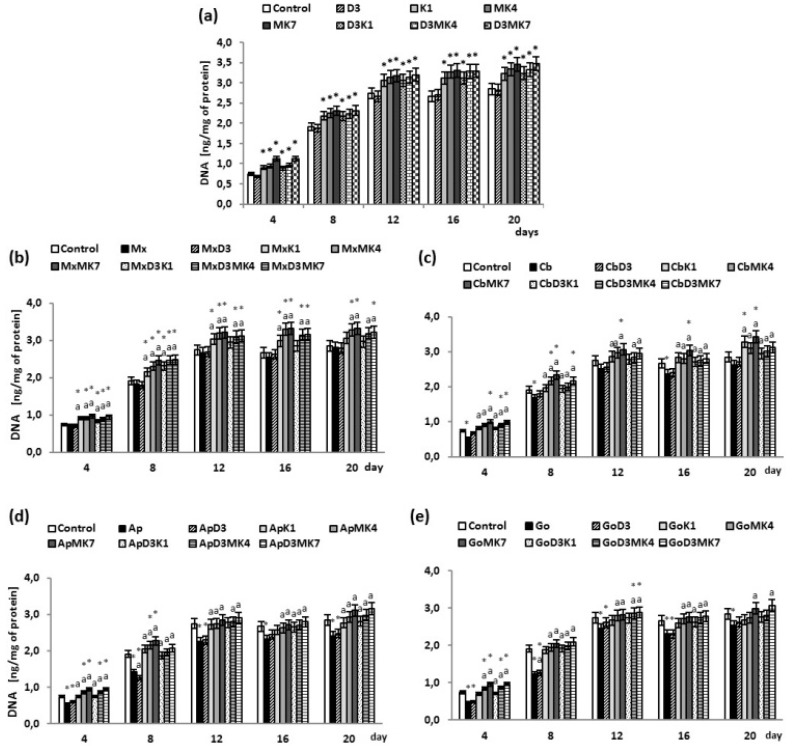
Hydroxyapatite-based biomaterials are commonly used in surgery to repair bone damage. However, the introduction of biomaterials into the body can cause metabolic alterations, including redox imbalance. Because vitamins D3 and K (K1, MK-4, MK-7) have pronounced osteoinductive, anti-inflammatory, and antioxidant properties, it is suggested that they may reduce the adverse effects of biomaterials. The aim of this study was to investigate the effects of vitamins D3 and K, used alone and in combination, on the redox metabolism of human osteoblasts (hFOB 1.19 cell line) cultured in the presence of hydroxyapatite-based biomaterials (Maxgraft, Cerabone, Apatos, and Gen-Os). Culturing of the osteoblasts in the presence of hydroxyapatite-based biomaterials resulted in oxidative stress manifested by increased production of reactive oxygen species and decrease of glutathione level and glutathione peroxidase activity. Such redox imbalance leads to lipid peroxidation manifested by an increase of 4-hydroxynonenal level, which is known to influence the growth of bone cells. Vitamins D3 and K were shown to help maintain redox balance and prevent lipid peroxidation in osteoblasts cultured with hydroxyapatite-based biomaterials. The strongest effect was observed for the combination of vitamin D3 and MK-7. Moreover, vitamins promoted growth of the osteoblasts, manifested by increased DNA biosynthesis. Therefore, it is suggested that the use of vitamins D3 and K may protect redox balance and support the growth of osteoblasts affected by hydroxyapatite-based biomaterials.
基于羟基磷灰石的生物材料常用于手术修复骨损伤。然而,生物材料进入体内会引起代谢改变,包括氧化还原失衡。由于维生素 D3 和 K(K1、MK-4、MK-7)具有明显的成骨诱导、抗炎和抗氧化特性,因此有人认为它们可能减轻生物材料的不良影响。本研究旨在探讨维生素 D3 和 K 单独和联合使用对羟基磷灰石基生物材料(Maxgraft、Cerabone、Apatos 和 Gen-Os)培养的人成骨细胞(hFOB 1.19 细胞系)氧化还原代谢的影响。在羟基磷灰石基生物材料存在的情况下培养成骨细胞会导致氧化应激,表现为活性氧的产生增加,谷胱甘肽水平和谷胱甘肽过氧化物酶活性降低。这种氧化还原失衡会导致脂质过氧化,表现为 4-羟基壬烯醛水平升高,已知其会影响骨细胞的生长。研究表明,维生素 D3 和 K 有助于维持氧化还原平衡,防止羟基磷灰石基生物材料培养的成骨细胞发生脂质过氧化。维生素 D3 和 MK-7 的联合使用效果最强。此外,维生素促进了成骨细胞的生长,表现为 DNA 生物合成增加。因此,建议使用维生素 D3 和 K 可能有助于保护氧化还原平衡并支持受羟基磷灰石基生物材料影响的成骨细胞的生长。