Shu Guowei, He Yunxia, Chen Li, Song Yajuan, Cao Jili, Chen He
School of Food and Biological Engineering, Shaanxi University of Science and Technology, Xi'an 710021, China.
College of Food Engineering and Nutritional Science, Shaanxi Normal University, Xi'an 710119, China.
Polymers (Basel). 2018 May 28;10(6):588. doi: 10.3390/polym10060588.
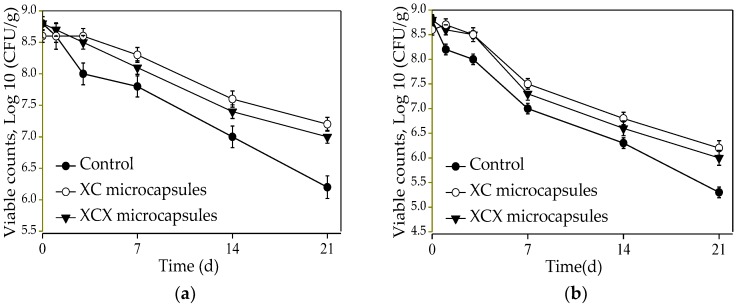
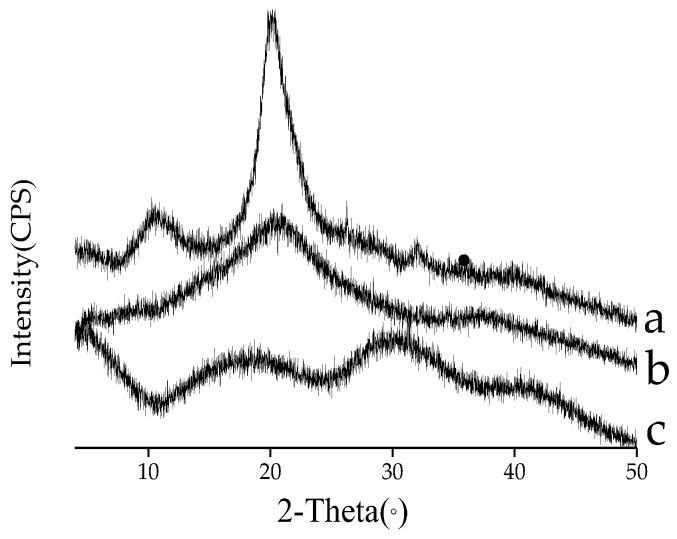
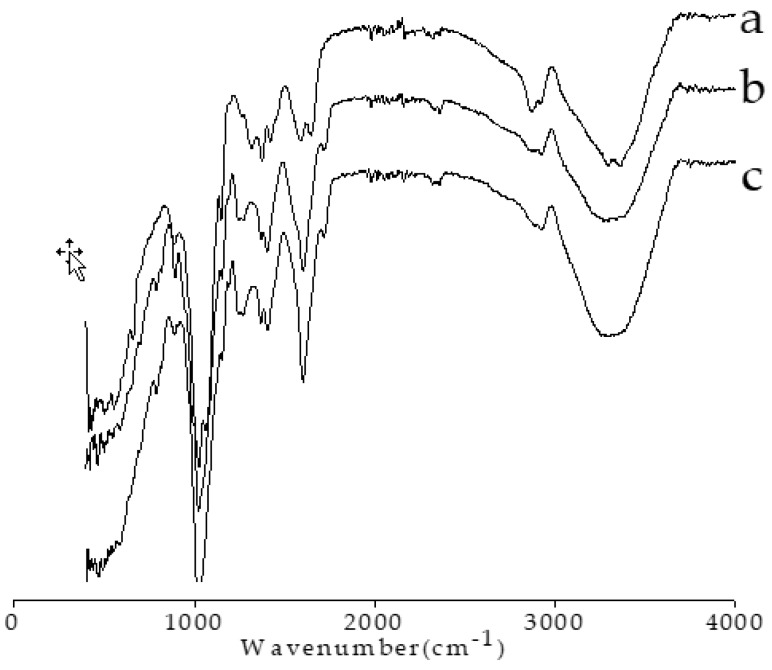
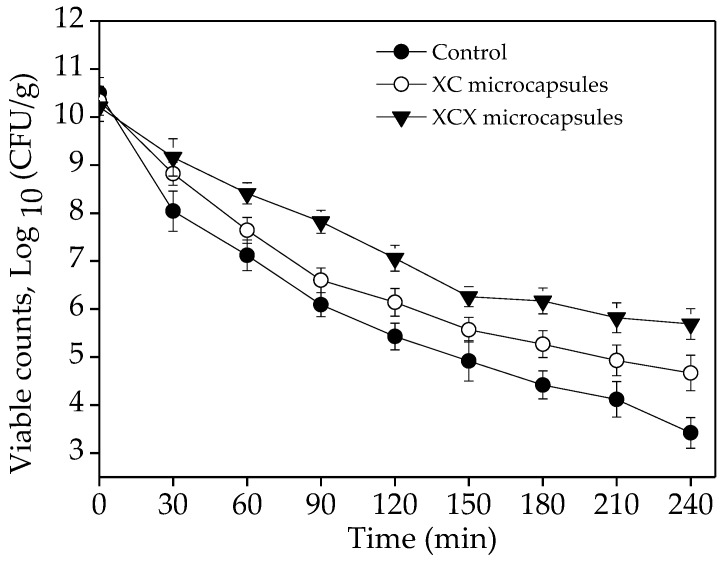
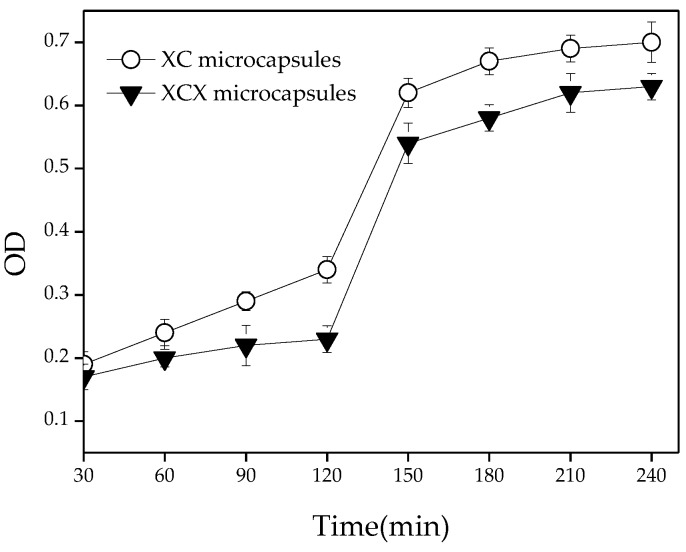
was encapsulated in xanthan⁻chitosan (XC) and xanthan⁻chitosan⁻xanthan (XCX) polyelectrolyte complex (PEC) gels by extrusion method. The obtained capsules were characterized by X-ray diffraction and FTIR spectroscopy. The effects of microencapsulation on the changes in survival and release behavior of the during exposure to simulated gastric fluid (SGF) and simulated intestinal fluid (SIF) were studied. Encapsulated exhibited a significantly higher resistance to SGF and SIF than non-encapsulated samples. In addition, the viability of free and immobilized cells of incorporated into dairy beverages was assessed for 21 days both at room temperature and in refrigerated storage. The results indicated that xanthan⁻chitosan⁻xanthan (XCX) and xanthan⁻chitosan (XC) significantly ( < 0.05) improved the cell survival of in yogurt during 21 days of storage at 4 and 25 °C, when compared to free cells.
通过挤压法将其包封在黄原胶 - 壳聚糖(XC)和黄原胶 - 壳聚糖 - 黄原胶(XCX)聚电解质复合物(PEC)凝胶中。通过X射线衍射和傅里叶变换红外光谱对所得胶囊进行表征。研究了微胶囊化对其在模拟胃液(SGF)和模拟肠液(SIF)中暴露期间存活率和释放行为变化的影响。包封后的样品对SGF和SIF的耐受性明显高于未包封的样品。此外,评估了掺入乳制品饮料中的游离和固定化细胞在室温及冷藏条件下21天的活力。结果表明,与游离细胞相比,在4℃和25℃下储存21天期间,黄原胶 - 壳聚糖 - 黄原胶(XCX)和黄原胶 - 壳聚糖(XC)显著(P < 0.05)提高了酸奶中细胞的存活率。