Department of Chemical Engineering, Universidade Federal de Minas Gerais (UFMG), Belo Horizonte, Minas Gerais 30270-901, Brazil.
Center for Optics, Photonics and Lasers (COPL), Université Laval, Quebec City, QC G1V 0A6, Canada.
Sensors (Basel). 2019 Apr 9;19(7):1686. doi: 10.3390/s19071686.
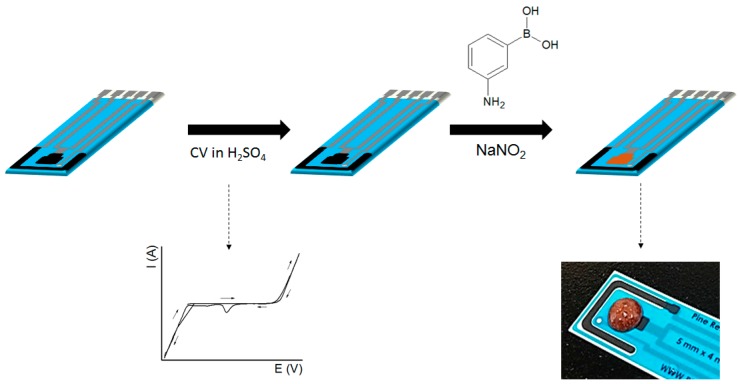
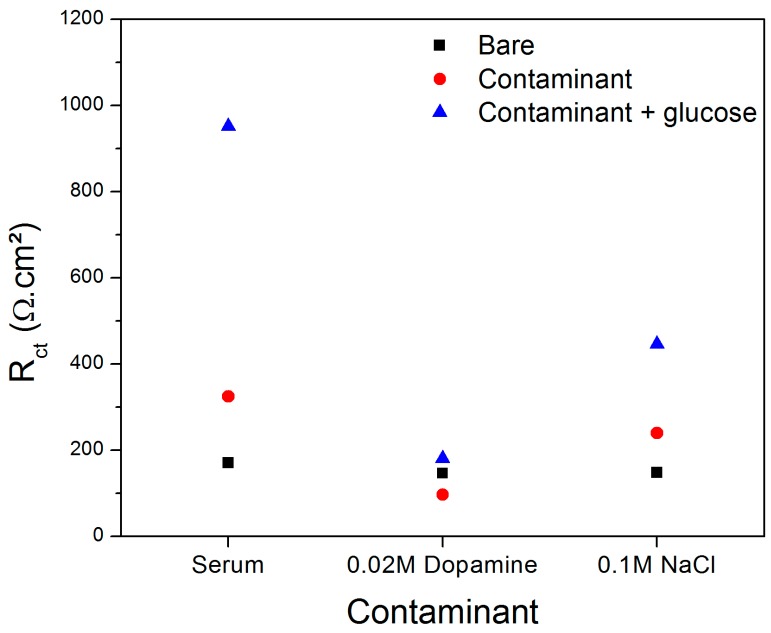
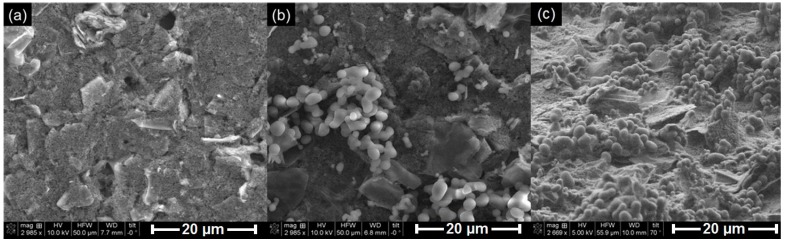
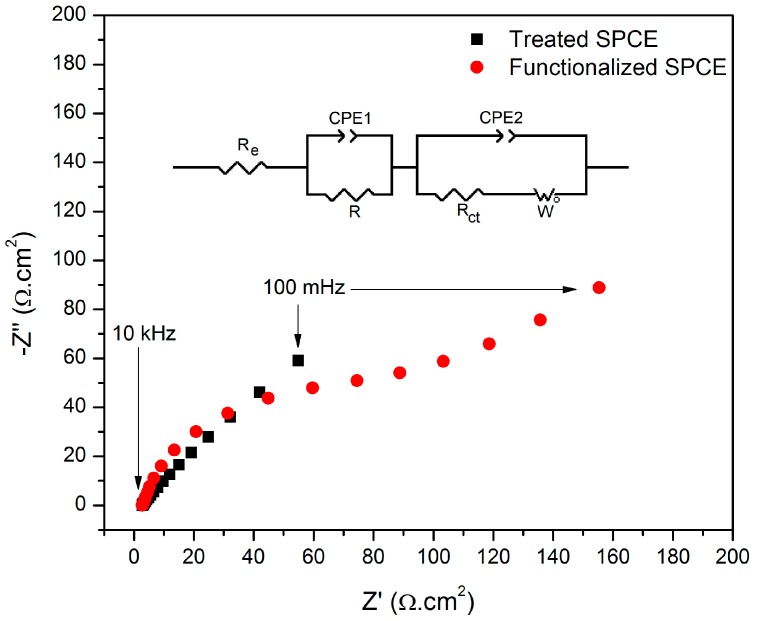
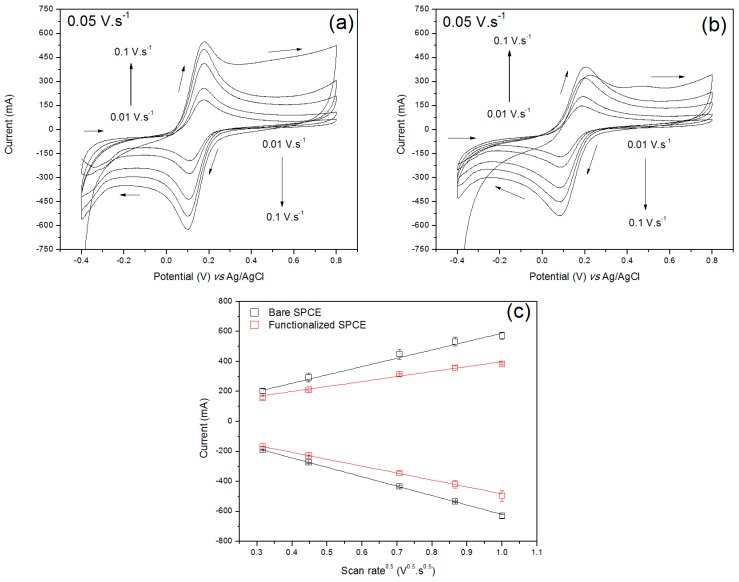
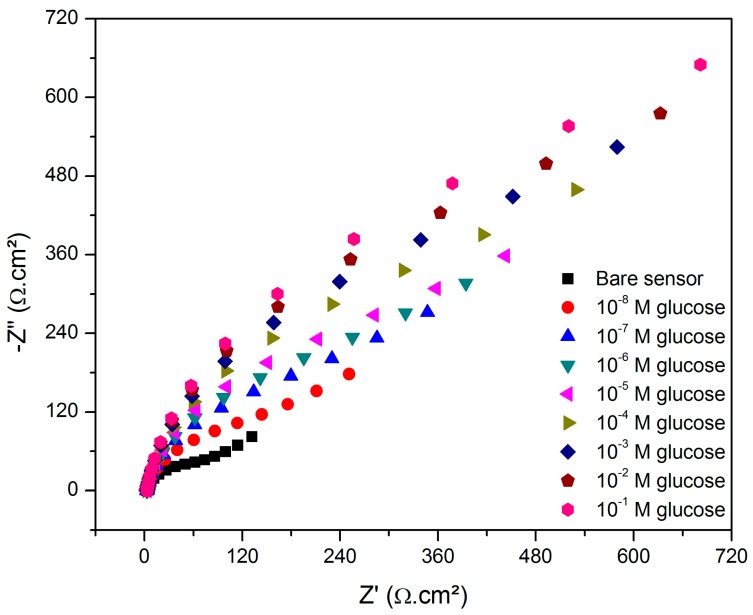
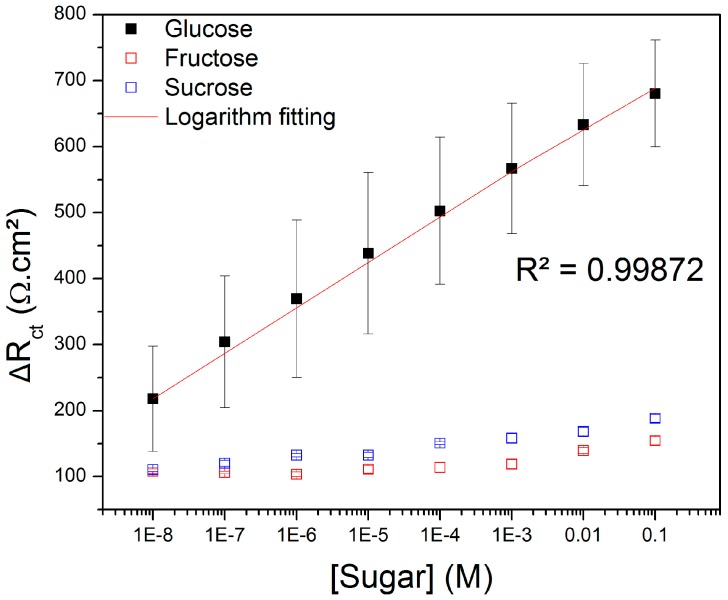
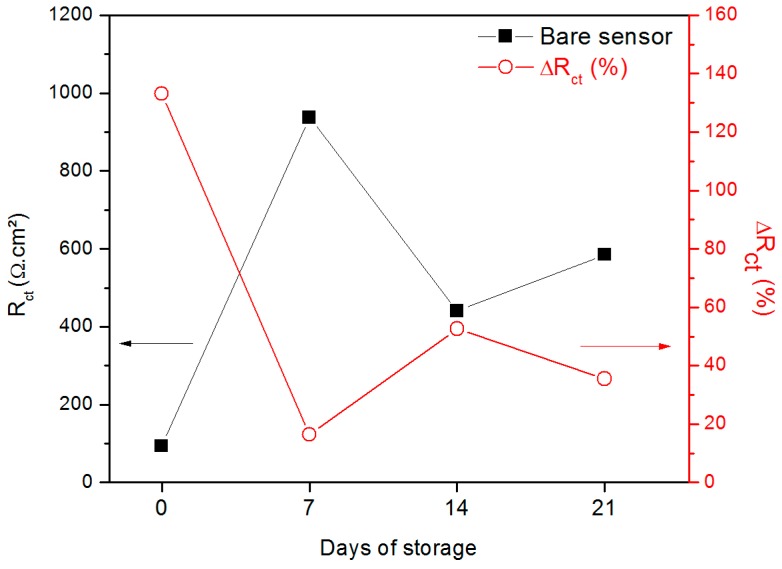
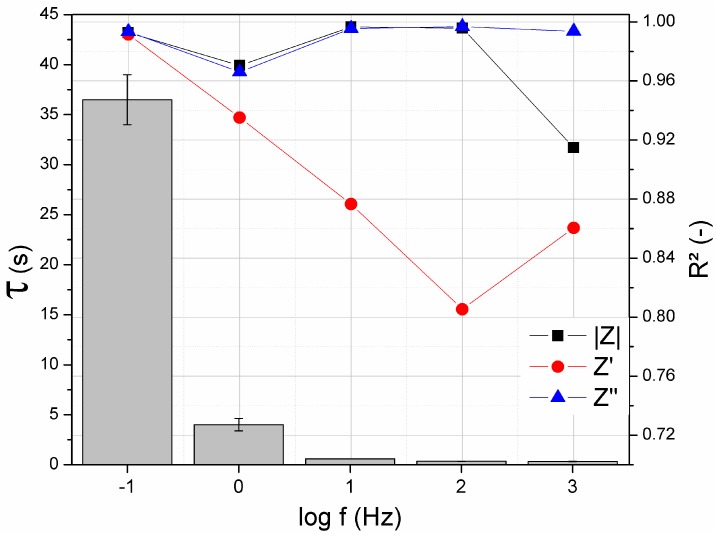
A highly sensitive glucose sensor was prepared by a one-step method using 3-aminophenyl boronic acid as a unit of recognition and a screen-printed carbon electrode (SPCE) as an electrochemical transducer. Scanning Electron Microscopy confirmed the success of the functionalization of the SPCE due to the presence of clusters of boronic acid distributed on the carbon surface. In agreement with the Electrochemical Impedance Spectroscopy (EIS) tests performed before and after the functionalization, Cyclic Voltammetry results indicated that the electroactivity of the electrode decreased 37.9% owing to the presence of the poly phenylboronic acid on the electrode surface. EIS revealed that the sensor was capable to selectively detect glucose at a broad range of concentrations (limit of detection of 8.53 × 10 M), not recognizing fructose and sucrose. The device presented a stable impedimetric response when immediately prepared but suffered the influence of the storage time and some interfering species (dopamine, NaCl and animal serum). The response time at optimized conditions was estimated to be equal to 4.0 ± 0.6 s.
一种高灵敏度的葡萄糖传感器通过一步法制备,使用 3-氨基苯硼酸作为识别单元和丝网印刷碳电极(SPCE)作为电化学换能器。扫描电子显微镜证实了 SPCE 的功能化成功,因为在碳表面上存在分布的硼酸簇。与功能化前后进行的电化学阻抗谱(EIS)测试一致,循环伏安法结果表明,由于电极表面存在多苯硼酸,电极的电活性降低了 37.9%。EIS 表明,该传感器能够在较宽浓度范围内(检测限为 8.53×10^-5 M)选择性地检测葡萄糖,而不能识别果糖和蔗糖。该设备在立即制备时呈现出稳定的阻抗响应,但受到储存时间和一些干扰物质(多巴胺、NaCl 和动物血清)的影响。在优化条件下的响应时间估计为 4.0±0.6 s。