Xiong Yuting, Li Minmin, Lu Qi, Qing Guangyan, Sun Taolei
State Key Laboratory of Advanced Technology for Materials Synthesis and Processing, Wuhan University of Technology, 122 Luoshi Road, Wuhan 430070, China.
College of Mechanical Engineering, Jiangxi University of Technology, 115 Ziyang Road, Nanchang 330098, China.
Polymers (Basel). 2017 Jun 27;9(7):249. doi: 10.3390/polym9070249.
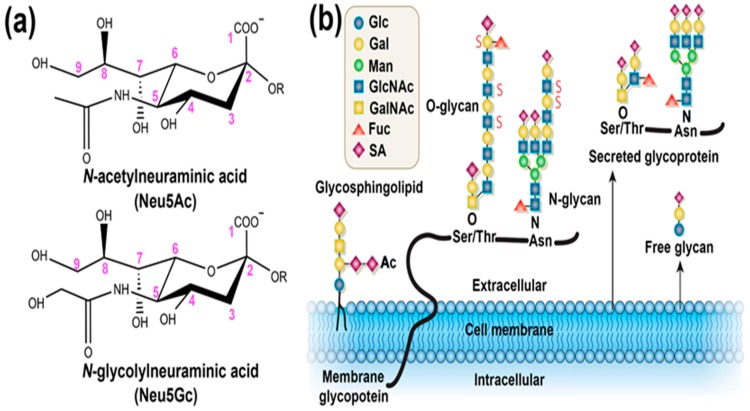
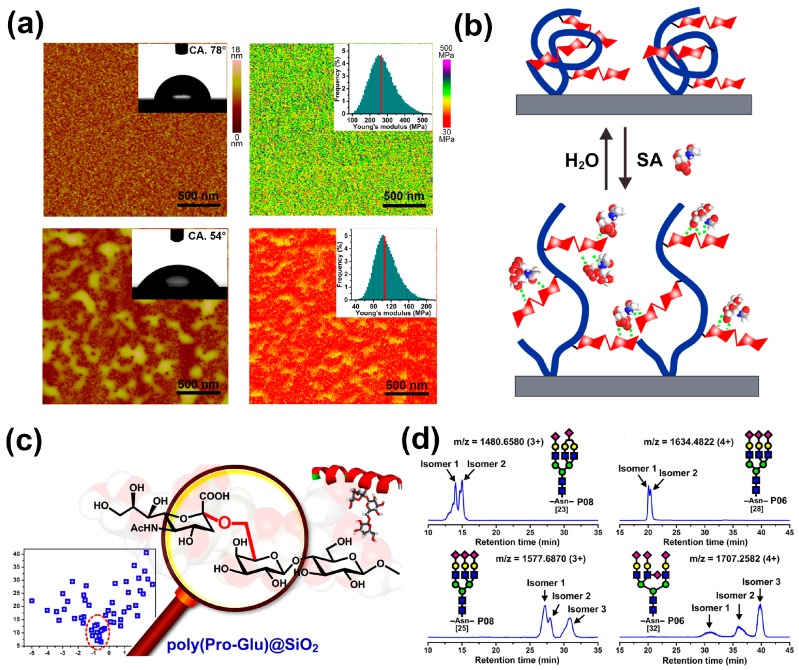
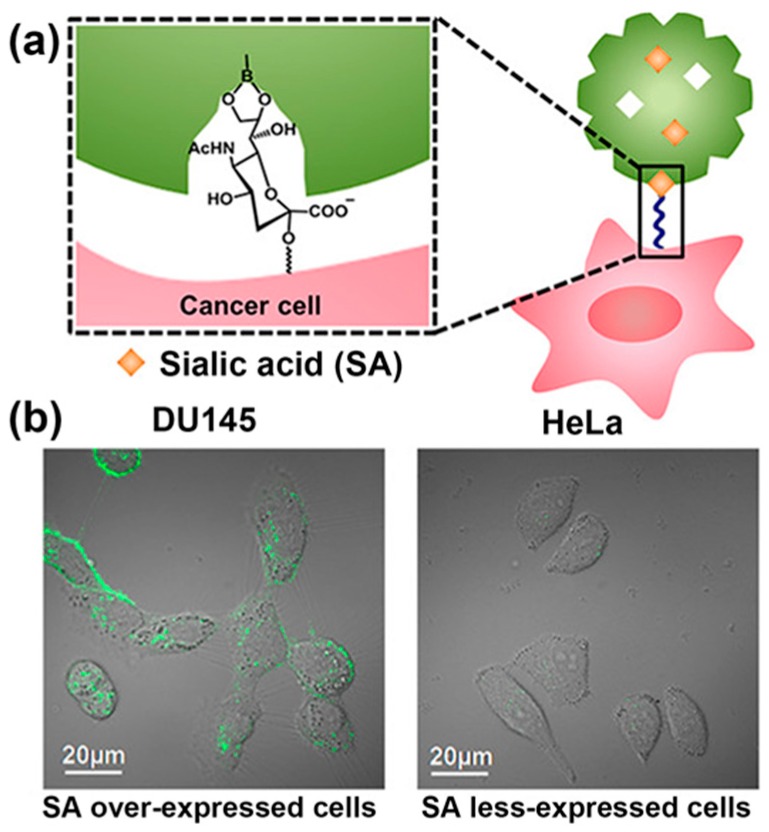
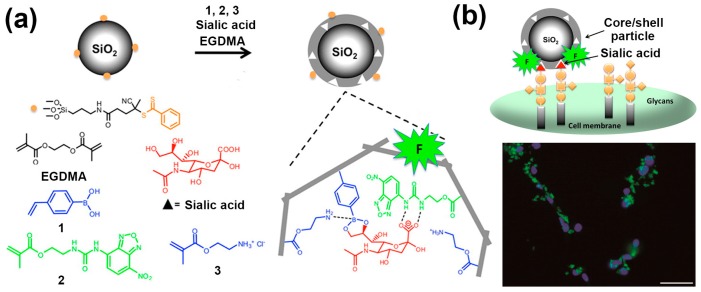
Sialic acids (SAs) are typically found as terminal monosaccharides attached to cell surface glycoconjugates, which play crucial roles in various biological processes, and aberrant sialylation is closely associated with many diseases, particularly cancers. As SAs are overexpressed in tumor-associated glycoproteins, the recognition and specific binding of SA are crucial for monitoring, analyzing and controlling cancer cells, which would have a considerable impact on diagnostic and therapeutic application. However, both effective and selective recognition of SA on the cancer cell surface remains challenging. In recent years, SA-targeted biointerface materials have attracted great attention in various bio-applications, including cancer detection and imaging, drug delivery for cancer therapy and sialylated glycopeptide separation or enrichment. This review provides an overview of recent advances in SA-targeted biointerface materials and related bio-applications.
唾液酸(SAs)通常作为末端单糖附着在细胞表面糖缀合物上,这些糖缀合物在各种生物过程中发挥着关键作用,并且异常的唾液酸化与许多疾病密切相关,尤其是癌症。由于唾液酸在肿瘤相关糖蛋白中过表达,因此对唾液酸的识别和特异性结合对于监测、分析和控制癌细胞至关重要,这将对诊断和治疗应用产生重大影响。然而,在癌细胞表面有效且选择性地识别唾液酸仍然具有挑战性。近年来,靶向唾液酸的生物界面材料在各种生物应用中引起了极大关注,包括癌症检测与成像、癌症治疗的药物递送以及唾液酸化糖肽的分离或富集。本综述概述了靶向唾液酸的生物界面材料及其相关生物应用的最新进展。