Gisbert-Garzarán Miguel, Vallet-Regí María
Departamento de Química en Ciencias Farmacéuticas, Universidad Complutense de Madrid, Instituto de Investigación Sanitaria Hospital 12 de Octubre i + 12, Plaza Ramón y Cajal s/n, 28040 Madrid, Spain.
Networking Research Center on Bioengineering, Biomaterials and Nanomedicine (CIBER-BBN), 28029 Madrid, Spain.
Nanomaterials (Basel). 2020 May 9;10(5):916. doi: 10.3390/nano10050916.
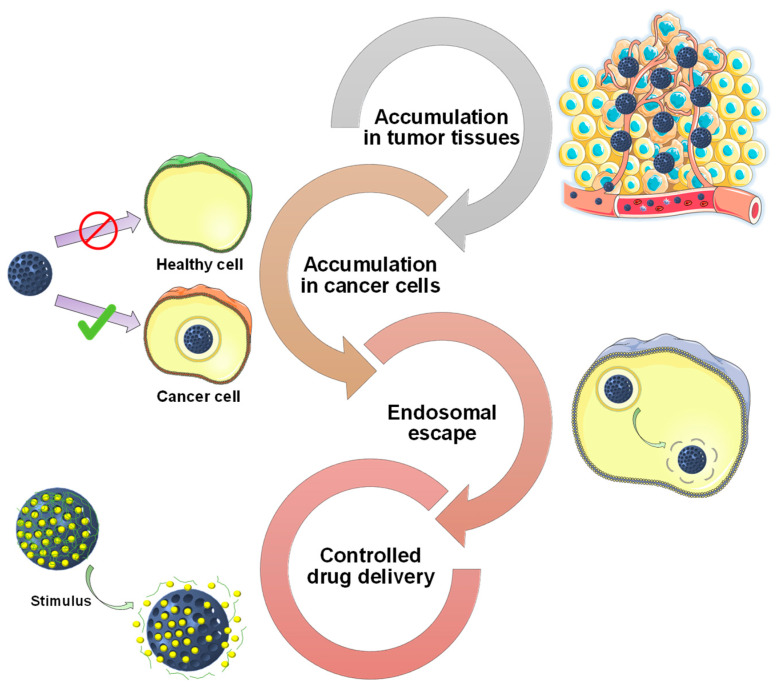
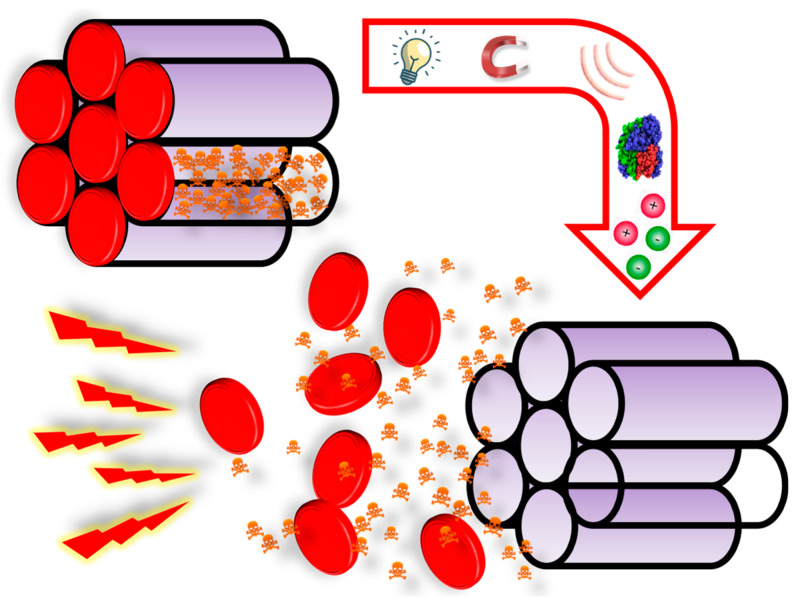
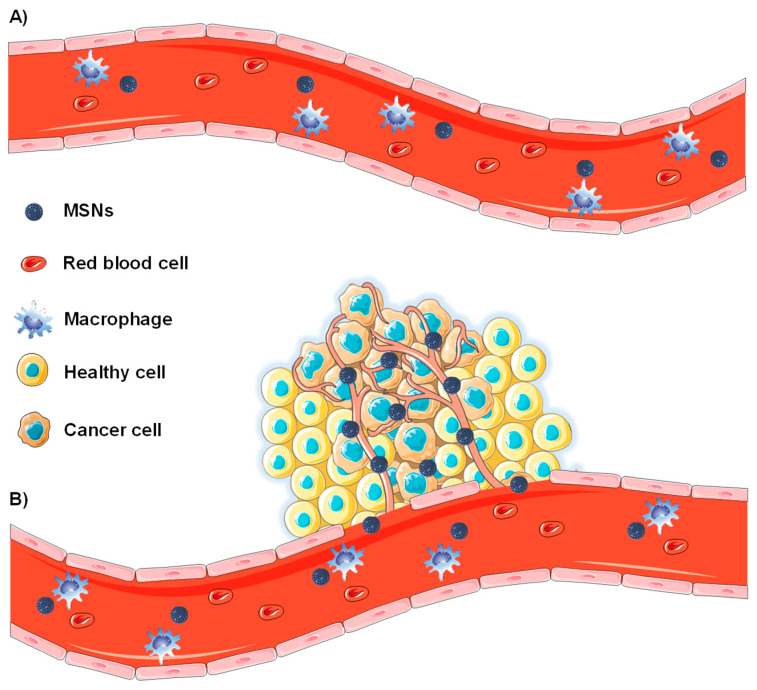
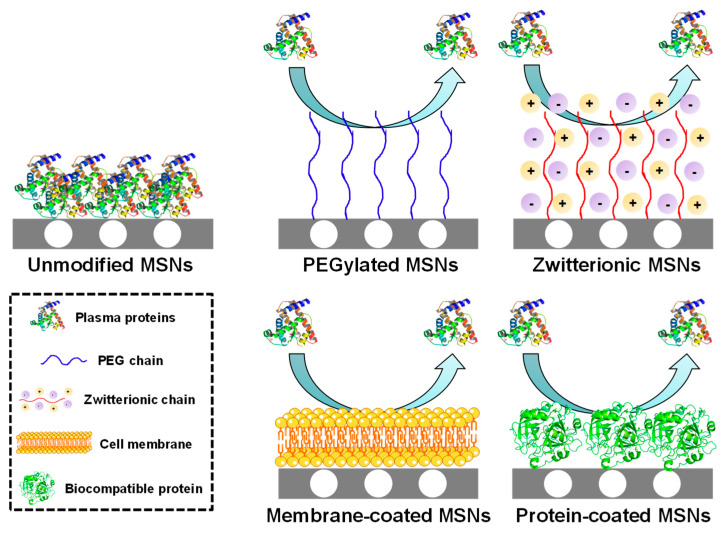
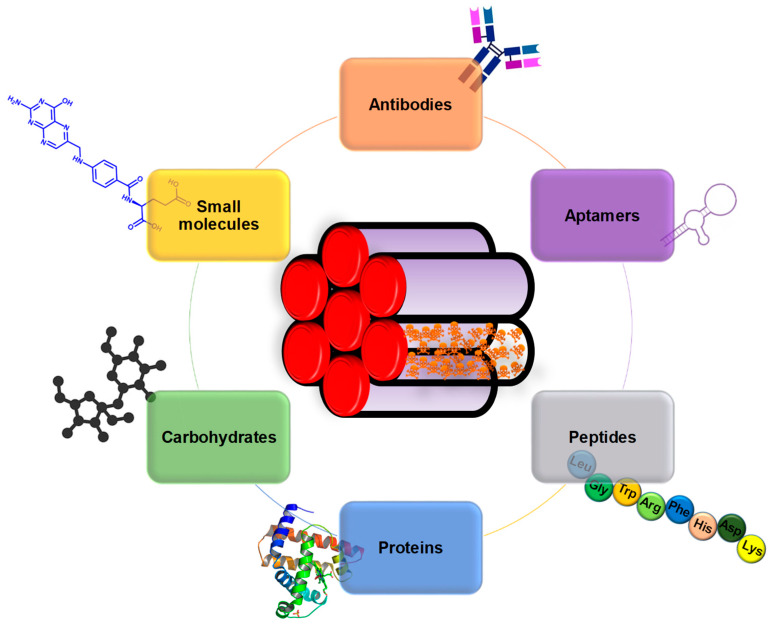
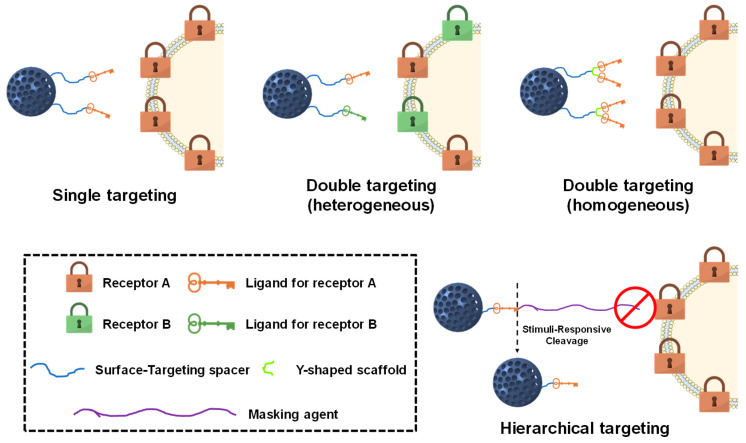
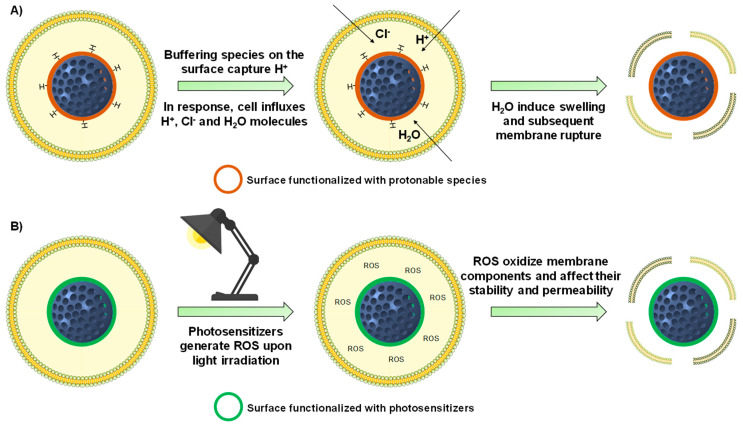
Mesoporous silica nanoparticles have been broadly applied as drug delivery systems owing to their exquisite features, such as excellent textural properties or biocompatibility. However, there are various biological barriers that prevent their proper translation into the clinic, including: (1) lack of selectivity toward tumor tissues, (2) lack of selectivity for tumoral cells and (3) endosomal sequestration of the particles upon internalization. In addition, their open porous structure may lead to premature drug release, consequently affecting healthy tissues and decreasing the efficacy of the treatment. First, this review will provide a comprehensive and systematic overview of the different approximations that have been implemented into mesoporous silica nanoparticles to overcome each of such biological barriers. Afterward, the potential premature and non-specific drug release from these mesoporous nanocarriers will be addressed by introducing the concept of stimuli-responsive gatekeepers, which endow the particles with on-demand and localized drug delivery.
介孔二氧化硅纳米粒子因其优异的特性,如出色的结构性质或生物相容性,已被广泛应用于药物递送系统。然而,存在各种生物屏障阻碍它们顺利转化为临床应用,包括:(1)对肿瘤组织缺乏选择性,(2)对肿瘤细胞缺乏选择性,以及(3)内化后颗粒被内体隔离。此外,它们开放的多孔结构可能导致药物过早释放,从而影响健康组织并降低治疗效果。首先,本综述将全面系统地概述为克服这些生物屏障而在介孔二氧化硅纳米粒子中实施的不同方法。之后,将通过引入刺激响应性守门人的概念来探讨这些介孔纳米载体潜在的过早和非特异性药物释放问题,刺激响应性守门人赋予粒子按需和局部药物递送的能力。