Kakizaki Ryuichiro, Bunya Naofumi, Uemura Shuji, Odagiri Arisa, Kasai Takehiko, Narimatsu Eichi
Department of Emergency Medicine Sapporo Medical University Hokkaido Japan.
Emergency and Critical Care Center Hakodate Municipal Hospital Hokkaido Japan.
Acute Med Surg. 2019 Mar 1;6(2):201-205. doi: 10.1002/ams2.399. eCollection 2019 Apr.
We here present the first case report of takotsubo cardiomyopathy that developed during rewarming of a patient with severe accidental hypothermia with extracorporeal membrane oxygenation.
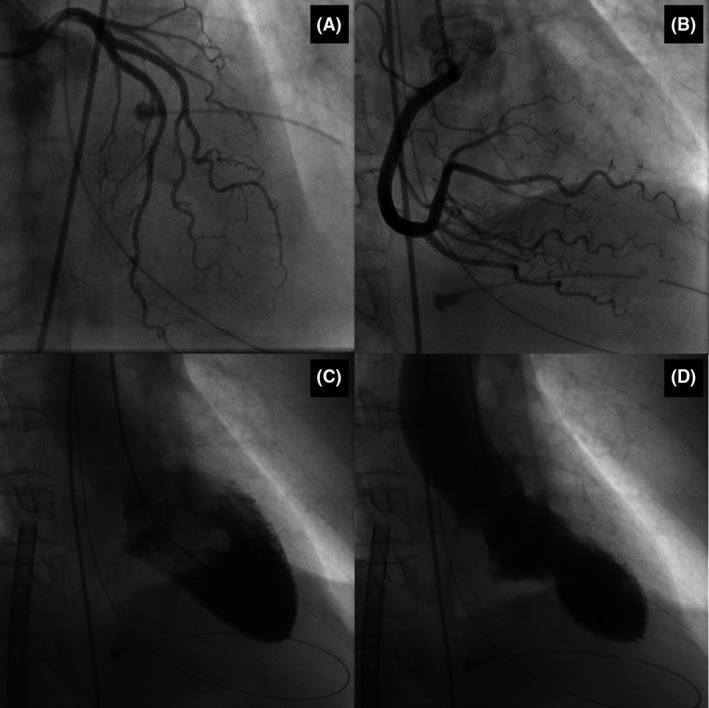
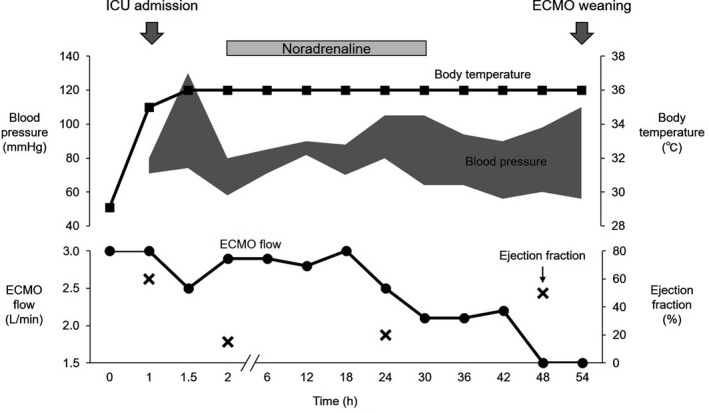
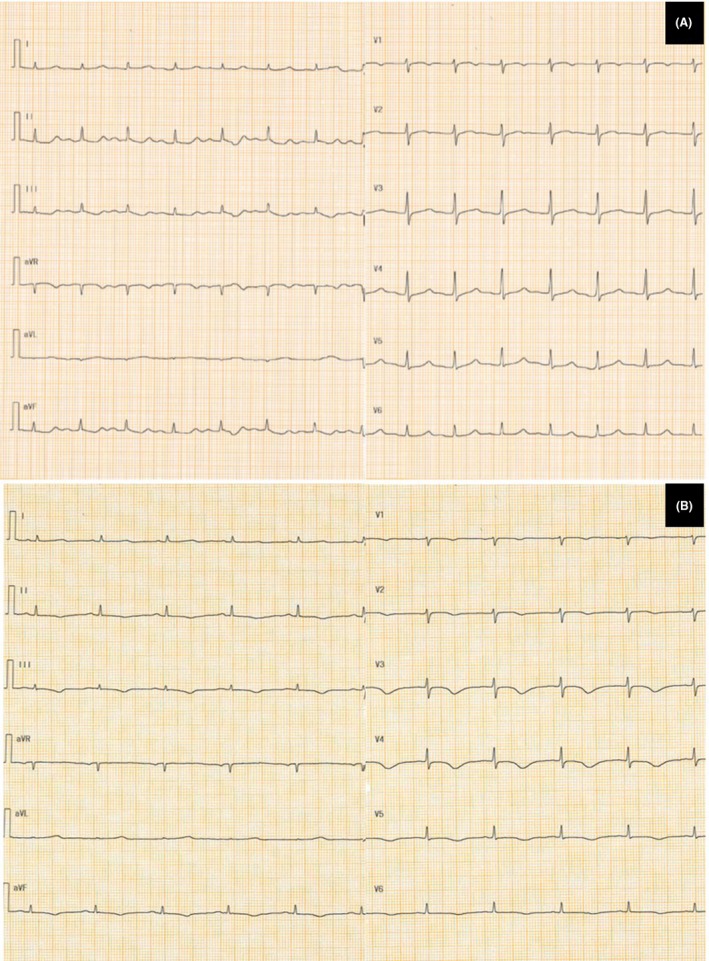
A 74-year-old woman was found unresponsive outdoors and suffered cardiopulmonary arrest during transfer to our hospital. On arrival, she was still in cardiopulmonary arrest. Veno-arterial extracorporeal membrane oxygenation was initiated for resuscitation and rewarming. After admission to the intensive care unit, her blood pressure suddenly dropped, and coronary angiography on day 2 indicated intact coronary arteries. Left ventriculography showed typical takotsubo-like dysfunction in the end-systolic phase, which led to the diagnosis of takotsubo cardiomyopathy. Left ventricular wall motion gradually improved, and echocardiography on day 6 revealed that abnormalities in the left ventricular wall motion had almost disappeared.
Takotsubo cardiomyopathy might arise during rewarming of patients with severe accidental hypothermia.
我们在此报告首例在体外膜肺氧合复温严重意外低温患者过程中发生的应激性心肌病病例。
一名74岁女性在户外被发现无反应,在转往我院途中发生心肺骤停。到达时,她仍处于心肺骤停状态。启动静脉-动脉体外膜肺氧合进行复苏和复温。入住重症监护病房后,她的血压突然下降,第2天的冠状动脉造影显示冠状动脉完好。左心室造影显示收缩末期典型的应激性心肌病样功能障碍,从而诊断为应激性心肌病。左心室壁运动逐渐改善,第6天的超声心动图显示左心室壁运动异常几乎消失。
严重意外低温患者复温过程中可能发生应激性心肌病。