Faculty of Veterinary Medicine, Agriculture and Environment, University of Teramo, 64100 Teramo, Italy.
Department of Biotechnology and Applied Clinical Sciences, University of L'Aquila, 67100 L'Aquila, Italy.
Molecules. 2019 Apr 11;24(7):1432. doi: 10.3390/molecules24071432.
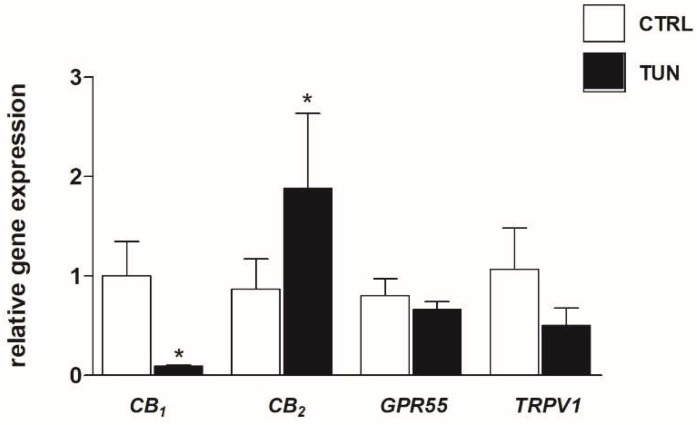
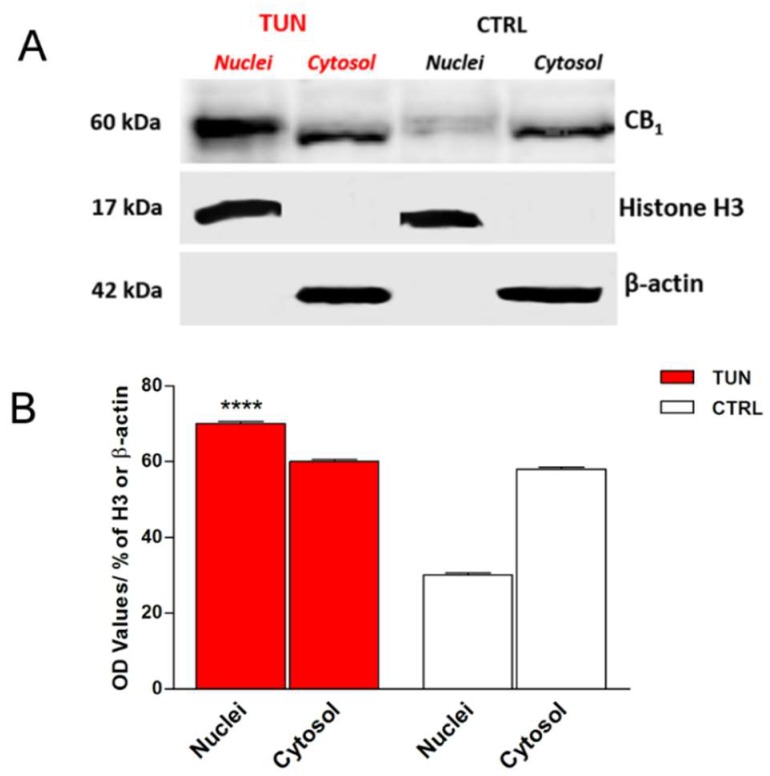
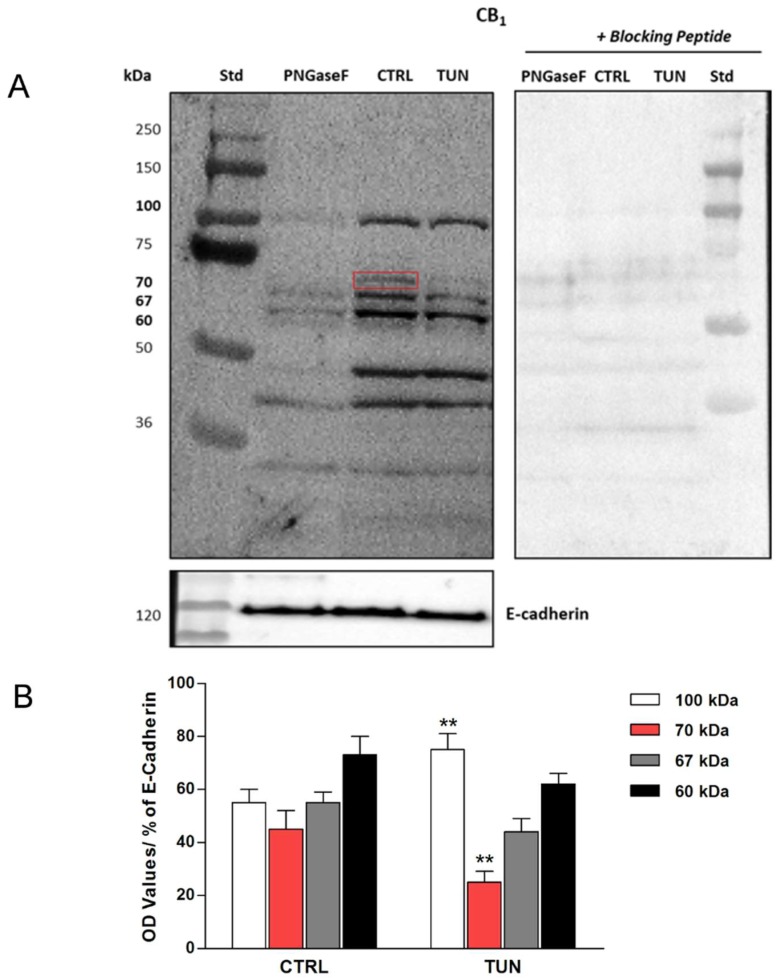
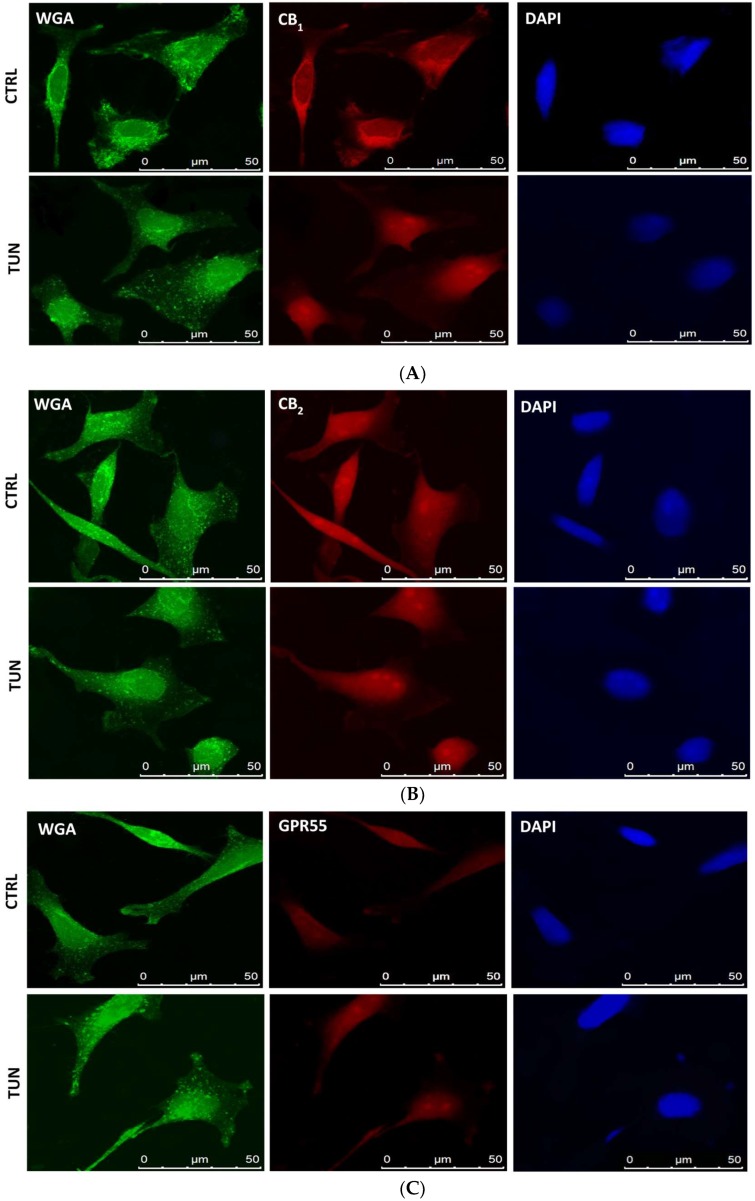
Endocannabinoid (eCB)-binding receptors can be modulated by several ligands and membrane environment, yet the effect of glycosylation remains to be assessed. In this study, we used human neuroblastoma SH-SY5Y cells to interrogate whether expression, cellular localization, and activity of eCB-binding receptors may depend on -linked glycosylation. Following treatment with tunicamycin (a specific inhibitor of -linked glycosylation) at the non-cytotoxic dose of 1 µg/mL, mRNA, protein levels and localization of eCB-binding receptors, as well as -acetylglucosamine (GlcNAc) residues, were evaluated in SH-SY5Y cells by means of quantitative real-time reverse transcriptase-polymerase chain reaction (qRT-PCR), fluorescence-activated cell sorting (FACS), and confocal microscopy, respectively. In addition, the activity of type-1 and type-2 cannabinoid receptors (CB₁ and CB₂) was assessed by means of rapid binding assays. Significant changes in gene and protein expression were found upon tunicamycin treatment for CB₁ and CB₂, as well as for GPR55 receptors, but not for transient receptor potential vanilloid 1 (TRPV1). Deglycosylation experiments with -glycosidase-F and immunoblot of cell membranes derived from SH-SY5Y cells confirmed the presence of one glycosylated form in CB₁ (70 kDa), that was reduced by tunicamycin. Morphological studies demonstrated the co-localization of CB₁ with GlcNAc residues, and showed that tunicamycin reduced CB₁ membrane expression with a marked nuclear localization, as confirmed by immunoblotting. Cleavage of the carbohydrate side chain did not modify CB receptor binding affinity. Overall, these results support -linked glycosylation as an unprecedented post-translational modification that may modulate eCB-binding receptors' expression and localization, in particular for CB₁.
内源性大麻素(eCB)结合受体可被多种配体和膜环境调节,但糖基化的影响仍有待评估。在这项研究中,我们使用人神经母细胞瘤 SH-SY5Y 细胞来探究 eCB 结合受体的表达、细胞定位和活性是否可能依赖于 O-连接糖基化。在用非细胞毒性剂量 1 µg/mL 的衣霉素(一种 O-连接糖基化的特异性抑制剂)处理后,通过定量实时逆转录聚合酶链反应(qRT-PCR)、荧光激活细胞分选(FACS)和共聚焦显微镜,分别评估 SH-SY5Y 细胞中 eCB 结合受体的 mRNA、蛋白水平和定位,以及 β-乙酰氨基葡萄糖(GlcNAc)残基。此外,通过快速结合测定评估 1 型和 2 型大麻素受体(CB₁ 和 CB₂)的活性。在 CB₁ 和 CB₂ 以及 GPR55 受体的衣霉素处理后,发现基因和蛋白表达有明显变化,但瞬时受体电位香草素 1(TRPV1)没有变化。用β-糖苷酶-F 进行去糖基化实验和 SH-SY5Y 细胞细胞膜的免疫印迹证实了 CB₁(70 kDa)存在一种糖基化形式,该形式被衣霉素减少。形态学研究表明 CB₁ 与 GlcNAc 残基共定位,并表明衣霉素减少了 CB₁ 的膜表达,同时伴有明显的核定位,这一点通过免疫印迹得到了证实。碳水化合物侧链的切割并未改变 CB 受体的结合亲和力。总的来说,这些结果支持 O-连接糖基化作为一种前所未有的翻译后修饰,可能调节 eCB 结合受体的表达和定位,特别是对于 CB₁。