Department of Nursing, Medical College, Hebei University of Engineering, Handan, Hebei, China (mainland).
Department of Oncology, Hebei Provincial Hospital of Traditional Chinese Medicine, Shijiazhuang, Hebei, China (mainland).
Med Sci Monit. 2019 Apr 15;25:2764-2776. doi: 10.12659/MSM.912014.
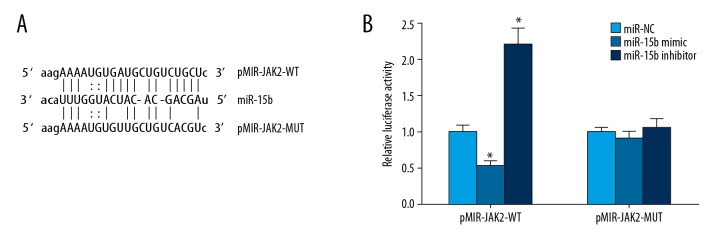
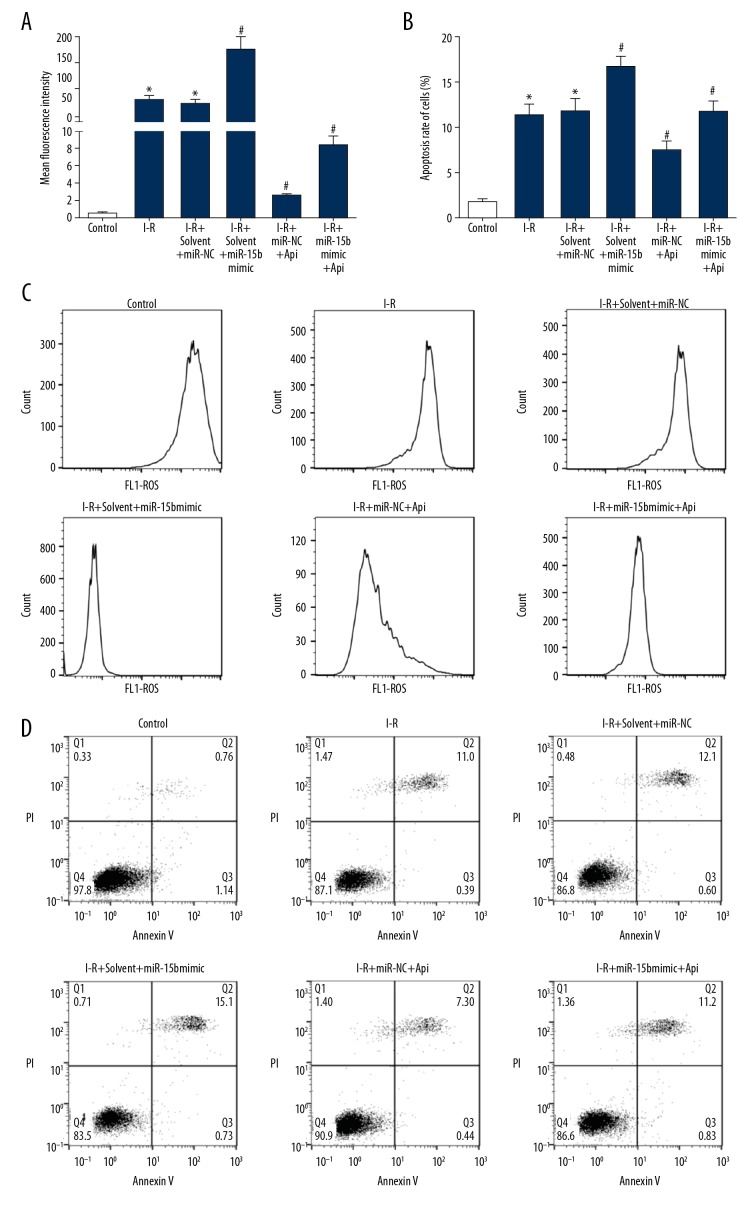
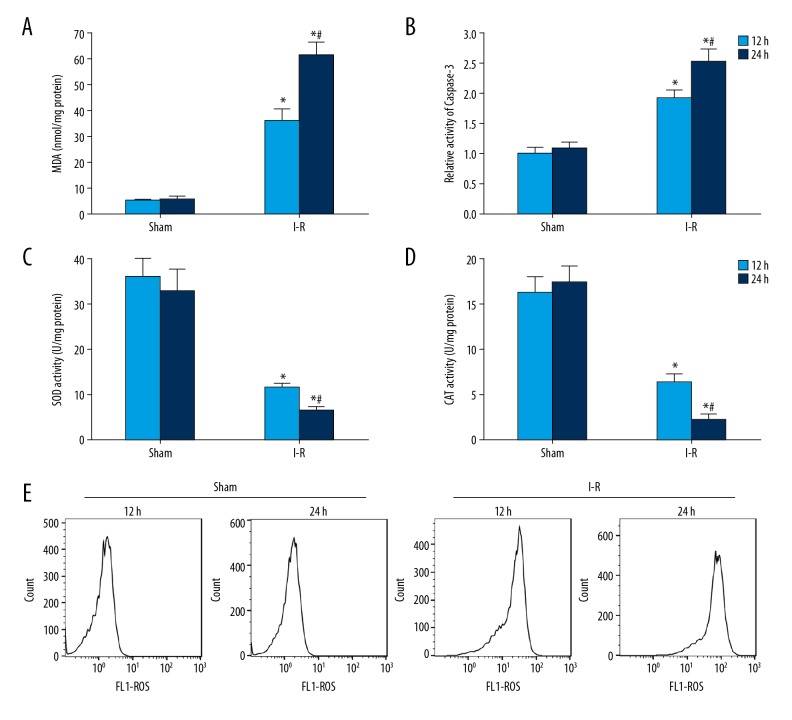
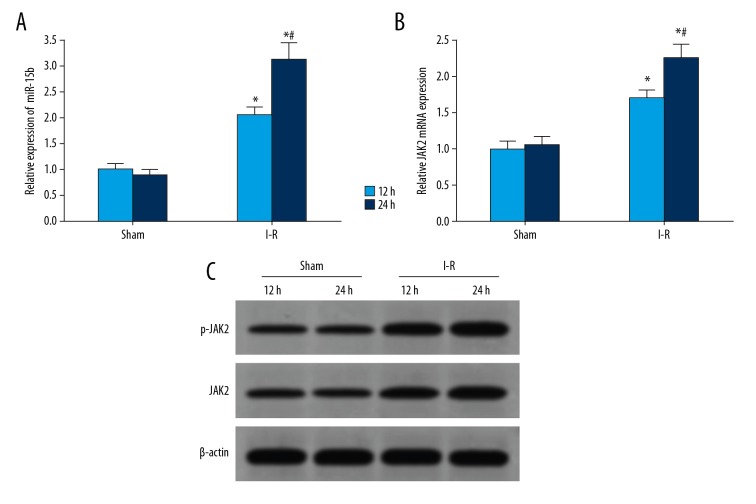
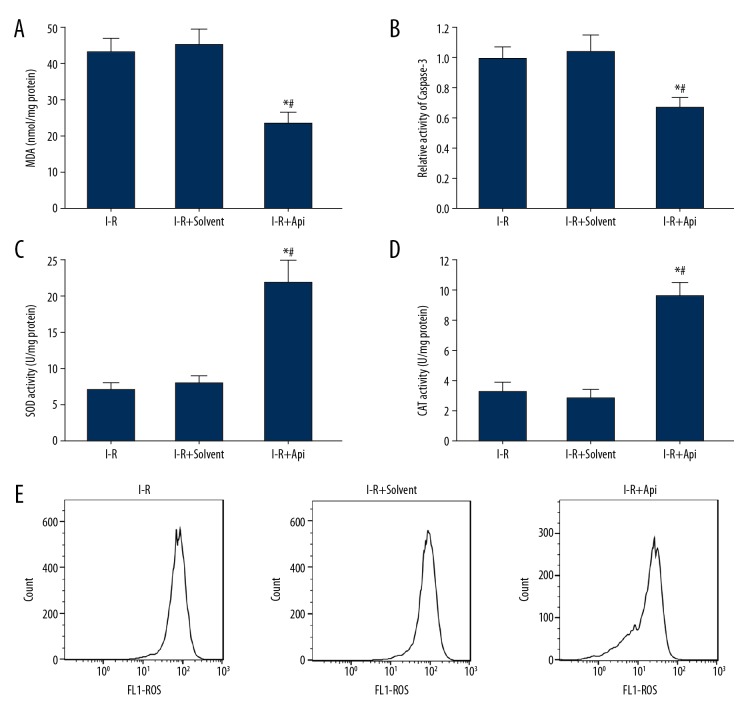
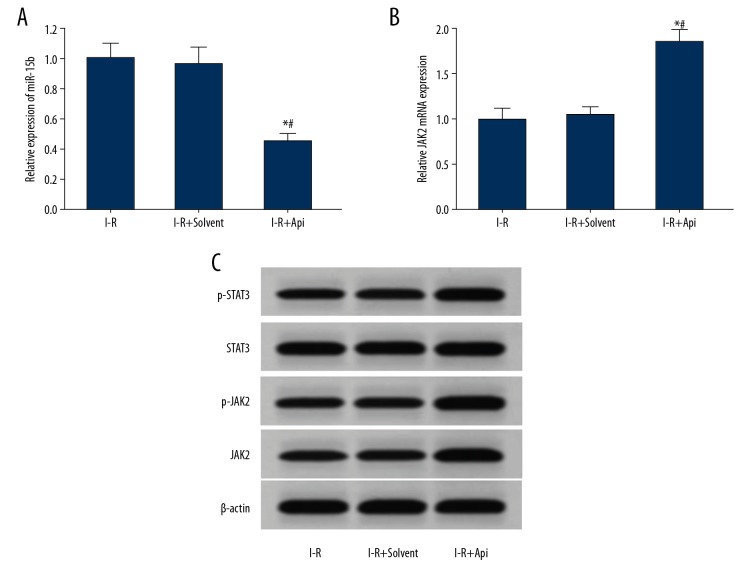
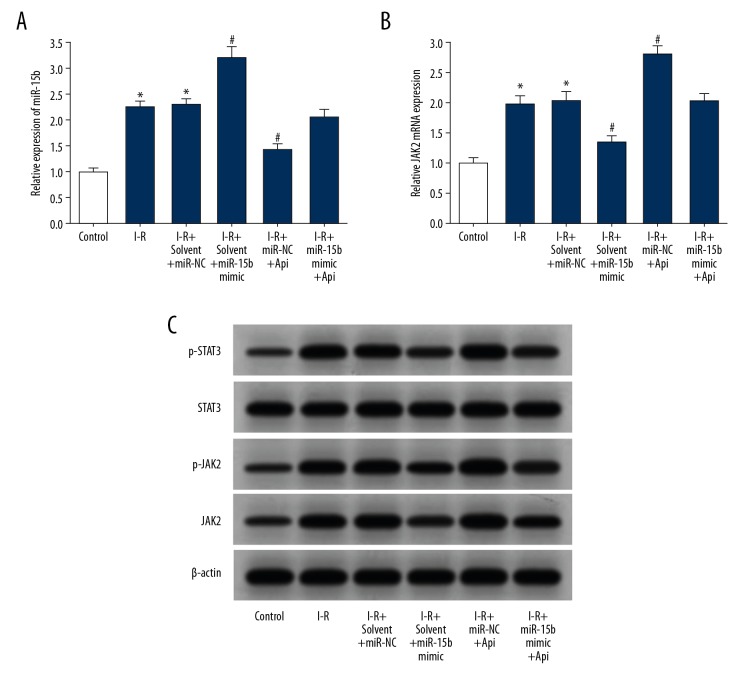
BACKGROUND We investigated whether apigenin could mitigate myocardial reperfusion injury in rats, and a possible mechanism was proposed. MATERIAL AND METHODS The I-R injury model was established in rats along with a sham group as control, and the expressions of microRNA-15b (miR-15b), JAK2, and p-JAK2 in the myocardia of the 2 groups were detected. Apoptosis and reactive oxygen species (ROS) were also detected. Rats in the I-R injury model were divided into 3 groups in vivo: the 1I-R group, the 2I-R+solvent group, and the 3I-R+apigenin group. Expression of miR-15b, JAK2, p-JAK2, STAT3, and p-STAT3 in the myocardia of the 3 groups were detected. ROS content, apoptosis, MDA content, SOD, and CAT activities were detected. Rat myocardial H9C2 cells were cultured in vitro and divided into 5 treatment groups in vitro; expressions of miR-15b, JAK2, p-JAK2, STAT3, and p-STAT3 in H9C2 cells were detected, and the apoptosis and ROS content were detected by flow cytometry. RESULTS We found that the increased miR-15b expression during myocardial I-R injury in rats downregulated the expression of JAK2 and activity of the JAK2-STAT3 pathway, promoted myocardial apoptosis and ROS production, and aggravated myocardial I-R injury. Apigenin treatment can downregulate miR-15b expression, increase the expression of JAK2 and the activity of JAK2-STAT3 pathway, reduce myocardial apoptosis and ROS production, and alleviate myocardial I-R injury. CONCLUSIONS Api treatment downregulated the expression of miR-15b and upregulated the expression of JAK2 and the activity of the JAK2-STAT3 pathway, thereby alleviating myocardial I-R injury, cardiomyocyte apoptosis, and ROS production in vitro.
本研究旨在探讨芹菜素是否可以减轻大鼠心肌再灌注损伤,并提出了可能的机制。
建立大鼠 I-R 损伤模型,并设立假手术组作为对照组,检测两组心肌组织中 microRNA-15b(miR-15b)、JAK2 和 p-JAK2 的表达。同时检测细胞凋亡和活性氧(ROS)。体内实验将 I-R 损伤模型大鼠分为三组:1I-R 组、2I-R+溶剂组和 3I-R+芹菜素组。检测三组大鼠心肌组织中 miR-15b、JAK2、p-JAK2、STAT3 和 p-STAT3 的表达。检测 ROS 含量、细胞凋亡、MDA 含量、SOD 和 CAT 活性。体外培养大鼠心肌 H9C2 细胞,体外实验分为 5 个处理组;检测 H9C2 细胞中 miR-15b、JAK2、p-JAK2、STAT3 和 p-STAT3 的表达,通过流式细胞术检测细胞凋亡和 ROS 含量。
我们发现,大鼠心肌 I-R 损伤时 miR-15b 表达增加,下调 JAK2 表达和 JAK2-STAT3 通路活性,促进心肌细胞凋亡和 ROS 产生,加重心肌 I-R 损伤。芹菜素处理可以下调 miR-15b 的表达,增加 JAK2 的表达和 JAK2-STAT3 通路活性,减少心肌细胞凋亡和 ROS 产生,减轻心肌 I-R 损伤。
Apigenin 处理下调 miR-15b 的表达,上调 JAK2 和 JAK2-STAT3 通路的表达,从而减轻体外心肌 I-R 损伤、心肌细胞凋亡和 ROS 产生。