Bharati Avinav, Mandal Susama Rani, Gupta Arun Kumar, Seth Amlesh, Sharma Raju, Bhalla Ashu S, Das Chandan J, Chatterjee S, Kumar Pratik
Department of Radiation Oncology, Dr. Ram Manohar Lohia Institute of Medical Sciences, Lucknow, Uttar Pradesh, India.
Department of Radiotherapy, Government Medical College, Kannauj, Uttar Pradesh, India.
J Med Phys. 2019 Jan-Mar;44(1):49-56. doi: 10.4103/jmp.JMP_125_18.
This study aims to develop a method using dual-energy computed tomography (DECT) to determine the effective atomic number and electron density of substances.
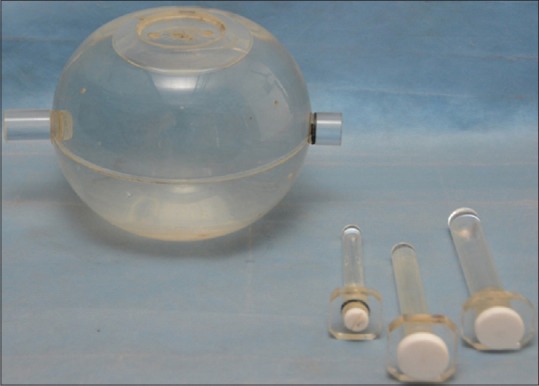
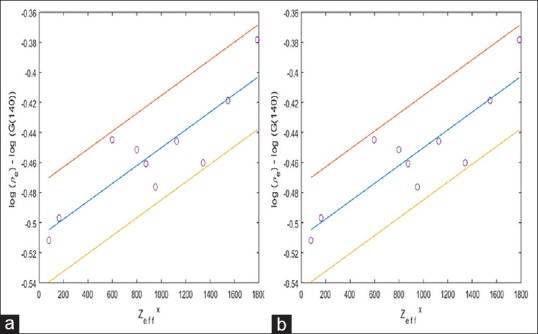
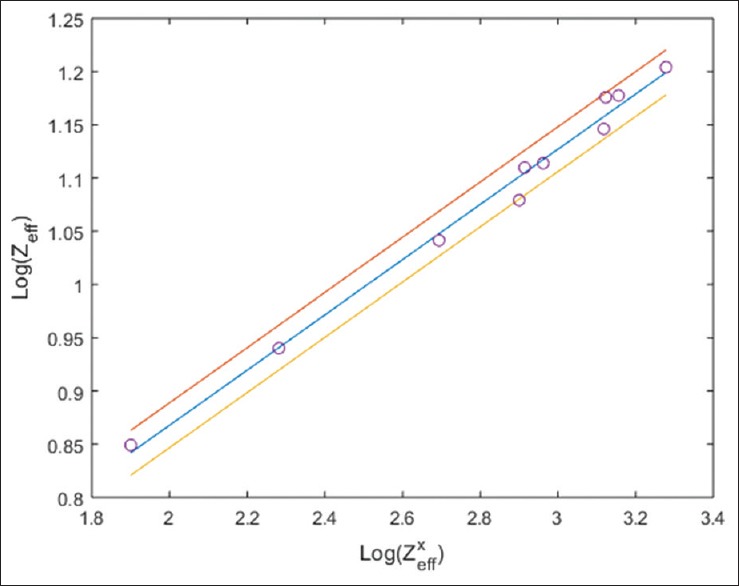
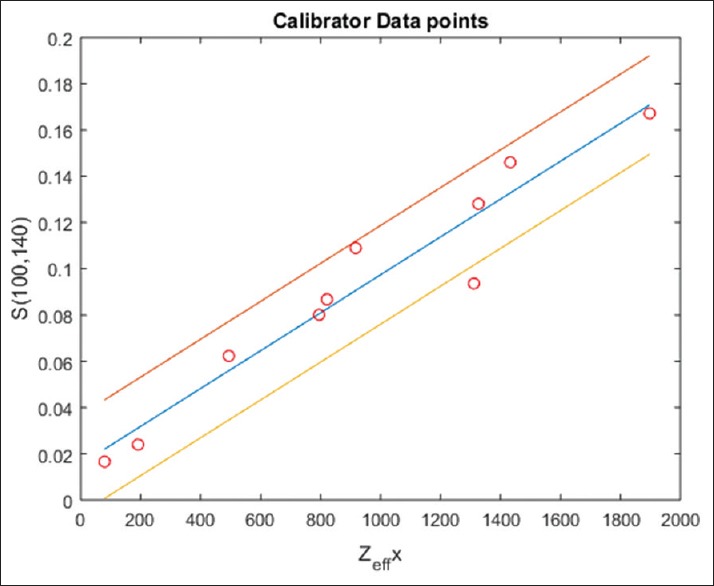
Ten chemical substances of pure analytical grade were obtained from various manufacturers. These chemicals were pelletized using a hydraulic press. These pellets were scanned using DECT. A relation was obtained for the pellet's atomic number and electron density with their CT number or Hounsfield unit (HU) values. Calibration coefficients were determined. Five new chemical pellets were scanned, and their effective atomic number and electron densities were determined using the calibration coefficients to test the efficacy of the calibration method.
The results obtained for effective atomic number and electron density from the HU number of DECT images were within ±5% and ±3%, respectively, of their actual values.
DECT can be used as an effective tool for determining the effective atomic number and electron density of high atomic number substance.
本研究旨在开发一种利用双能计算机断层扫描(DECT)来确定物质有效原子序数和电子密度的方法。
从不同制造商处获取了10种纯分析级化学物质。使用液压机将这些化学物质制成颗粒。使用DECT对这些颗粒进行扫描。获得了颗粒的原子序数和电子密度与其CT值或亨氏单位(HU)值之间的关系。确定了校准系数。对5个新的化学颗粒进行扫描,并使用校准系数确定其有效原子序数和电子密度,以测试校准方法的有效性。
从DECT图像的HU值获得的有效原子序数和电子密度结果分别在其实际值的±5%和±3%范围内。
DECT可作为确定高原子序数物质有效原子序数和电子密度的有效工具。