Coronel-Hernández Jossimar, López-Urrutia Eduardo, Contreras-Romero Carlos, Delgado-Waldo Izamary, Figueroa-González Gabriela, Campos-Parra Alma D, Salgado-García Rebeca, Martínez-Gutierrez Antonio, Rodríguez-Morales Miguel, Jacobo-Herrera Nadia, Terrazas Luis Ignacio, Silva-Carmona Abraham, López-Camarillo César, Pérez-Plasencia Carlos
1Laboratorio de Genómica Funcional, Unidad de Biomedicina, FES-IZTACALA, UNAM, Tlalnepantla, Mexico.
7Programa de Doctorado en Ciencias Biomédicas, Universidad Nacional Autónoma de México, Mexico City, Mexico.
Cancer Cell Int. 2019 Apr 2;19:80. doi: 10.1186/s12935-019-0802-5. eCollection 2019.
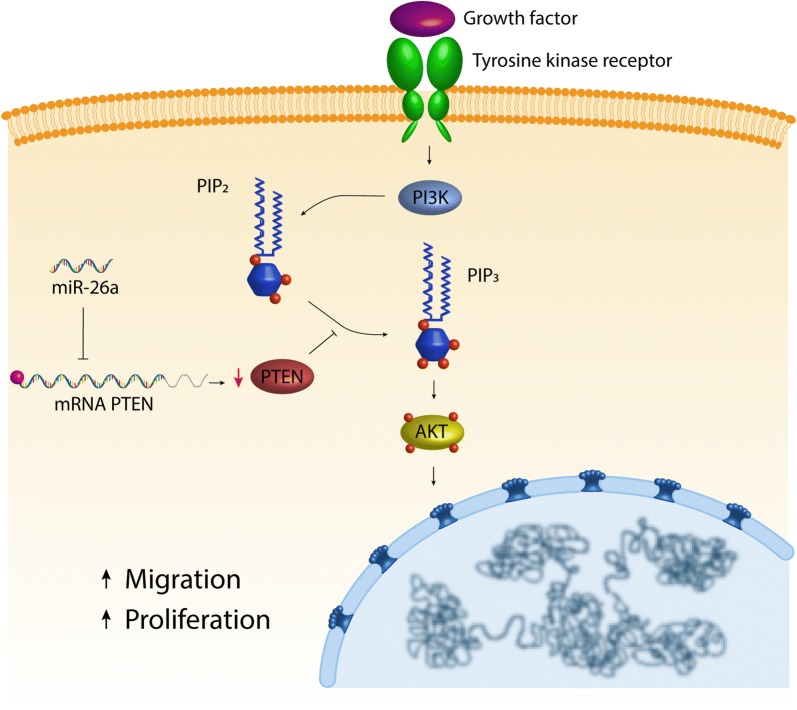
Invasion and metastasis are determinant events in the prognosis of Colorectal cancer (CRC), a common neoplasm worldwide. An important factor for metastasis is the acquired capacity of the cell to proliferate and invade adjacent tissues. In this paper, we explored the role of micro-RNA-26a in the regulation of proliferation and migration in CRC-derived cells through the negative regulation of PTEN, a key negative regulator of the AKT pathway.
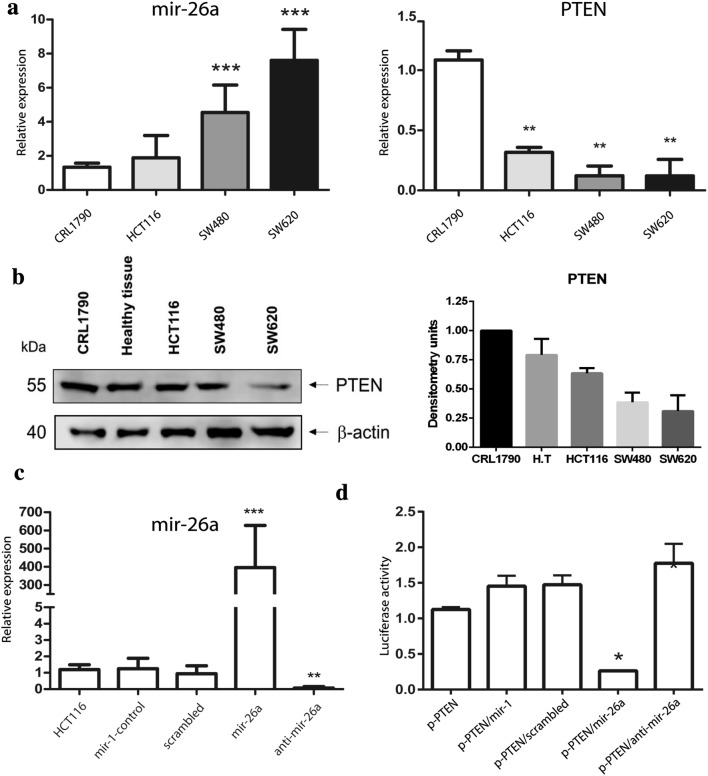
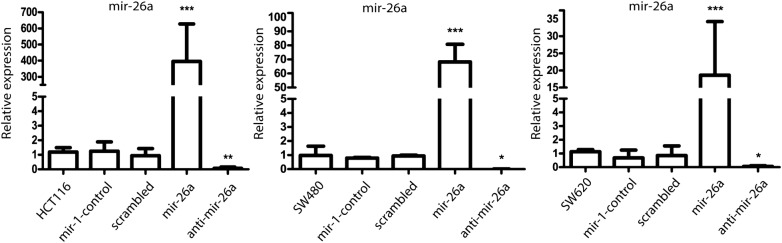
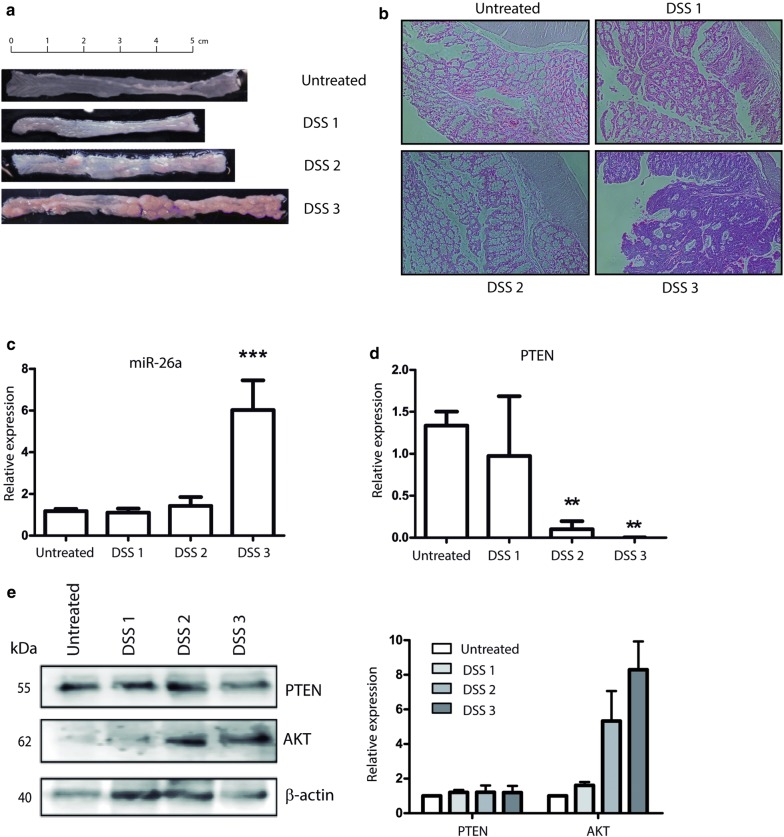
Expression levels of PTEN and mir-26a were surveyed in normal and CRC-derived cell lines; paraffin embedded human tissues, TCGA CRC expression data and a Balb/c mice orthotopic induced CRC model. CRC was induced by an initial intraperitoneal dose of the colonic carcinogen Azoxymethane followed by inflammatory promoter Dextran Sulfate Sodium Salt. Luciferase assays provide information about miR-26a-PTEN 3'UTR interaction. Proliferation and migration by real time cell analysis and wound-healing functional analyses were performed to assess the participation of mir-26a on important hallmarks of CRC and its regulation on the PTEN gene.
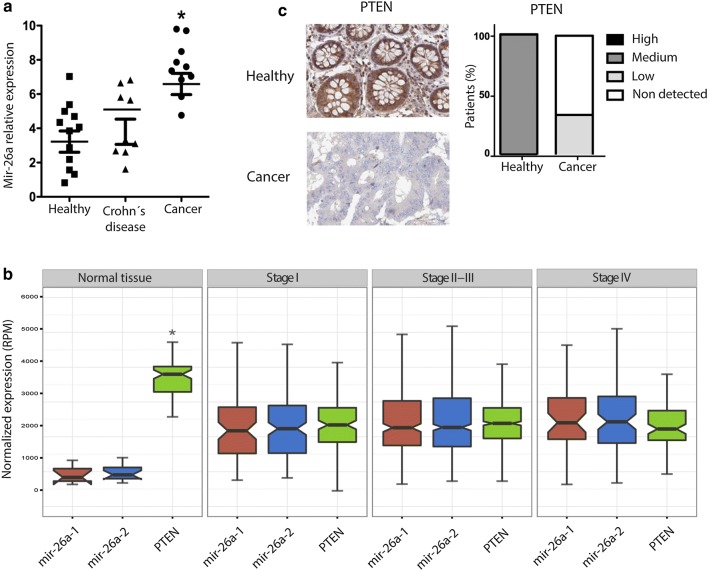
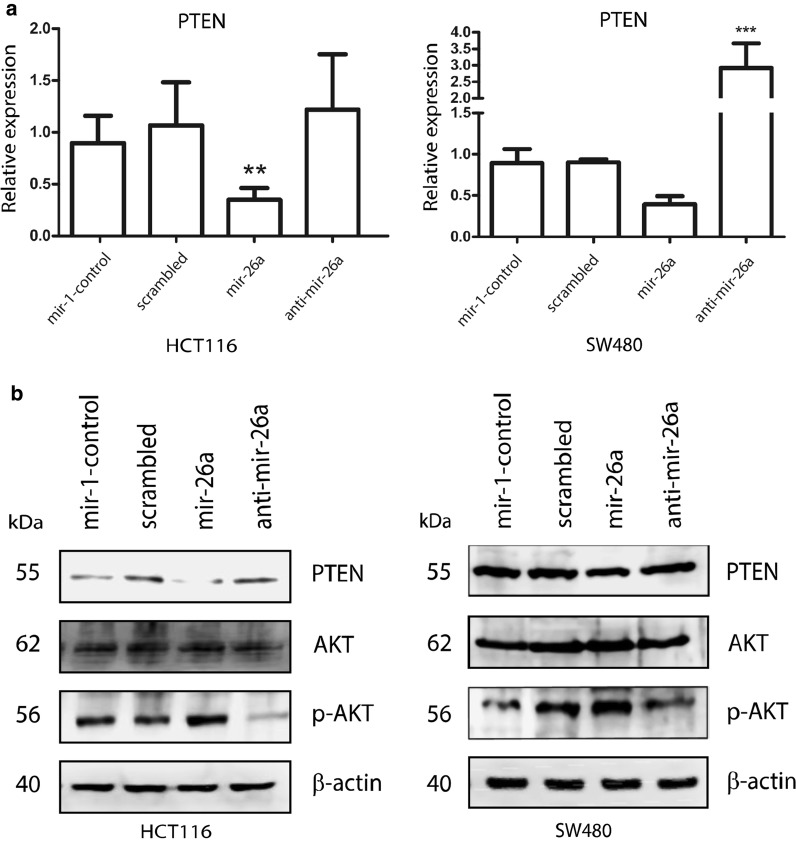
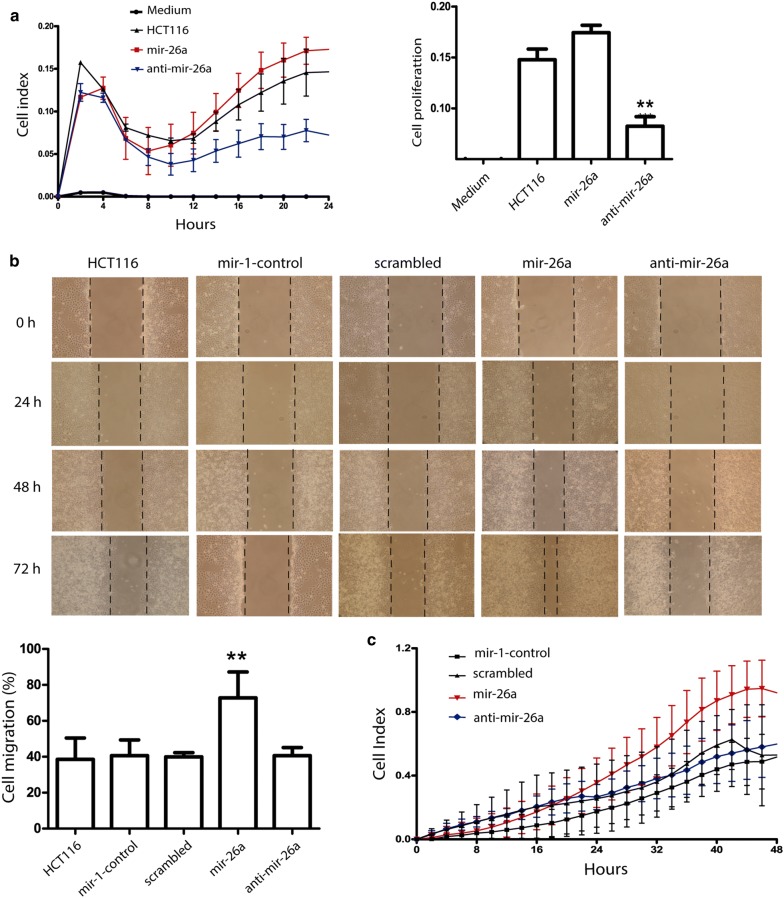
We observed a negative correlation between PTEN and mir-26a expression in cell lines, human tissues, TCGA data, and tissues derived from the CRC mouse model. Moreover, we showed that negative regulation of PTEN exerted by miR-26a affected AKT phosphorylation levels directly. Functional assays showed that mir-26a directly down-regulates PTEN, and that mir-26a over-expressing cells had higher proliferation and migration rates.
All this data proposes an important role of mir-26a as an oncomir in the progression and invasion of CRC. Our data suggested that mir-26a could be used as a biomarker of tumor development in CRC patients, however more studies must be conducted to establish its clinical role.
侵袭和转移是结直肠癌(CRC)预后的决定性因素,结直肠癌是全球常见的肿瘤。转移的一个重要因素是细胞获得增殖和侵袭邻近组织的能力。在本文中,我们通过对PTEN(AKT通路的关键负调节因子)的负调节,探讨了微小RNA-26a在结直肠癌来源细胞增殖和迁移调控中的作用。
在正常和结直肠癌来源的细胞系、石蜡包埋的人体组织、TCGA结直肠癌表达数据以及Balb/c小鼠原位诱导的结直肠癌模型中检测PTEN和mir-26a的表达水平。结直肠癌由腹腔内初始剂量的结肠致癌物氧化偶氮甲烷诱导,随后使用炎性促进剂葡聚糖硫酸钠。荧光素酶测定提供了有关miR-26a-PTEN 3'UTR相互作用的信息。通过实时细胞分析和伤口愈合功能分析进行增殖和迁移评估,以评估mir-26a在结直肠癌重要特征中的参与情况及其对PTEN基因的调控。
我们在细胞系、人体组织、TCGA数据以及结直肠癌小鼠模型来源的组织中观察到PTEN和mir-26a表达之间呈负相关。此外,我们表明miR-26a对PTEN的负调节直接影响AKT磷酸化水平。功能测定表明mir-26a直接下调PTEN,并且过表达mir-26a的细胞具有更高的增殖和迁移率。
所有这些数据表明mir-26a作为一种癌基因在结直肠癌的进展和侵袭中起重要作用。我们的数据表明mir-26a可作为结直肠癌患者肿瘤发展的生物标志物,然而必须进行更多研究以确定其临床作用。