Department of Cardiology, Zhongshan Hospital, Fudan University, Shanghai Institute of Cardiovascular Diseases, Shanghai, China.
Front Immunol. 2019 Mar 29;10:648. doi: 10.3389/fimmu.2019.00648. eCollection 2019.
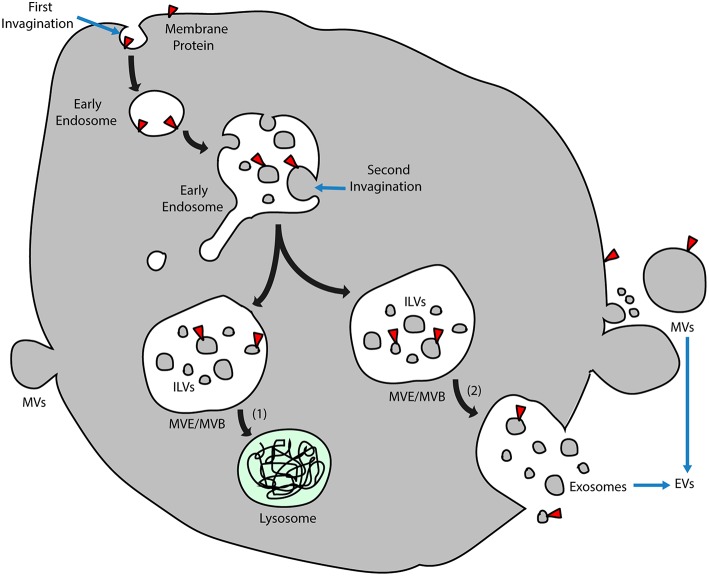
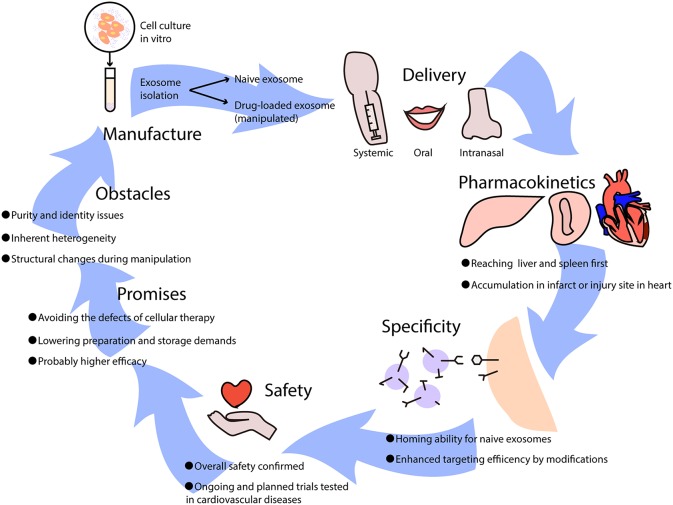
Therapies aimed at minimizing adverse remodeling in cardiovascular diseases on a molecular and cellular basis are urgently needed. Exosomes are nanosized lipid vesicles released from various cells that are able to mediate intercellular signaling and communication via their cargos. It has been increasingly demonstrated that exosomes from cardiomyocytes or stem/progenitor cells can promote cardiac repair and regeneration, but their mechanism has not been fully explained. Immune responses mediated by immune cells also play important and complicated roles in the progression of various cardiovascular diseases such as myocardial infarction and atherosclerosis. Exosomes derived from immune cells have shown pleiotropic effects on these pathological states, whether similar to or different from their parent cells. However, the underlying mechanism remains obscure. In this review, we first describe the biological characteristics and biogenesis of exosomes. Then we critically examine the emerging roles of exosomes in cardiovascular disease; the exosomes we focus on are derived from immune cells such as dendritic cells, macrophages, B cells, T cells, as well as neutrophils and mast cells. Among the cardiovascular diseases we discuss, we mainly focus on myocardial infarction and atherosclerosis. As active intercellular communicators, exosomes from immune cells may offer prospective diagnostic and therapeutic value in cardiovascular disease.
迫切需要针对心血管疾病的分子和细胞基础上最小化不良重构的治疗方法。外泌体是源自各种细胞的纳米级脂质囊泡,能够通过其 cargo 介导细胞间信号转导和通讯。越来越多的证据表明,心肌细胞或干细胞/祖细胞来源的外泌体可以促进心脏修复和再生,但它们的机制尚未完全阐明。免疫细胞介导的免疫反应在心肌梗死和动脉粥样硬化等各种心血管疾病的进展中也发挥着重要而复杂的作用。免疫细胞来源的外泌体对这些病理状态具有多效性作用,无论是与母细胞相似还是不同。然而,其潜在机制尚不清楚。在这篇综述中,我们首先描述了外泌体的生物学特性和生物发生。然后,我们批判性地检查了外泌体在心血管疾病中的新兴作用;我们关注的外泌体来自免疫细胞,如树突状细胞、巨噬细胞、B 细胞、T 细胞,以及中性粒细胞和肥大细胞。在我们讨论的心血管疾病中,我们主要关注心肌梗死和动脉粥样硬化。作为活跃的细胞间通讯者,免疫细胞来源的外泌体可能为心血管疾病提供有前景的诊断和治疗价值。