Gutekunst Sören B, Siemsen Katharina, Huth Steven, Möhring Anneke, Hesseler Britta, Timmermann Michael, Paulowicz Ingo, Mishra Yogendra Kumar, Siebert Leonard, Adelung Rainer, Selhuber-Unkel Christine
Institute for Materials Science, Biocompatible Nanomaterials, and Institute for Materials Science, Functional Nanomaterials, University of Kiel, Kiel D-24143, Germany.
Phi-Stone AG, Kiel D-24143, Germany.
ACS Biomater Sci Eng. 2019 Apr 8;5(4):1784-1792. doi: 10.1021/acsbiomaterials.8b01009. Epub 2019 Jan 10.
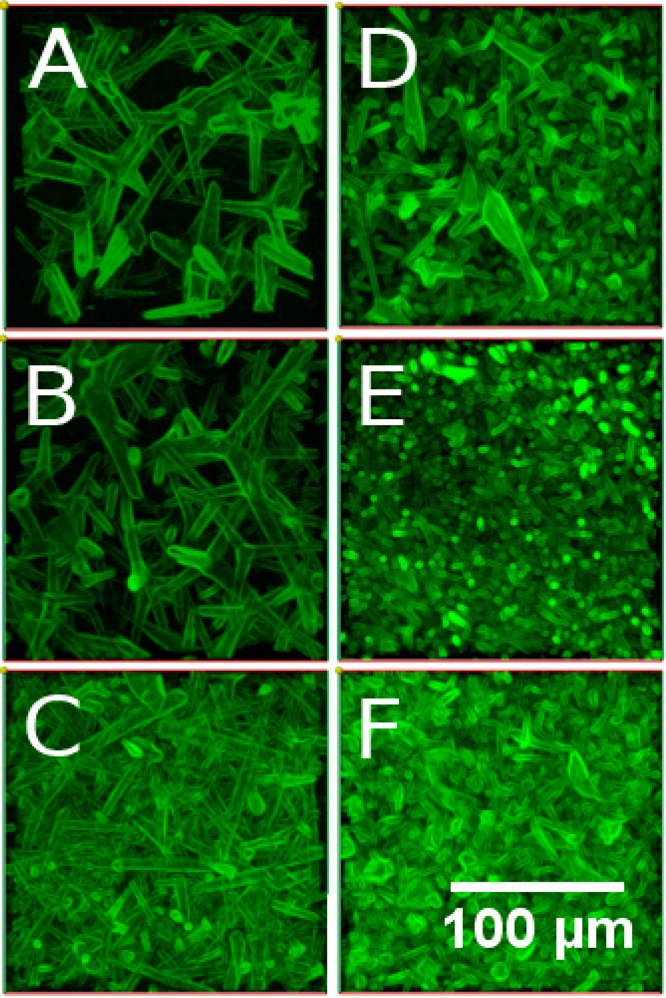
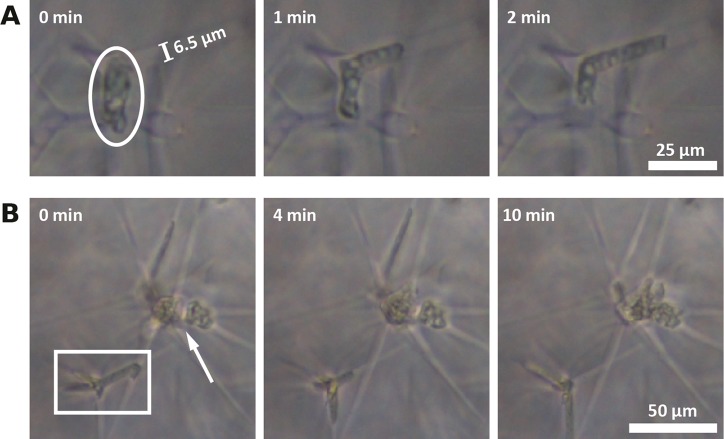
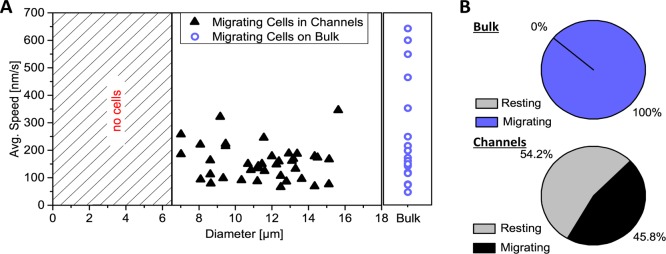
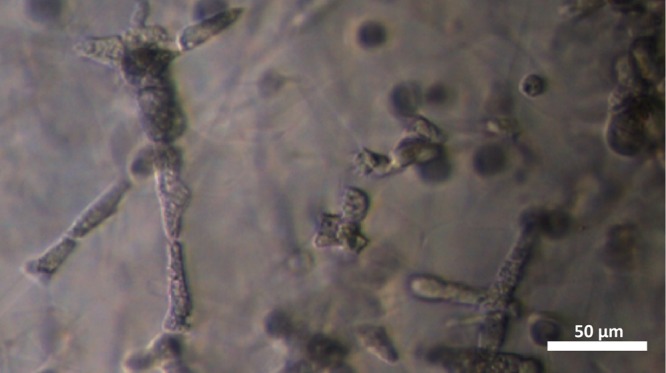
Porous hydrogel scaffolds are ideal candidates for mimicking cellular microenvironments, regarding both structural and mechanical aspects. We present a novel strategy to use uniquely designed ceramic networks as templates for generating hydrogels with a network of interconnected pores in the form of microchannels. The advantages of this new approach are the high and guaranteed interconnectivity of the microchannels, as well as the possibility to produce channels with diameters smaller than 7 μm. Neither of these assets can be ensured with other established techniques. Experiments using the polyacrylamide substrates produced with our approach have shown that the migration of human pathogenic trophozoites is manipulated by the microchannel structure in the hydrogels. The parasites can even be captured inside the microchannel network and removed from their incubation medium by the porous polyacrylamide, indicating the huge potential of our new technique for medical, pharmaceutical, and tissue engineering applications.
从结构和力学方面来看,多孔水凝胶支架是模拟细胞微环境的理想选择。我们提出了一种新颖的策略,使用独特设计的陶瓷网络作为模板,来生成具有以微通道形式相互连接的孔网络的水凝胶。这种新方法的优点是微通道具有高度且有保证的连通性,以及能够生产直径小于7μm的通道。其他现有技术都无法确保这些特性。使用我们的方法生产的聚丙烯酰胺底物进行的实验表明,人类致病滋养体的迁移受到水凝胶中微通道结构的操控。寄生虫甚至可以被困在微通道网络内,并通过多孔聚丙烯酰胺从其培养液中去除,这表明我们的新技术在医学、制药和组织工程应用方面具有巨大潜力。