Biocompatible Nanomaterials, Institute for Materials Science, Kiel University, Kaiserstr. 2, 24143 Kiel, Germany.
Institute for Molecular Systems Engineering (IMSE), Heidelberg University, Im Neuenheimer Feld 253, 69120 Heidelberg, Germany.
Nano Lett. 2021 Apr 28;21(8):3690-3697. doi: 10.1021/acs.nanolett.0c04375. Epub 2021 Mar 16.
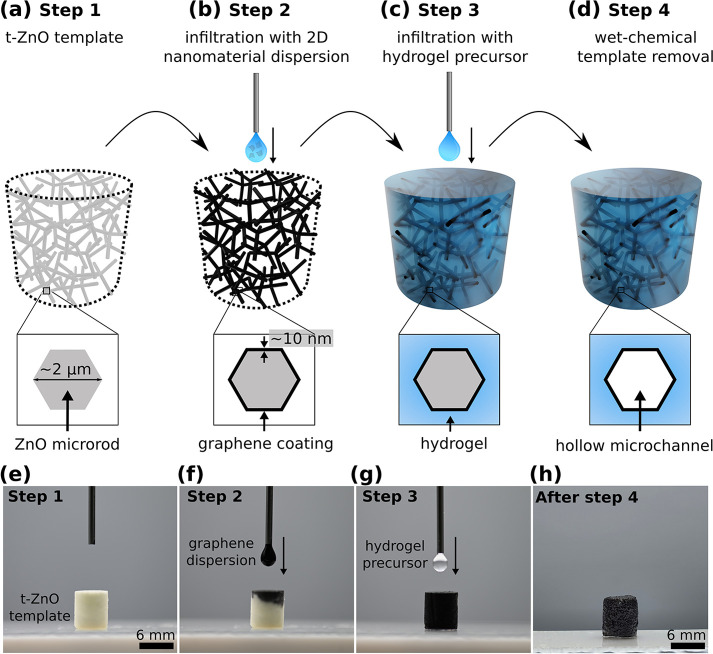
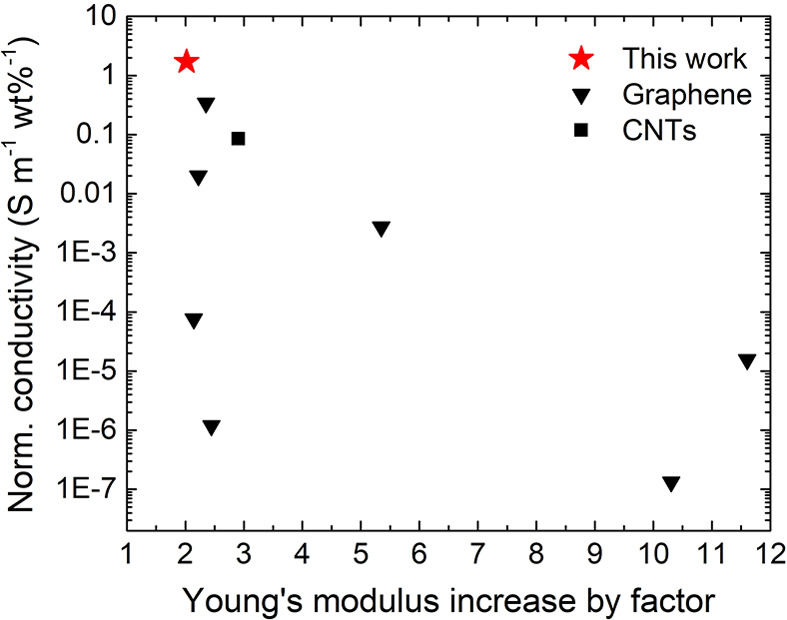
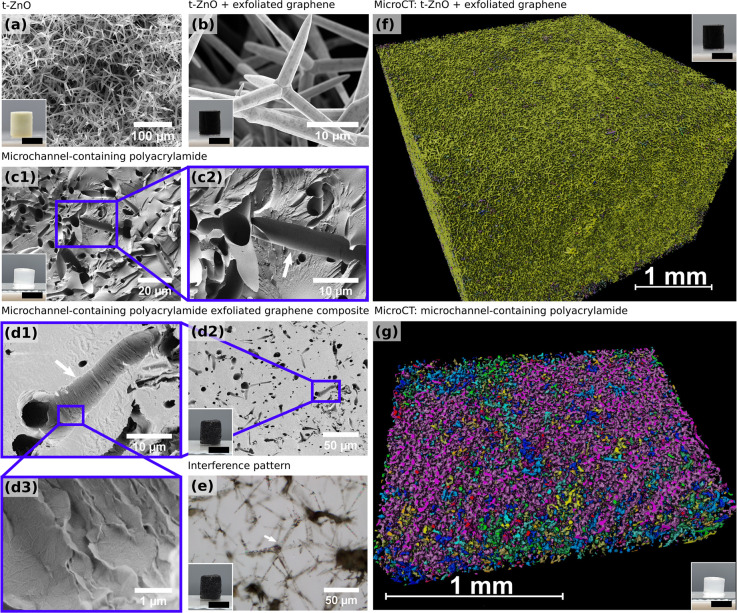
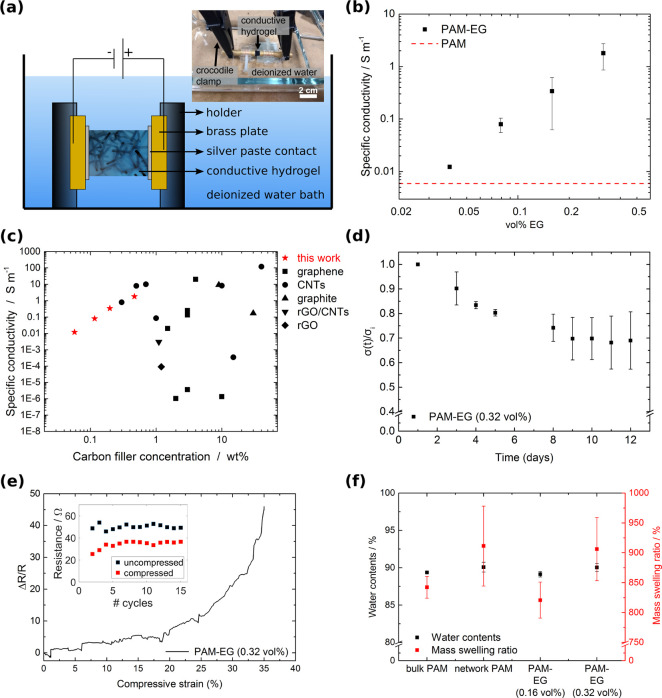
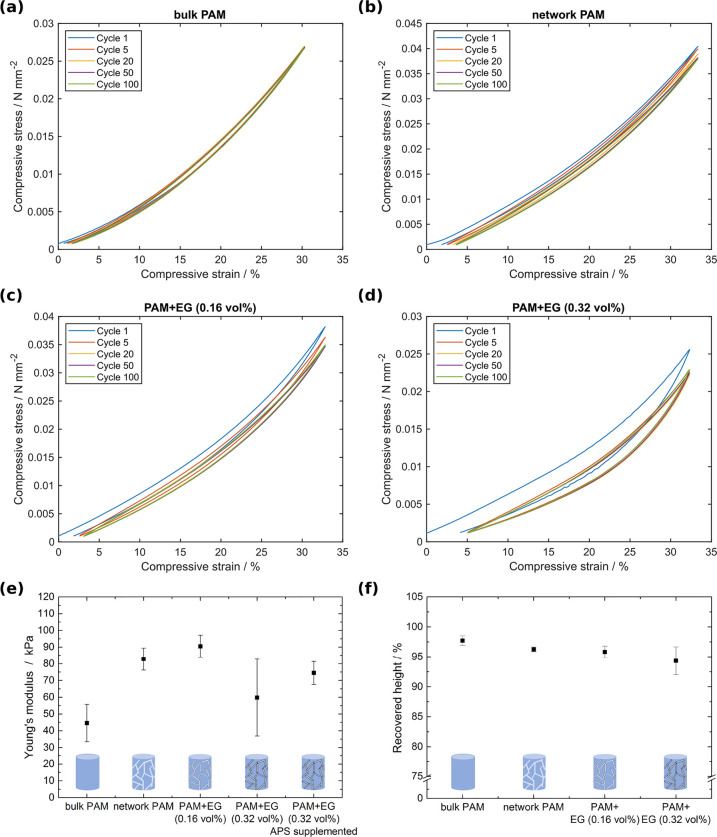
The fabrication of electrically conductive hydrogels is challenging as the introduction of an electrically conductive filler often changes mechanical hydrogel matrix properties. Here, we present an approach for the preparation of hydrogel composites with outstanding electrical conductivity at extremely low filler loadings (0.34 S m, 0.16 vol %). Exfoliated graphene and polyacrylamide are microengineered to 3D composites such that conductive graphene pathways pervade the hydrogel matrix similar to an artificial nervous system. This makes it possible to combine both the exceptional conductivity of exfoliated graphene and the adaptable mechanical properties of polyacrylamide. The demonstrated approach is highly versatile regarding porosity, filler material, as well as hydrogel system. The important difference to other approaches is that we keep the original properties of the matrix, while ensuring conductivity through graphene-coated microchannels. This novel approach of generating conductive hydrogels is very promising, with particular applications in the fields of bioelectronics and biohybrid robotics.
制备具有导电性的水凝胶具有挑战性,因为引入导电填料通常会改变机械水凝胶基质的性质。在这里,我们提出了一种在极低的填充负载下(0.34 S m,0.16 体积%)制备具有出色导电性的水凝胶复合材料的方法。剥离的石墨烯和聚丙烯酰胺被微工程化为 3D 复合材料,使得导电的石墨烯通路贯穿水凝胶基质,类似于人工神经系统。这使得我们可以结合剥离石墨烯的卓越导电性和聚丙烯酰胺的可适应的机械性能。所展示的方法在多孔性、填充材料以及水凝胶系统方面具有高度的通用性。与其他方法的重要区别在于,我们保持了基质的原始性质,同时通过石墨烯涂覆的微通道确保了导电性。这种生成导电水凝胶的新方法非常有前景,特别适用于生物电子学和生物混合机器人技术领域。