Department of Molecular Biosciences, School of Veterinary Medicine, University of California, Davis, CA, United States of America.
Department of Population Health and Reproduction, School of Veterinary Medicine, University of California, Davis, CA, United States of America.
PLoS One. 2019 Apr 15;14(4):e0215390. doi: 10.1371/journal.pone.0215390. eCollection 2019.
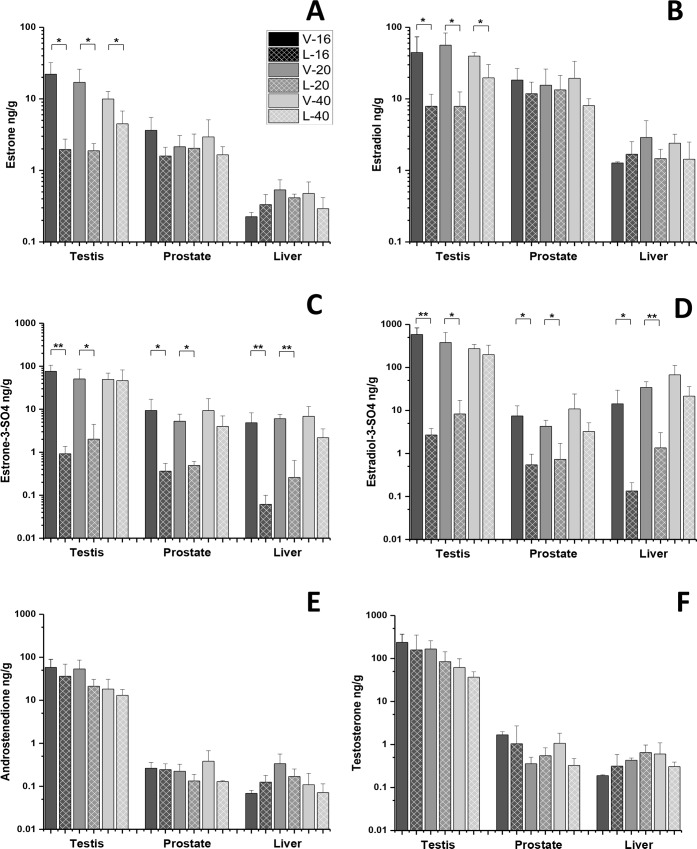
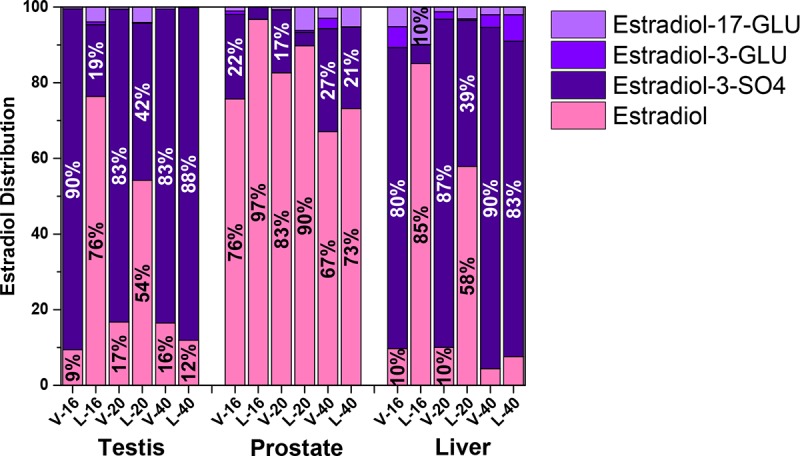
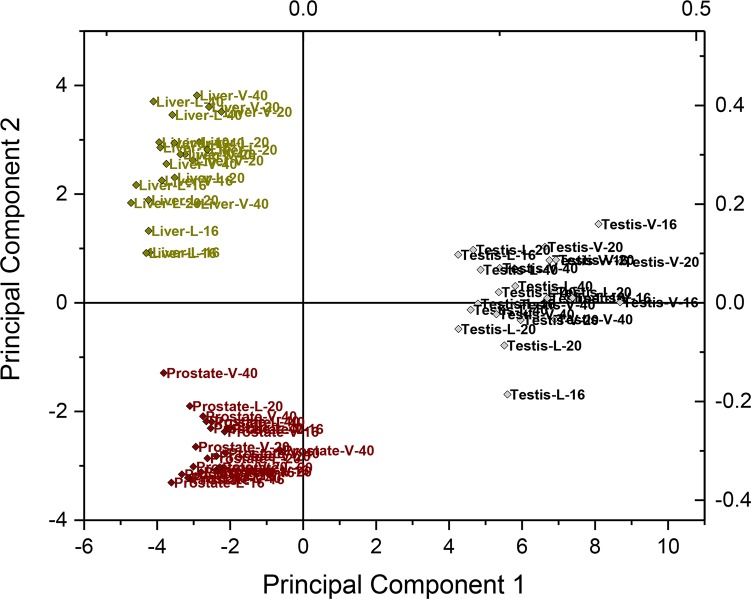
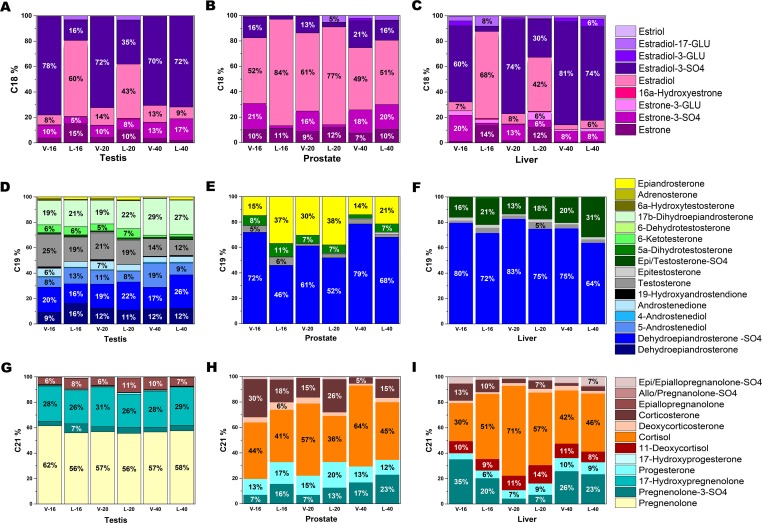
Production of steroid hormones is complex and dependent upon steroidogenic enzymes, cofactors, receptors, and transporters expressed within a tissue. Collectively, these factors create an environment for tissue-specific steroid hormone profiles and potentially tissue-specific responses to drug administration. Our objective was to assess steroid production, including sulfated steroid metabolites in the boar testis, prostate, and liver following inhibition of aromatase, the enzyme that converts androgen precursors to estrogens. Boars were treated with the aromatase inhibitor, letrozole from 11 to 16 weeks of age and littermate boars received the canola oil vehicle. Steroid profiles were evaluated in testes, prostate, and livers of 16, 20, and 40 week old boars using liquid chromatography/mass spectrometry. Testis, prostate, and liver had unique steroid profiles in vehicle-treated animals. Only C18 steroid hormones were altered by treatment with the aromatase inhibitor, letrozole; no significant differences were detected in any of the C19 or C21 steroids evaluated. Testis was the only tissue with significantly decreased free estrogens following treatment with the aromatase inhibitor; estrone and estradiol concentrations were lower (p < 0.05) in testes from 16, 20, and 40 week letrozole-treated boars. However, concentrations of the sulfated conjugates, estrone-sulfate and estradiol-sulfate, were significantly decreased (p<0.05) in 16 and 20 week boar testes, prostates, and livers from letrozole-treated boars. Hence, the distribution of estrogens between the free and conjugated forms was altered in a tissue-specific manner following inhibition of aromatase. The results suggest sulfated testicular estrogens are important estrogen precursors for the prostate, potentially enabling peripheral target tissues to synthesize free estrogens in the male pig.
类固醇激素的产生过程较为复杂,依赖于在组织内表达的类固醇生成酶、辅助因子、受体和转运蛋白。这些因素共同构成了组织特异性类固醇激素谱的环境,并可能使组织对药物治疗产生特异性反应。我们的目的是评估在抑制芳香酶(将雄激素前体转化为雌激素的酶)后,公猪睾丸、前列腺和肝脏中类固醇的产生情况,包括硫酸化类固醇代谢物。从 11 至 16 周龄开始,公猪接受芳香酶抑制剂来曲唑治疗,其同窝公猪接受菜籽油载体处理。使用液相色谱/质谱法评估 16、20 和 40 周龄公猪睾丸、前列腺和肝脏中的类固醇谱。在载体处理的动物中,睾丸、前列腺和肝脏具有独特的类固醇谱。只有 C18 类固醇激素受到芳香酶抑制剂来曲唑的影响而发生改变;在所评估的任何 C19 或 C21 类固醇中均未检测到显著差异。在使用芳香酶抑制剂治疗后,睾丸是唯一一种游离雌激素显著减少的组织;16、20 和 40 周龄来曲唑治疗公猪的睾丸中雌酮和雌二醇浓度较低(p < 0.05)。然而,16 和 20 周龄来曲唑治疗公猪的睾丸、前列腺和肝脏中,雌酮硫酸盐和雌二醇硫酸盐的硫酸化缀合物浓度显著降低(p < 0.05)。因此,在抑制芳香酶后,雌激素在游离和结合形式之间的分布以组织特异性方式发生改变。这些结果表明,硫酸化睾丸雌激素是前列腺中重要的雌激素前体,可能使雄性猪的外周靶组织能够合成游离雌激素。