Department of Food Science and Technology, Chonbuk National University, Jeonju-si, Jeollabuk-do 54896, Korea.
Department of Health Management, Jeonju University, Jeonju-si, Jeollabuk-do 55069, Korea.
Molecules. 2019 Apr 2;24(7):1290. doi: 10.3390/molecules24071290.
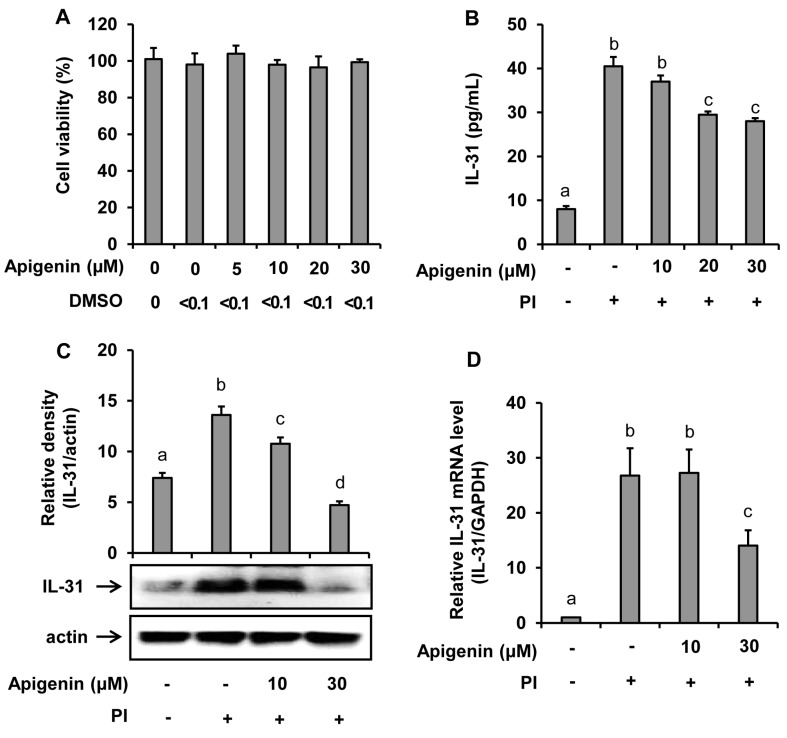
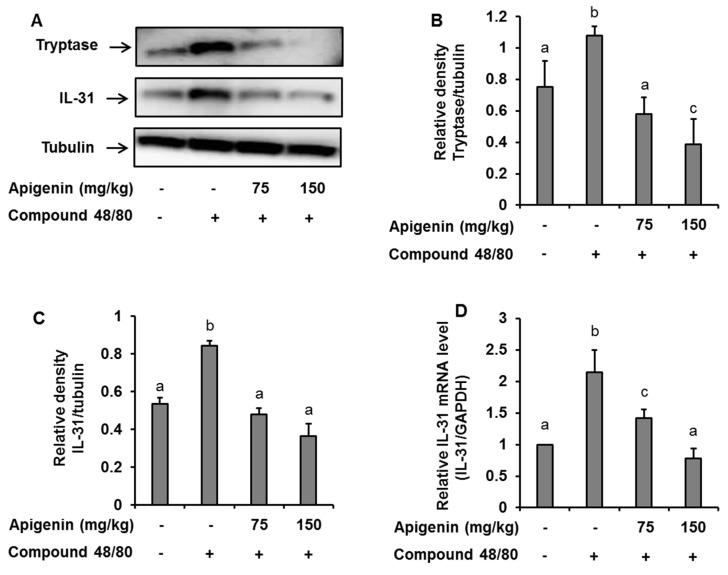
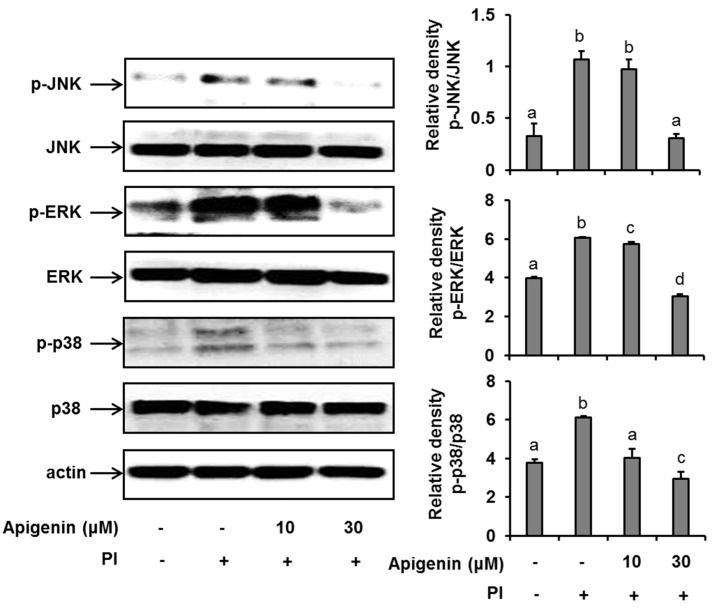
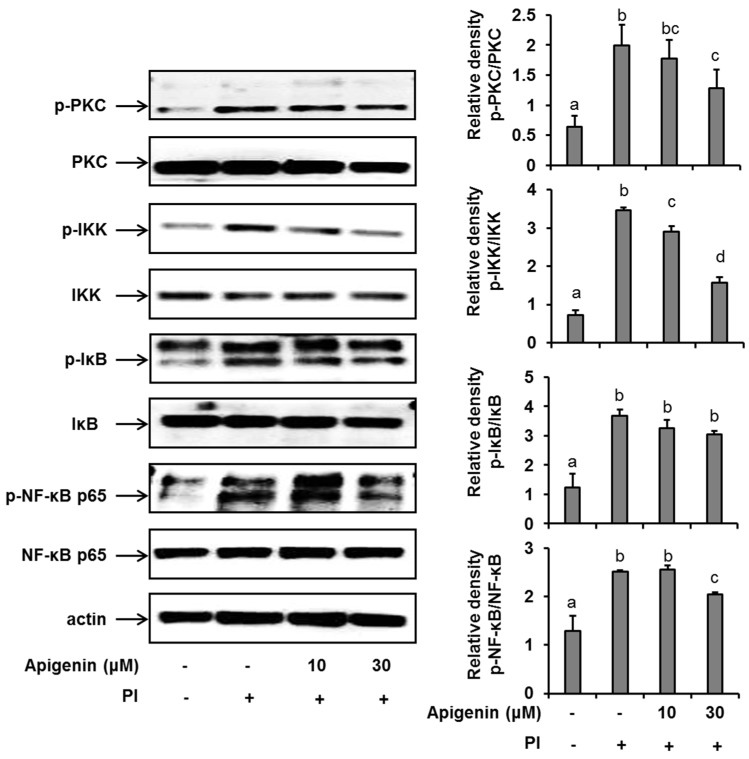
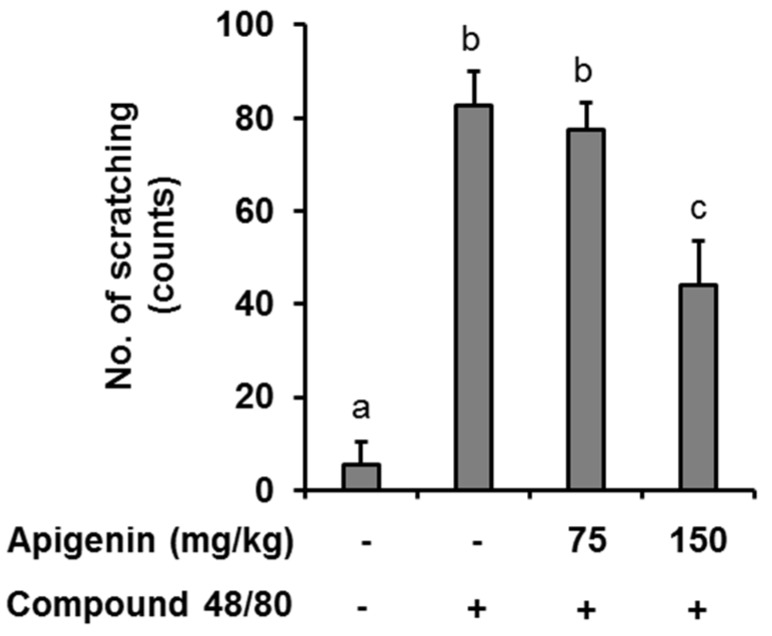
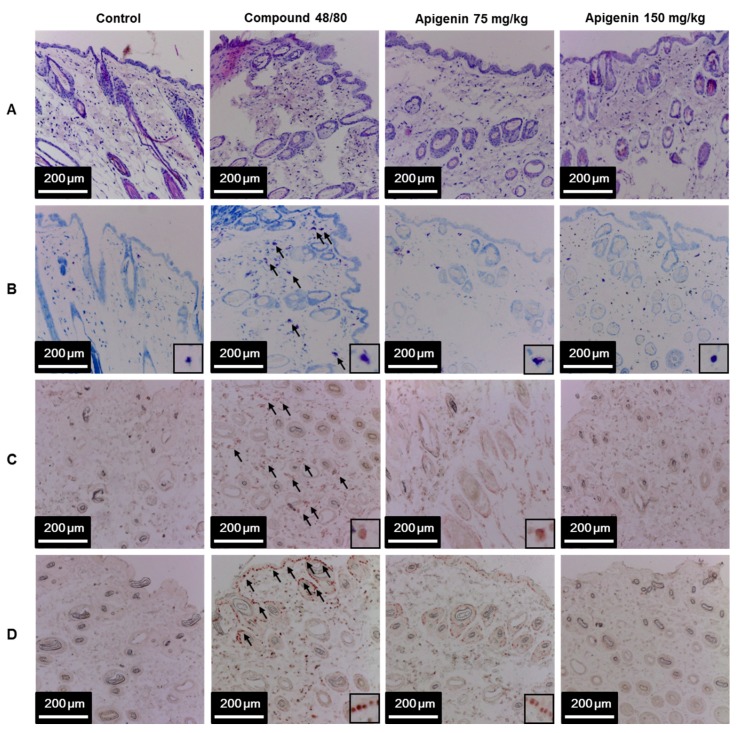
IL-31 is a recently discovered cytokine that is produced not only in T-cells but also in mast cells. It is strongly implicated to play a key role in inflammatory diseases and in the pathogenesis of itch in atopic dermatitis. Apigenin, a flavonoid of plant origin has numerous biological applications. In this study, we showed that apigenin modulates IL-31 mRNA, protein expression, and release in stimulated human mast (HMC-1) by inhibiting the phosphorylation activation of MAPK and NF-κB. To determine whether apigenin has similar effects in vivo, using Compound 48/80, we developed an atopic dermatitis itch model in mice and found an increase in IL-31 expression in the skin. We also revealed that apigenin prevents the infiltration and degranulation of mast cells and suppressed mRNA and protein expression of IL-31 in the skin of mice. These results provide a new suggestion of the potential applicability of apigenin for treatment of various inflammatory diseases and itch mediated by IL-31.
白细胞介素-31 是一种新发现的细胞因子,不仅在 T 细胞中产生,也在肥大细胞中产生。它在炎症性疾病和特应性皮炎的瘙痒发病机制中起关键作用。芹菜素是一种植物来源的类黄酮,具有多种生物学应用。在这项研究中,我们表明,芹菜素通过抑制 MAPK 和 NF-κB 的磷酸化激活来调节刺激的人肥大细胞(HMC-1)中的白细胞介素-31 mRNA、蛋白表达和释放。为了确定芹菜素在体内是否具有类似的作用,我们使用化合物 48/80 在小鼠中开发了特应性皮炎瘙痒模型,发现皮肤中白细胞介素-31 的表达增加。我们还揭示了芹菜素可防止肥大细胞的浸润和脱颗粒,并抑制小鼠皮肤中白细胞介素-31 的 mRNA 和蛋白表达。这些结果为芹菜素在治疗各种由白细胞介素-31 介导的炎症性疾病和瘙痒方面的潜在适用性提供了新的建议。