Department of Biology and Human Genetics and Department for Cell and Tissue Engineering, Faculty of Medicine, University of Niš, 18000 Niš, Serbia.
Int J Mol Sci. 2019 Apr 3;20(7):1671. doi: 10.3390/ijms20071671.
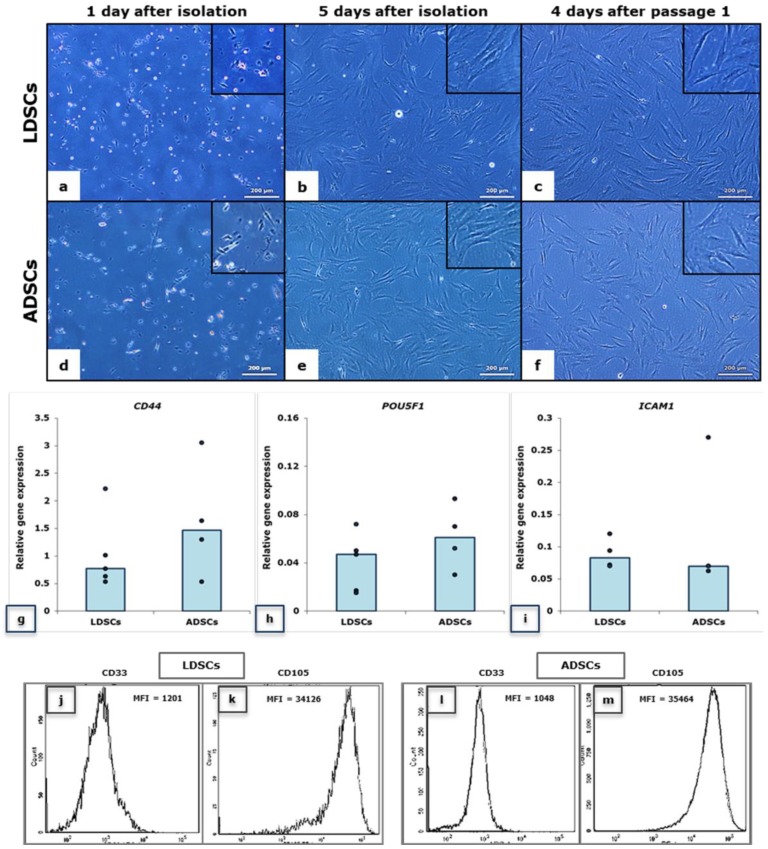
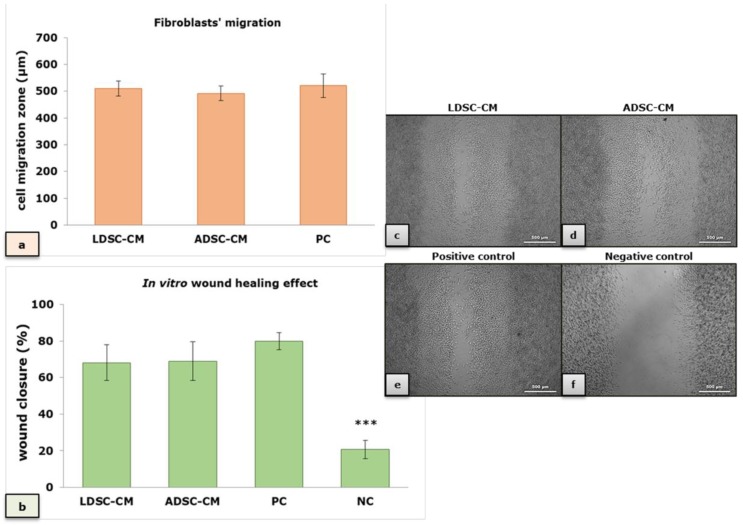
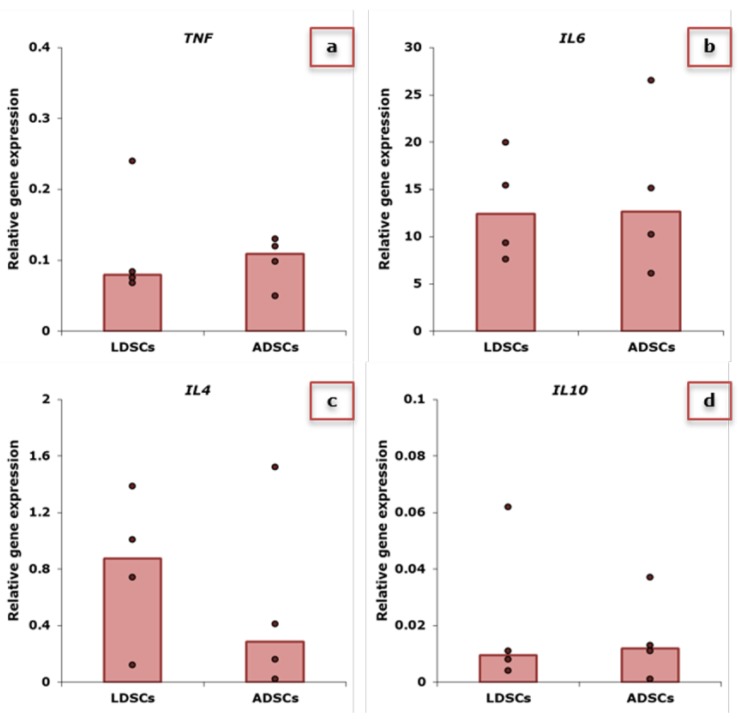
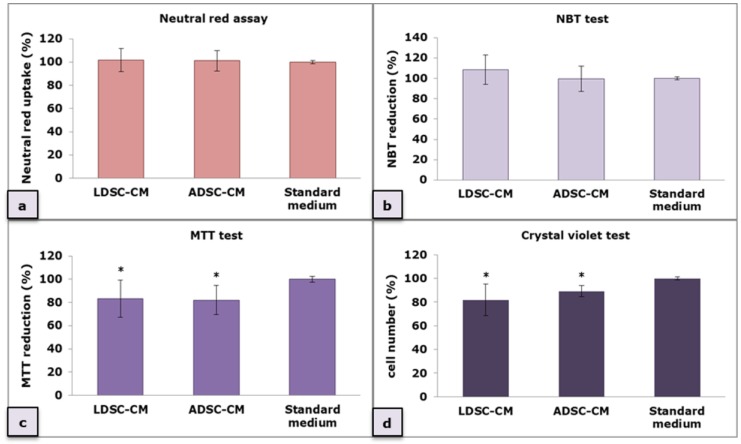
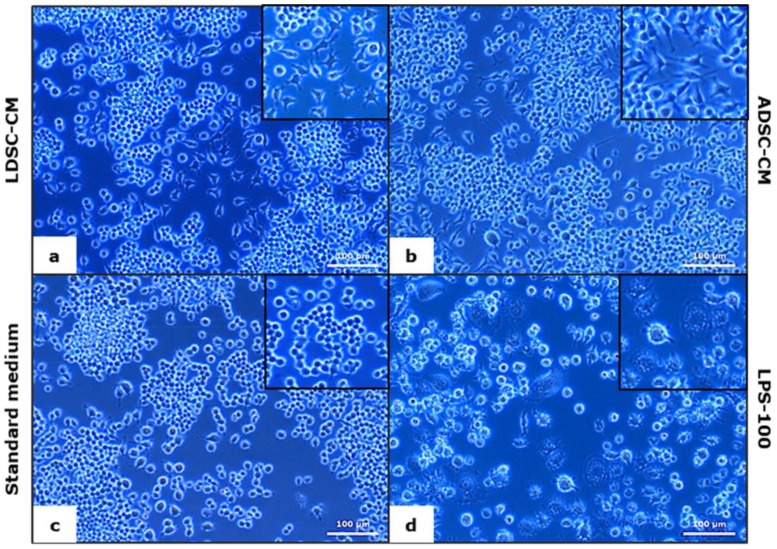
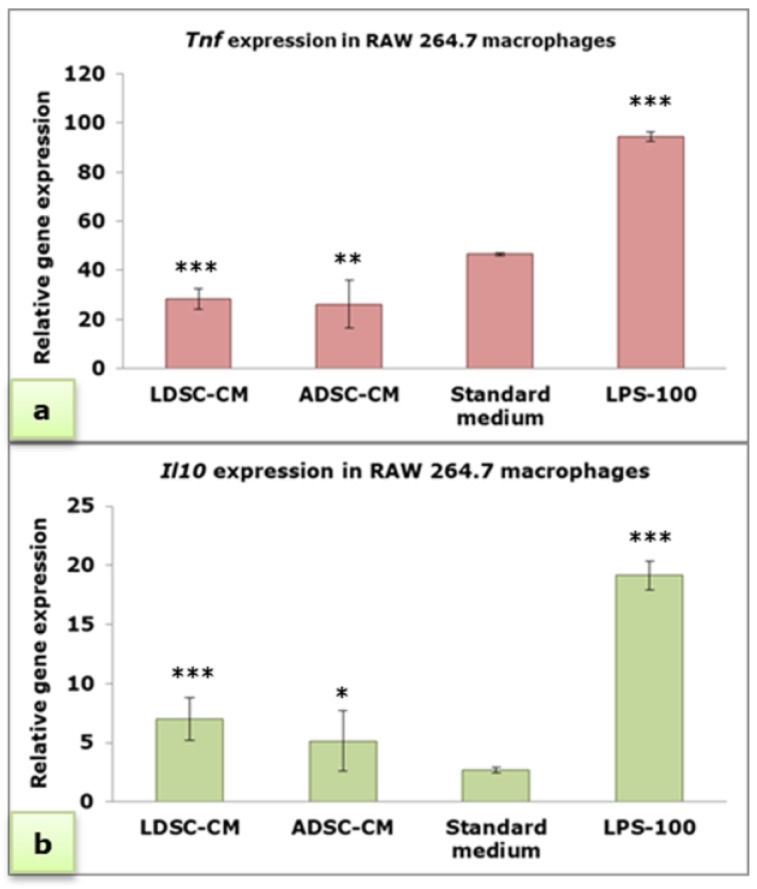
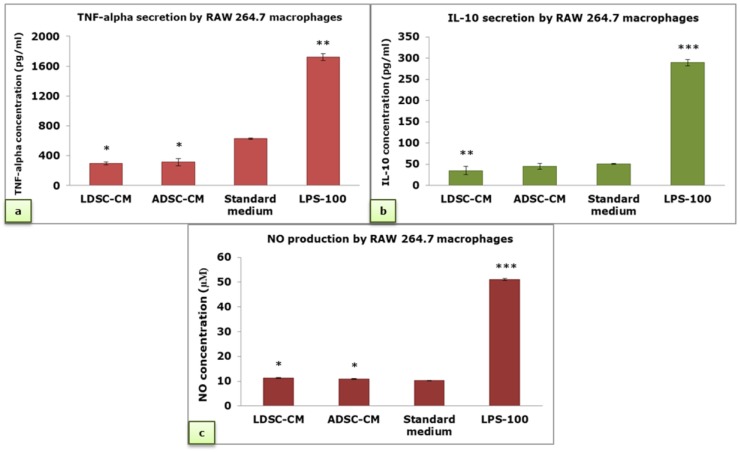
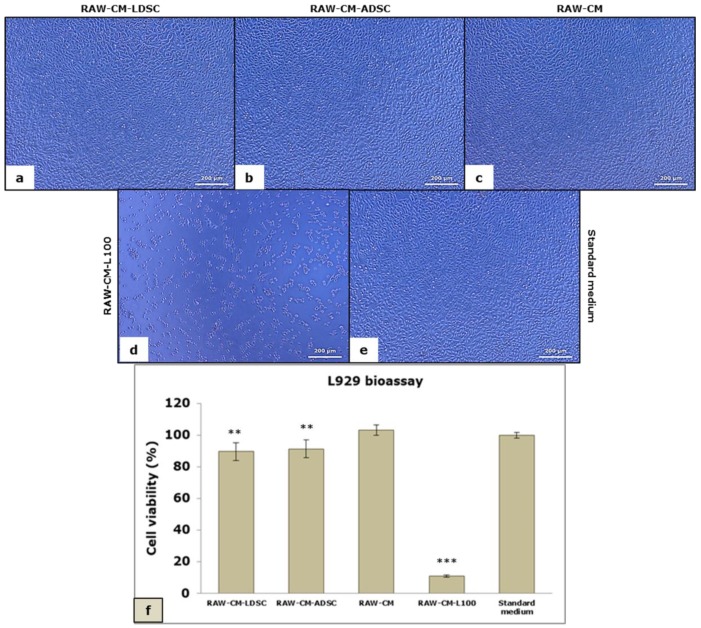
Immunomodulatory and wound healing activities of adipose-derived stem cells (ADSCs) have been reported in various in vitro and in vivo experimental models suggesting their beneficial role in regenerative medicine and treatments of inflammatory-related disorders. Lipoma-derived stem cells (LDSCs) were reported as a potential tool in regenerative medicine due to the similarity with ADSCs but we have previously shown that LDSCs have different differentiation capacity than ADSCs despite a similar mesenchymal phenotype. To further analyze the potential differences and/or similarities between those two stem cell types, in the present study we examined the macrophages (MΦs)' response, immunomodulatory and wound healing effect of conditioned media (CM) of LDSCs and ADSCs in indirect co-culture system in vitro. We confirmed similar mesenchymal phenotype and stemness state of LDSCs and ADSCs but indicated differences in expression of some inflammatory-related genes. Anti-inflammatory potential of CM of LDSCs and ADSCs, with pronounced effect of LDSCs, in unstimulated RAW 264.7 MΦs was evaluated by decrease in and increase in gene expression, which was confirmed by corresponding cytokines' secretion analysis. Conditioned media of both LDSCs and ADSCs led to the functional activation of MΦs, with slightly more pronounced effect of CM of LDSCs, while both stimulated wound healing in vitro in a similar manner. Results of this study suggest that LDSCs secrete soluble factors like ADSCs and therefore may have a potential for application in regenerative medicine, due to immunomodulatory and wound healing activity, and indicate that LDSCs through secretome may interact with other cells in lipoma tissue.
脂肪来源干细胞(ADSCs)的免疫调节和伤口愈合活性已在各种体外和体内实验模型中得到报道,表明其在再生医学和炎症相关疾病治疗中的有益作用。脂肪瘤来源干细胞(LDSCs)由于与 ADSCs 相似,被报道为再生医学的潜在工具,但我们之前曾表明,尽管具有相似的间充质表型,但 LDSCs 的分化能力与 ADSCs 不同。为了进一步分析这两种干细胞类型之间的潜在差异和/或相似性,在本研究中,我们在体外间接共培养系统中检查了条件培养基(CM)对 LDSCs 和 ADSCs 诱导的巨噬细胞(MΦs)反应、免疫调节和伤口愈合的影响。我们证实了 LDSCs 和 ADSCs 具有相似的间充质表型和干性状态,但表明一些炎症相关基因的表达存在差异。通过下调 基因表达和上调 基因表达,评估了 LDSCs 和 ADSCs CM 的抗炎潜力,在未刺激的 RAW 264.7 MΦs 中,LDSCs 的效果更为明显,这通过相应细胞因子分泌分析得到了证实。LDSCs 和 ADSCs 的条件培养基均导致 MΦs 的功能激活,而 LDSCs 的 CM 效果更为明显,同时两者均以相似的方式在体外刺激伤口愈合。本研究结果表明,LDSCs 像 ADSCs 一样分泌可溶性因子,因此由于其免疫调节和伤口愈合活性,可能具有在再生医学中的应用潜力,并表明 LDSCs 通过分泌组可能与脂肪组织中的其他细胞相互作用。