Distinguished Professor of Biology, Division of Life Sciences, Environmental and Occupational Health Sciences Institute and School of Public Health, Rutgers University, United States.
Professor Emeritus, Environmental and Occupational Health Sciences Institute and Robert Wood Johnson Medical School, Rutgers University, United States.
Disasters. 2019 Jul;43(3):658-685. doi: 10.1111/disa.12350. Epub 2019 Apr 16.
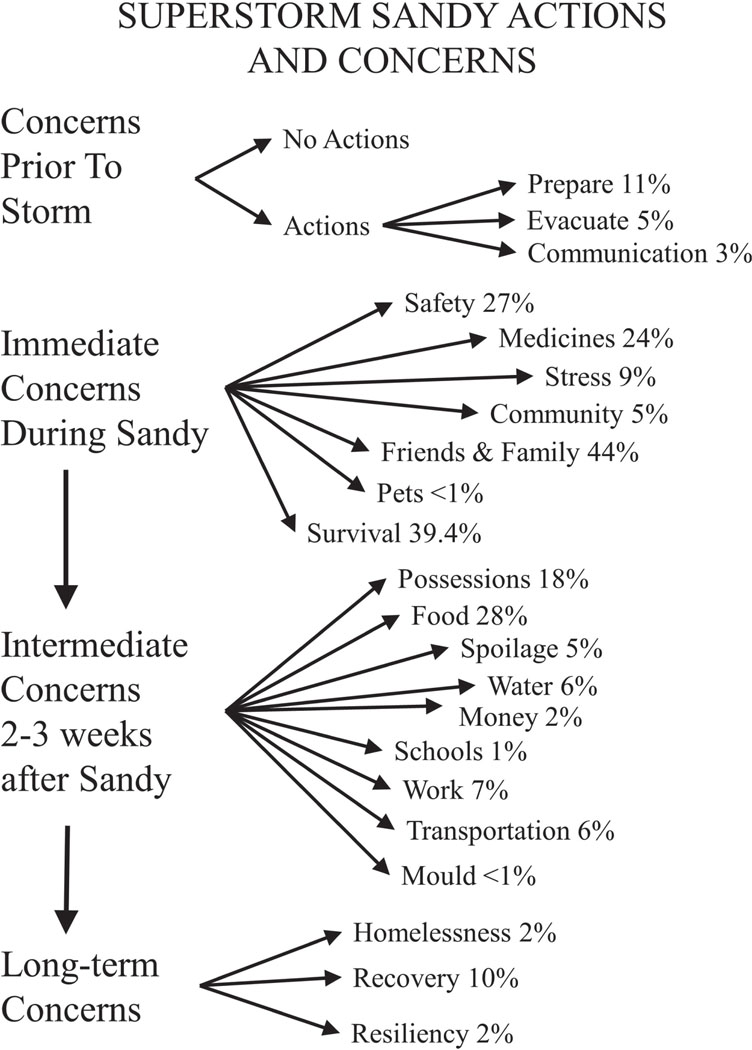
Knowing how people prepare for disasters is essential to developing resiliency strategies. This study examined recalled concerns, evacuation experiences, and the future preparedness plans of a vulnerable population in New Jersey, United States, following Hurricane Sandy in 2012. Understanding the responses of minority communities is key to protecting them during forthcoming disasters. Overall, 35 per cent of respondents were not going to prepare for an event. Intended future preparedness actions were unrelated to respondents' ratings of personal impact. More Blacks and Hispanics planned on preparing than Whites (68 versus 55 per cent), and more Hispanics planned on evacuating than did others who were interviewed. A higher percentage of respondents who had trouble getting to health centres were going to prepare than others. Respondents' concerns were connected to safety and survival, protecting family and friends, and having enough food and medicine, whereas future actions included evacuating earlier and buying sufficient supplies to shelter in place.
了解人们如何为灾害做准备对于制定弹性策略至关重要。本研究调查了美国新泽西州 2012 年桑迪飓风后易受灾人群对灾害的担忧、撤离经历和未来的准备计划。了解少数族裔社区的反应对于在即将到来的灾害中保护他们至关重要。总体而言,35%的受访者不打算为事件做准备。未来的准备行动与受访者对个人影响的评价无关。与白人相比,更多的黑人和西班牙裔计划做准备(68%比 55%),更多的西班牙裔计划撤离,而不是其他接受采访的人。与其他人相比,那些去医疗中心有困难的受访者更有可能做准备。受访者的担忧与安全和生存、保护家人和朋友以及有足够的食物和药品有关,而未来的行动包括更早撤离和购买足够的物资就地避难。