Chen Zhouxun, Lin Jiahao, Feng Shuyi, Chen Xuxu, Huang Hanzhang, Wang Chen, Yu Yujun, He Yu, Han Shaoliang, Zheng Linfeng, Huang Guoyu
Department of Colorectal and Anal Surgery, The First Affiliated Hospital, Wenzhou Medical University, Wenzhou, China.
School of The First Clinical Medical Sciences, Wenzhou Medical University, Wenzhou, China.
Onco Targets Ther. 2019 Mar 28;12:2397-2408. doi: 10.2147/OTT.S189536. eCollection 2019.
SIRT4, a protein localized in the mitochondria, is one of the least characteristic members of the sirtuin family. It is known that SIRT4 has deacetylase activity and plays a role in energy metabolism, but little is known about its possible role in carcinogenesis. Recently, several studies have suggested that SIRT4 may function as either a tumor oncogene or a tumor suppressor gene. However, its relationship with thyroid cancer remains unclear.
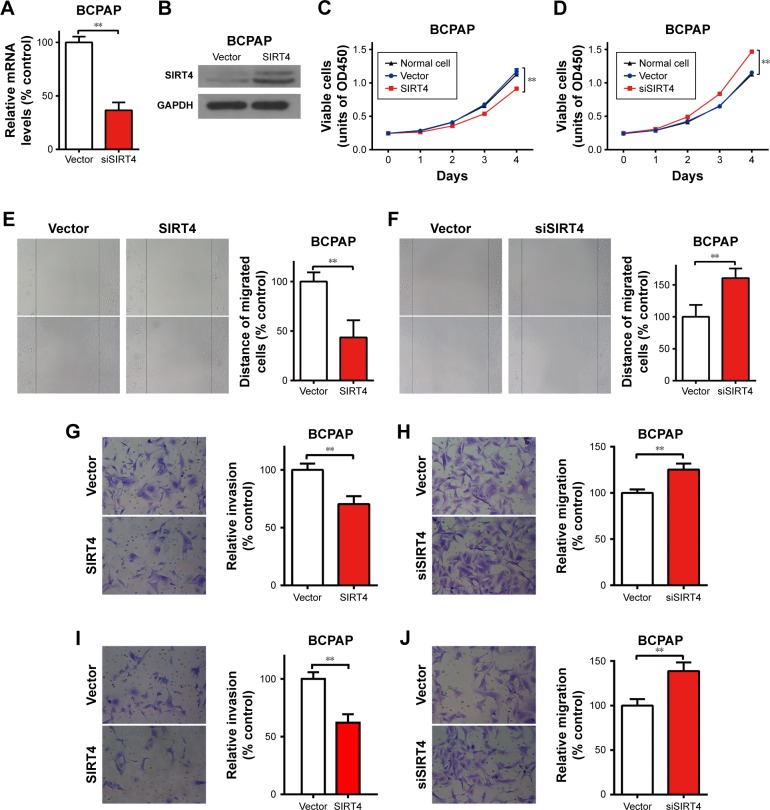
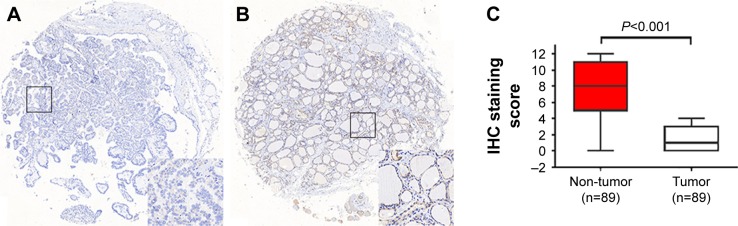
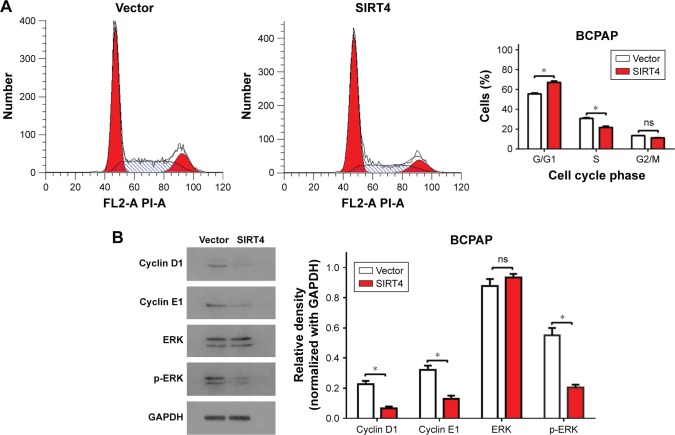
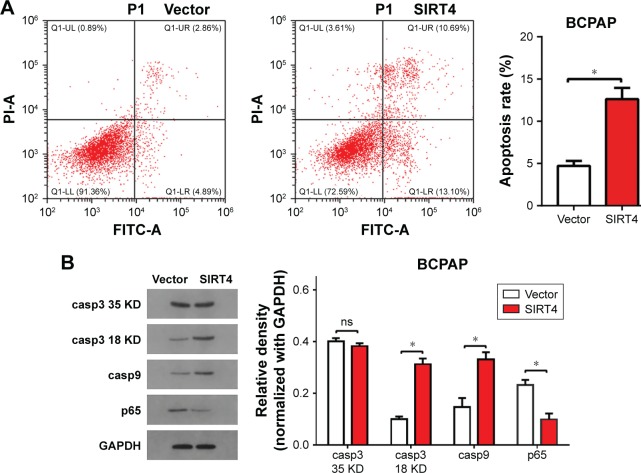
We stably overexpressed SIRT4 or silenced its expression in the human thyroid cancer cell line BCPAP by means of lentiviral vectors. We conducted a variety of tests, such as CCK-8, wound healing, migration, and invasion assays, to investigate the role of SIRT4 in the proliferation, migration, and invasion abilities of thyroid cancer cells. We also investigated the effects of SIRT4 overexpression on cell cycle progression and apoptosis of BCPAP cells and studied the role of glutamine metabolism in the effects of SIRT4 on BCPAP cell migration and invasion. Finally, we analyzed SIRT4 expression levels in thyroid cancer specimens by immunohistochemistry and investigated their association with clinicopathological features.
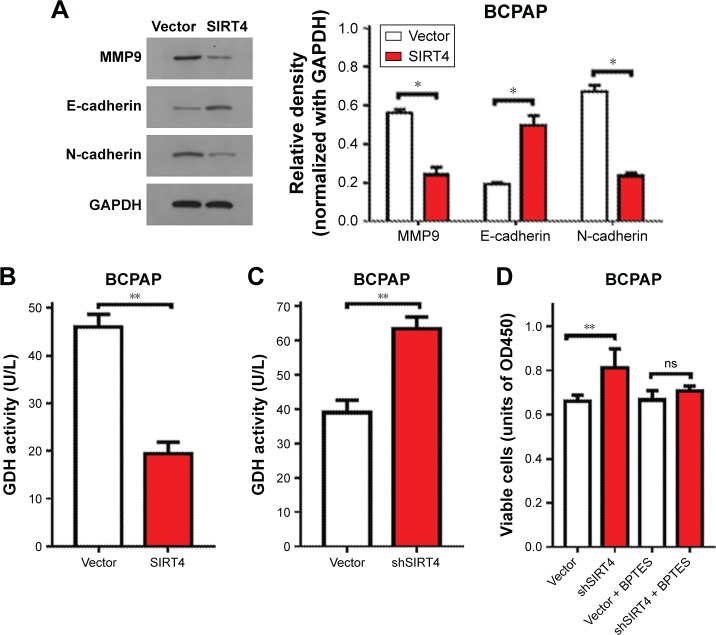
Overexpression of SIRT4 inhibited the proliferation, migration, and invasion abilities of BCPAP thyroid cancer cells, blocked the cell cycle in the G0/G1 phase, and induced apoptosis. Mechanistically, SIRT4 inhibited BCPAP migration and invasion by inhibiting glutamine metabolism. Moreover, we found that SIRT4 protein levels in thyroid cancer tissues were markedly lower than in their non-neoplastic tissue counterparts (<0.001).
SIRT4 plays a pivotal role in the growth and metastasis of thyroid cancer cells and could be a potential therapeutic target in thyroid cancer.
SIRT4是一种定位于线粒体的蛋白质,是沉默调节蛋白家族中特性最少的成员之一。已知SIRT4具有脱乙酰酶活性并在能量代谢中发挥作用,但对其在致癌作用中可能发挥的作用了解甚少。最近,几项研究表明SIRT4可能作为肿瘤癌基因或肿瘤抑制基因发挥作用。然而,其与甲状腺癌的关系仍不清楚。
我们通过慢病毒载体在人甲状腺癌细胞系BCPAP中稳定过表达SIRT4或沉默其表达。我们进行了多种测试,如CCK-8、伤口愈合、迁移和侵袭试验,以研究SIRT4在甲状腺癌细胞增殖、迁移和侵袭能力中的作用。我们还研究了SIRT4过表达对BCPAP细胞周期进程和凋亡的影响,并研究了谷氨酰胺代谢在SIRT4对BCPAP细胞迁移和侵袭影响中的作用。最后,我们通过免疫组织化学分析了甲状腺癌标本中SIRT4的表达水平,并研究了它们与临床病理特征的关联。
SIRT4的过表达抑制了BCPAP甲状腺癌细胞的增殖、迁移和侵袭能力,使细胞周期停滞在G0/G1期,并诱导凋亡。机制上,SIRT4通过抑制谷氨酰胺代谢来抑制BCPAP的迁移和侵袭。此外,我们发现甲状腺癌组织中的SIRT4蛋白水平明显低于其非肿瘤组织对应物(<0.001)。
SIRT4在甲状腺癌细胞的生长和转移中起关键作用,可能是甲状腺癌潜在的治疗靶点。