Department of Anorectal Surgery, Hainan General Hospital, Haikou, China.
Department of Pediatrics, First Hospital of Ninghai County, Ningbo, China.
Sci Rep. 2022 Jul 16;12(1):12208. doi: 10.1038/s41598-022-16610-8.
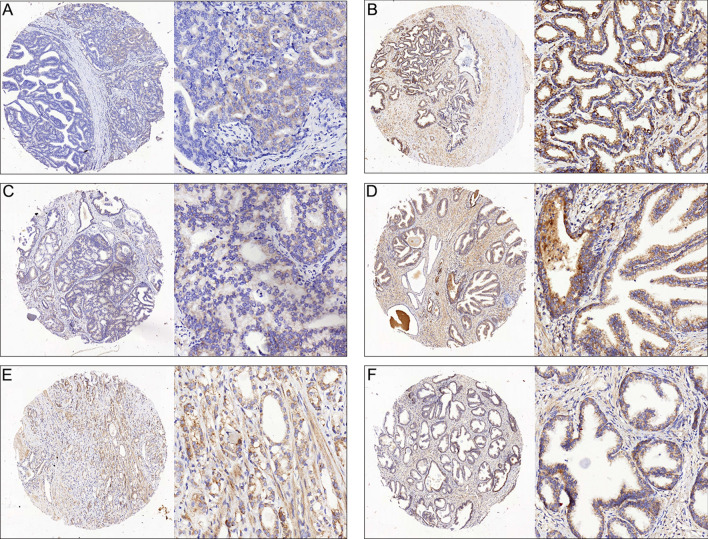
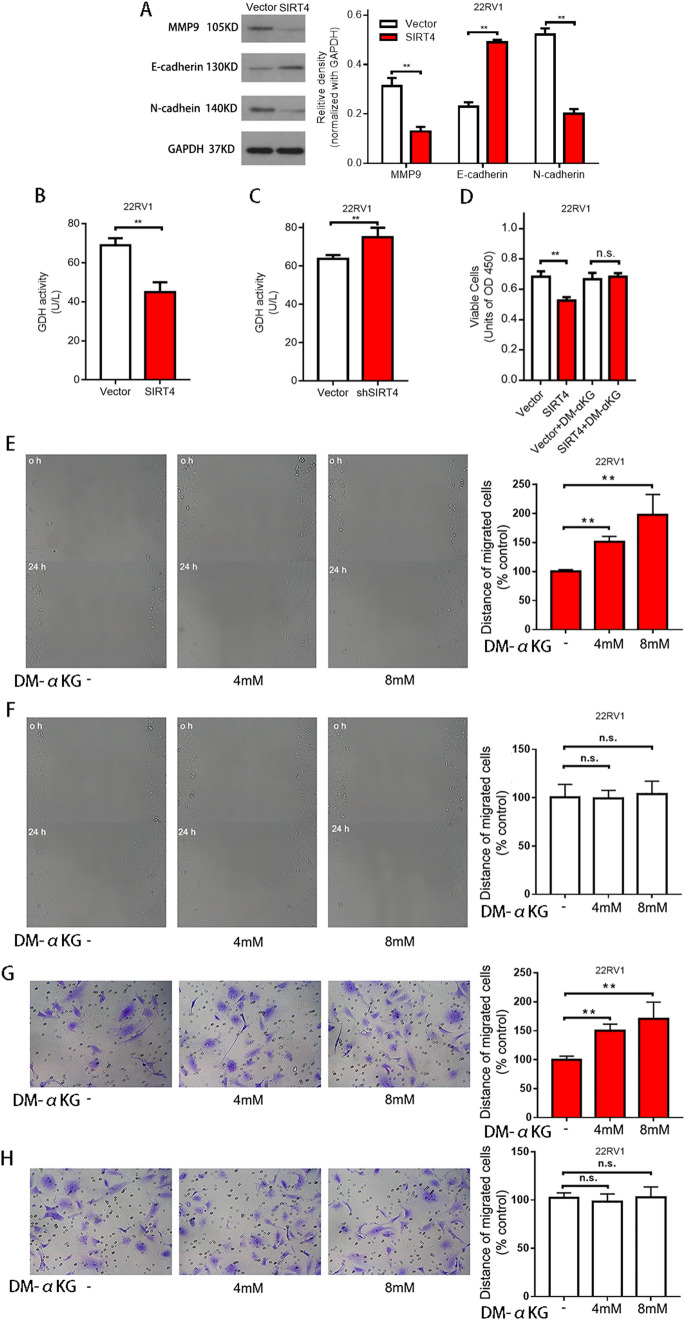
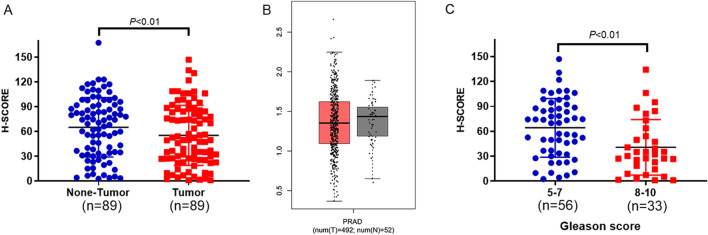
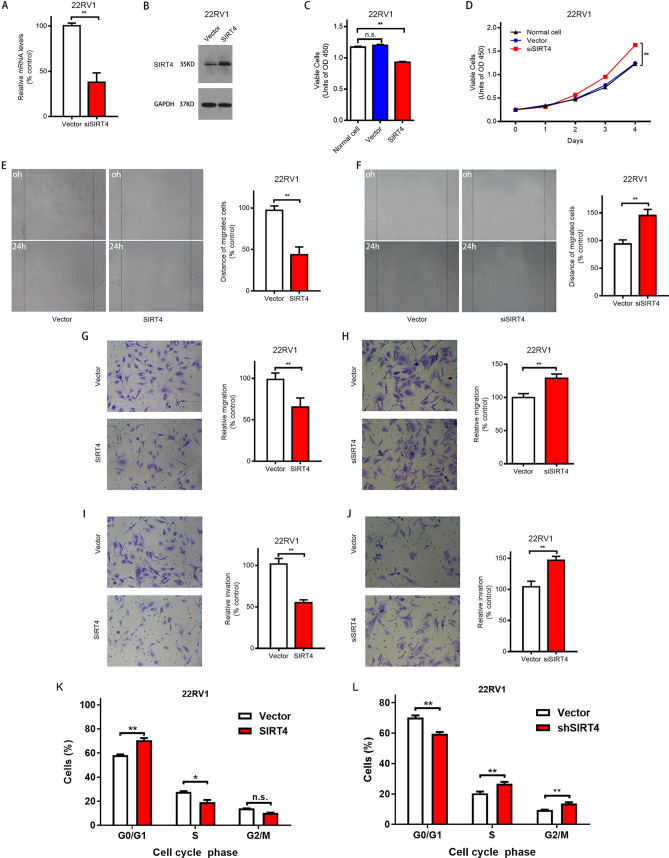
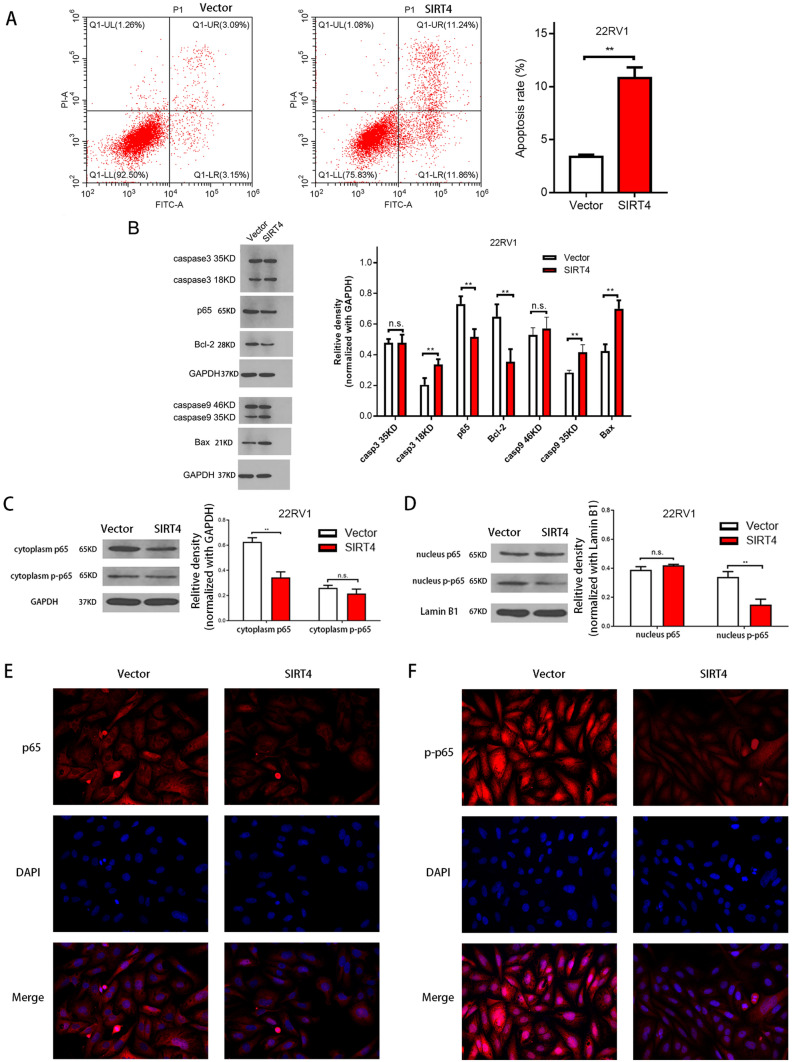
Localized in the mitochondria, SIRT4 is a nicotinamide adenine dinucleotide (NAD +) -dependent adenosine diphosphate (ADP) -ribosyltransferase and is one of the least characterized members of the sirtuin family. Although it is well known that it shows deacetylase activity for energy metabolism, little is understood about its function in tumorigenesis. Recent research suggests that SIRT4 may work as both a tumor suppressor gene and an oncogene. However, the clinical significance of SIRT4 in prostate cancer remains unknown. In this study, we evaluated SIRT4 protein levels in cancerous prostate tissue and corresponding non-tumor prostate tissue via immunohistochemical staining on a tissue microarray including tissues from 89 prostate cancer patients. The association between SIRT4 expression and Gleason score was also determined. Further, shSIRT4 or stable prostate cancer cell lines (22RV1) overexpressing SIRT4 were constructed via lentiviral infection. Using Cell-Counting Kit-8 (CCK-8) assay, wound healing assay, migration, and invasion and apoptosis assays, the effects of SIRT4 on the migration, invasion ability, and proliferation of prostate cancer cells were investigated. We also determined the effect of SIRT4 on glutamine metabolism in 22RV1 cells. We found the protein levels of SIRT4 in prostate cancer tissues were significantly lower than those in their non-neoplastic tissue counterparts (P < 0.01); a lower SIRT4 level was also significantly associated with a higher Gleason score (P < 0.01). SIRT4 suppressed the migration, invasion capabilities, and proliferation of prostate cancer cells and induced cellular apoptosis. Furthermore, the invasion and migration of 22RV1 cells were mechanistically inhibited by SIRT4 via glutamine metabolism inhibition. In conclusion, the present study's findings showed that SIRT4 protein levels are significantly associated with the Gleason score in patients with prostate cancer, and SIRT4 exerts a tumor-suppressive effect on prostate cancer cells by inhibiting glutamine metabolism. Thus, SIRT4 may serve as a potential novel therapeutic target for prostate cancer.
SIRT4 定位于线粒体,是烟酰胺腺嘌呤二核苷酸 (NAD+)依赖的二腺苷二磷酸 (ADP)-核糖基转移酶,是 sirtuin 家族中特征最少的成员之一。虽然众所周知它具有能量代谢的去乙酰化酶活性,但对其在肿瘤发生中的功能知之甚少。最近的研究表明,SIRT4 可能既是肿瘤抑制基因又是癌基因。然而,SIRT4 在前列腺癌中的临床意义尚不清楚。在这项研究中,我们通过对包括 89 例前列腺癌患者组织的组织微阵列进行免疫组织化学染色,评估了癌性前列腺组织和相应非肿瘤前列腺组织中的 SIRT4 蛋白水平。还确定了 SIRT4 表达与 Gleason 评分之间的关联。此外,我们通过慢病毒感染构建了 shSIRT4 或稳定过表达 SIRT4 的前列腺癌细胞系(22RV1)。通过细胞计数试剂盒-8 (CCK-8) 测定、划痕愈合测定、迁移、侵袭和凋亡测定,研究了 SIRT4 对前列腺癌细胞迁移、侵袭能力和增殖的影响。我们还确定了 SIRT4 对 22RV1 细胞中谷氨酰胺代谢的影响。我们发现前列腺癌组织中的 SIRT4 蛋白水平明显低于其非肿瘤组织对应物(P<0.01);较低的 SIRT4 水平也与较高的 Gleason 评分显著相关(P<0.01)。SIRT4 抑制前列腺癌细胞的迁移、侵袭能力和增殖并诱导细胞凋亡。此外,SIRT4 通过抑制谷氨酰胺代谢,在机制上抑制 22RV1 细胞的侵袭和迁移。总之,本研究的结果表明,SIRT4 蛋白水平与前列腺癌患者的 Gleason 评分显著相关,SIRT4 通过抑制谷氨酰胺代谢对前列腺癌细胞发挥肿瘤抑制作用。因此,SIRT4 可能成为前列腺癌的潜在新治疗靶点。