Department of Endocrinology, The First Affiliated Hospital of Chongqing Medical University, 400016 Chongqing, China.
The Biology Science Institutes, Chongqing Medical University, Chongqing 400016, China.
J Diabetes Res. 2019 Mar 12;2019:3256060. doi: 10.1155/2019/3256060. eCollection 2019.
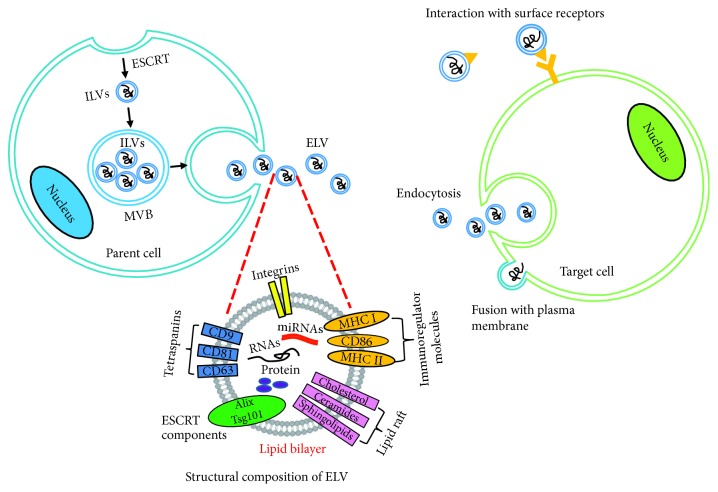
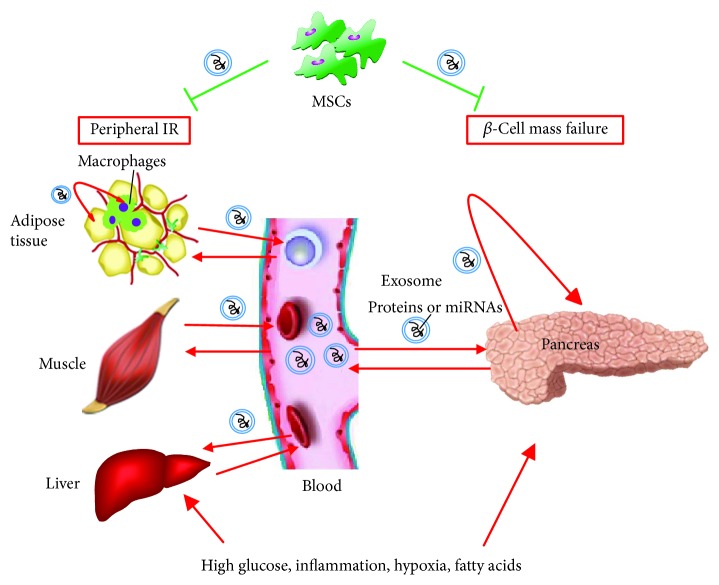
Exosome-like vesicles (ELVs), the smallest class of extracellular vesicles released from cells, function in cellular crosstalk and therefore profoundly affect physiologic responses and pathologic progression. A growing body of evidence supports a novel role for ELVs as important mediators and therapeutic targets due to their effects on regulation of both insulin signaling and -cell mass. Pathologic conditions associated with type 2 diabetes (such as high blood glucose, inflammation, hypoxia, and fatty acids) can alter the quantity and components of ELVs secreted from the pancreas or peripheral insulin-targeting tissues. These released ELVs can either enter the blood circulation or be taken up by neighboring cells or macrophages, which can lead to insulin resistance or -cell apoptosis. This review focuses on the roles of ELVs in insulin resistance and -cell failure and also highlights the potential use of ELVs and exosome-based delivery systems in therapeutic interventions aimed at treating type 2 diabetes mellitus as well as the challenges associated with exosome-targeting therapeutics.
外泌体样小泡 (ELVs) 是细胞释放的最小一类细胞外囊泡,在细胞间通讯中发挥作用,因此深刻影响生理反应和病理进展。越来越多的证据支持 ELVs 作为重要的介质和治疗靶点的新作用,这是由于它们对胰岛素信号和 -细胞质量的调节作用。与 2 型糖尿病相关的病理状况(如高血糖、炎症、缺氧和脂肪酸)可改变胰腺或外周胰岛素靶向组织分泌的 ELVs 的数量和成分。这些释放的 ELVs 可以进入血液循环或被邻近细胞或巨噬细胞摄取,这可能导致胰岛素抵抗或 -细胞凋亡。本文重点讨论了 ELVs 在胰岛素抵抗和 -细胞衰竭中的作用,并强调了 ELVs 和基于外泌体的递药系统在治疗 2 型糖尿病的治疗干预中的潜在用途,以及外泌体靶向治疗相关的挑战。