Ludwig Collaborative and Swim Across America Laboratory, Memorial Sloan Kettering Cancer Center, New York, NY 10065, USA.
Division of Hematology & Medical Oncology, Laura and Isaac Perlmutter Cancer Center, New York University Langone Medical Center, New York, NY 10016, USA.
Cell Rep. 2019 Apr 16;27(3):806-819.e5. doi: 10.1016/j.celrep.2019.03.066.
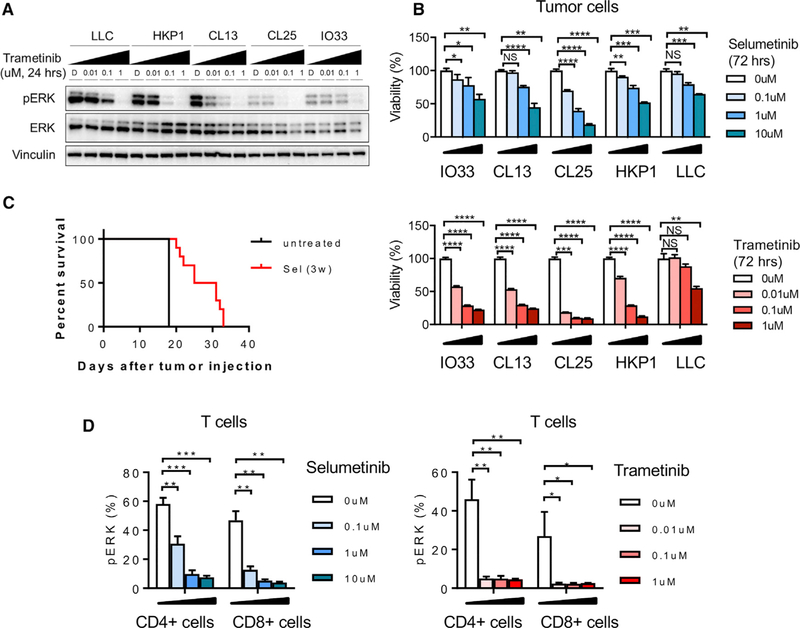
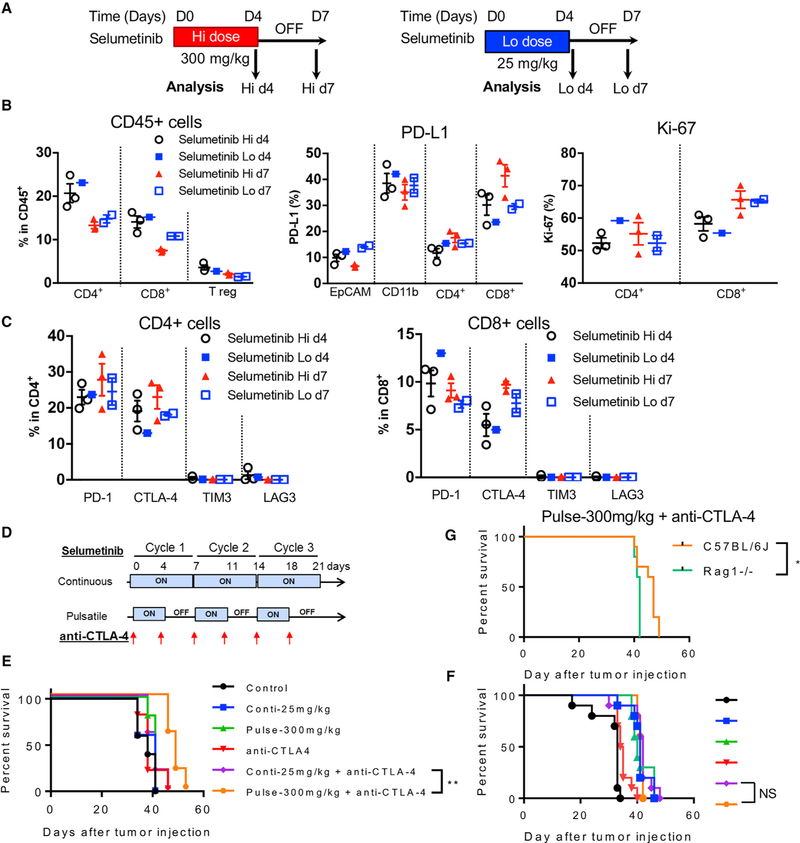
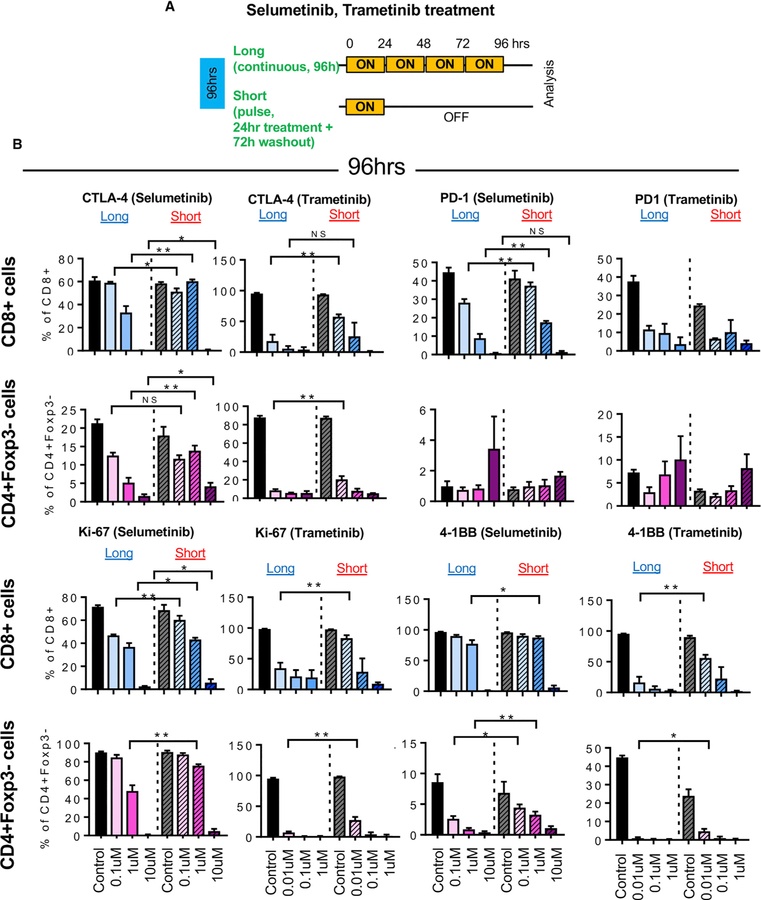
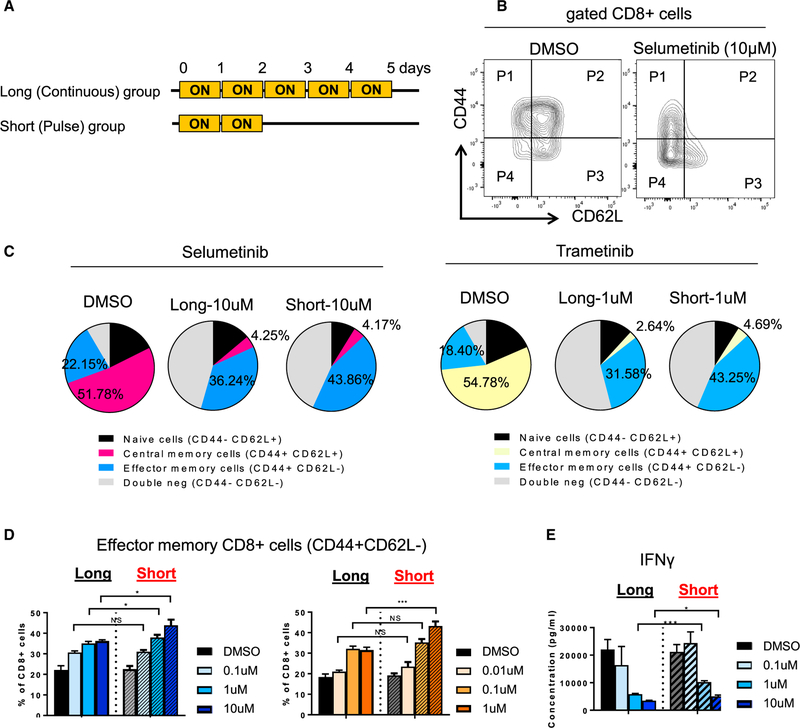
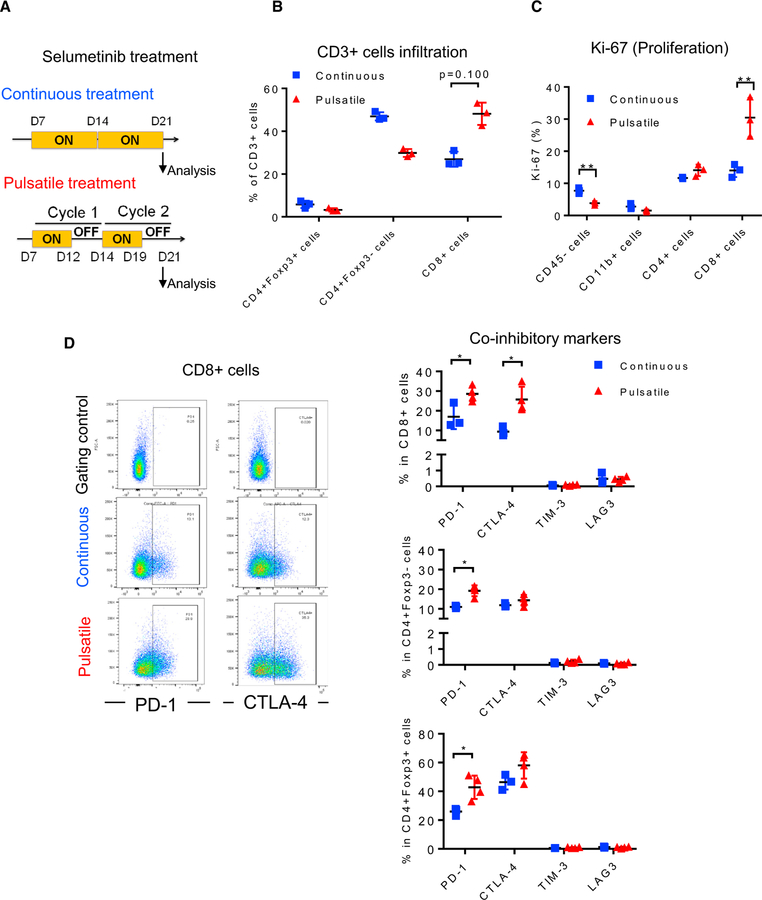
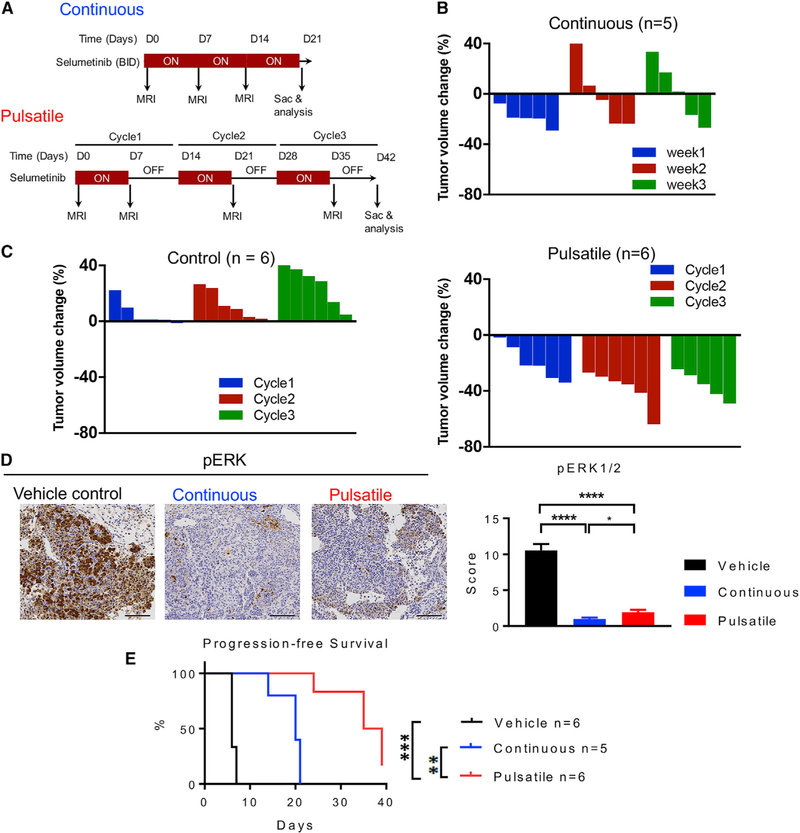
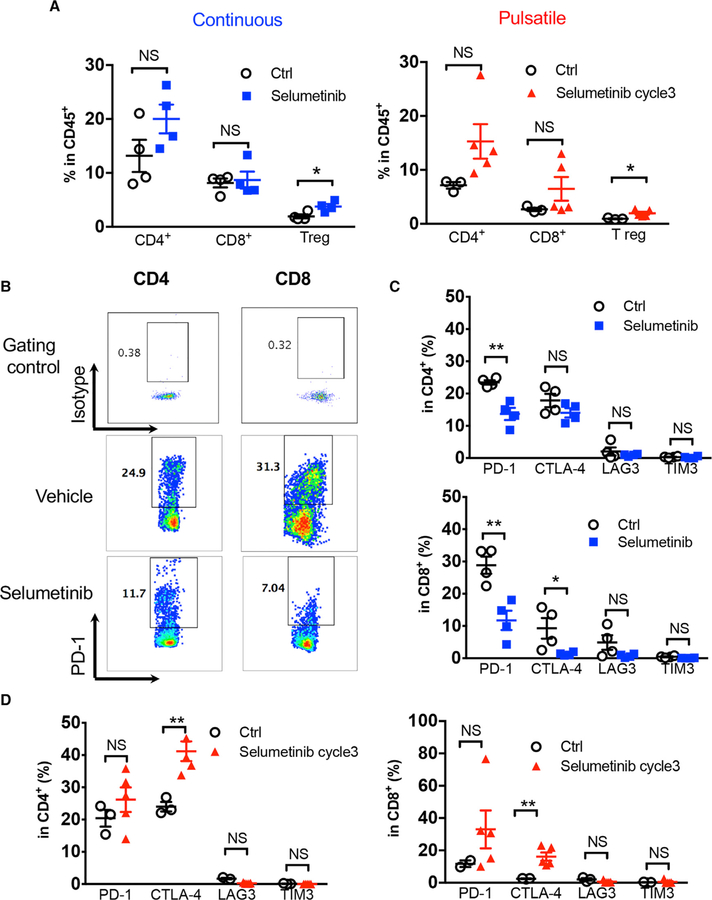
KRAS is one of the driver oncogenes in non-small-cell lung cancer (NSCLC) but remains refractory to current modalities of targeted pathway inhibition, which include inhibiting downstream kinase MEK to circumvent KRAS activation. Here, we show that pulsatile, rather than continuous, treatment with MEK inhibitors (MEKis) maintains T cell activation and enables their proliferation. Two MEKis, selumetinib and trametinib, induce T cell activation with increased CTLA-4 expression and, to a lesser extent, PD-1 expression on T cells in vivo after cyclical pulsatile MEKi treatment. In addition, the pulsatile dosing schedule alone shows superior anti-tumor effects and delays the emergence of drug resistance. Furthermore, pulsatile MEKi treatment combined with CTLA-4 blockade prolongs survival in mice bearing tumors with mutant Kras. Our results set the foundation and show the importance of a combinatorial therapeutic strategy using pulsatile targeted therapy together with immunotherapy to optimally enhance tumor delay and promote long-term anti-tumor immunity.
KRAS 是一种非小细胞肺癌(NSCLC)的驱动致癌基因,但目前针对靶向通路抑制的方法仍然无效,包括抑制下游激酶 MEK 以避免 KRAS 激活。在这里,我们表明,MEK 抑制剂(MEKi)的脉冲而非连续治疗可维持 T 细胞的激活并促进其增殖。两种 MEKi,selumetinib 和 trametinib,在周期性脉冲 MEKi 治疗后,体内会诱导 T 细胞的激活,增加 CTLA-4 的表达,在较小程度上也会增加 PD-1 的表达。此外,单独的脉冲给药方案显示出更好的抗肿瘤效果,并延迟了耐药性的出现。此外,脉冲 MEKi 治疗联合 CTLA-4 阻断可延长携带突变 Kras 肿瘤的小鼠的存活时间。我们的研究结果为联合使用脉冲靶向治疗和免疫治疗的组合治疗策略奠定了基础,并展示了其重要性,以最佳地增强肿瘤延迟并促进长期抗肿瘤免疫。