Yorlets Rachel R, Iverson Katherine R, Leslie Hannah H, Gage Anna Davies, Roder-DeWan Sanam, Nsona Humphreys, Shrime Mark G
Department of Plastic & Oral Surgery, Harvard Medical School, Boston Children's Hospital, Boston, Massachusetts, USA.
Program in Global Surgery and Social Change, Harvard Medical School, Boston, Massachusetts, USA.
BMJ Glob Health. 2019 Mar 30;4(2):e000930. doi: 10.1136/bmjgh-2018-000930. eCollection 2019.
In the era of Sustainable Development Goals, reducing maternal and neonatal mortality is a priority. With one of the highest maternal mortality ratios in the world, Malawi has a significant opportunity for improvement. One effort to improve maternal outcomes involves increasing access to high-quality health facilities for delivery. This study aimed to determine the role that quality plays in women's choice of delivery facility.
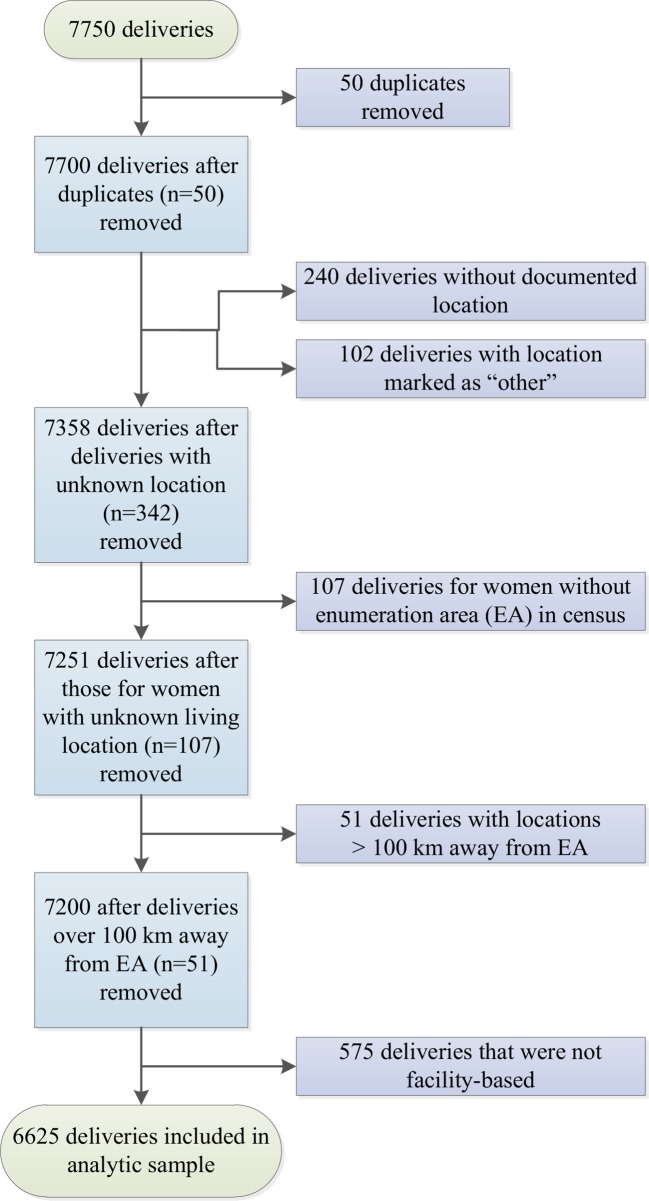
A revealed-preference latent class analysis was performed with data from 6625 facility births among women in Malawi from 2013 to 2014. Responses were weighted for national representativeness, and model structure and class number were selected using the Bayesian information criterion.
Two classes of preferences exist for pregnant women in Malawi. Most of the population 65.85% (95% CI 65.847% to 65.853%) prefer closer facilities that do not charge fees. The remaining third (34.15%, 95% CI 34.147% to 34.153%) prefers central hospitals, facilities with higher basic obstetric readiness scores and locations further from home. Women in this class are more likely to be older, literate, educated and wealthier than the majority of women.
For only one-third of pregnant Malawian women, structural quality of care, as measured by basic obstetric readiness score, factored into their choice of facility for delivery. Most women instead prioritise closer care and care without fees. Interventions designed to increase access to high-quality care in Malawi will need to take education, distance, fees and facility type into account, as structural quality alone is not predictive of facility type selection in this population.
在可持续发展目标的时代,降低孕产妇和新生儿死亡率是一项优先任务。马拉维的孕产妇死亡率位居世界前列,因此有很大的改善空间。为改善孕产妇结局所做的一项努力是增加获得高质量分娩医疗机构的机会。本研究旨在确定质量在女性选择分娩机构中所起的作用。
利用2013年至2014年马拉维女性6625例机构分娩的数据进行了显示偏好潜在类别分析。对回答进行加权以确保具有全国代表性,并使用贝叶斯信息准则选择模型结构和类别数量。
马拉维的孕妇存在两类偏好。大多数人(65.85%,95%置信区间65.847%至65.853%)更喜欢距离较近且不收费的机构。其余三分之一(34.15%,95%置信区间34.147%至34.153%)更喜欢中心医院、基本产科准备得分较高且离家较远的机构。这一类别的女性比大多数女性更有可能年龄较大、识字、受过教育且更富有。
对于仅三分之一的马拉维孕妇来说,以基本产科准备得分衡量的结构护理质量是她们选择分娩机构的因素之一。大多数女性反而更优先考虑距离较近的护理和免费护理。在马拉维,旨在增加获得高质量护理机会的干预措施需要考虑教育、距离、费用和机构类型,因为仅结构质量并不能预测该人群对机构类型的选择。